




NHTSA: Young, Affluent Drivers More Likely to Speed
The survey yields national estimates of driving behavior and attitudes toward speeding in the U.S.
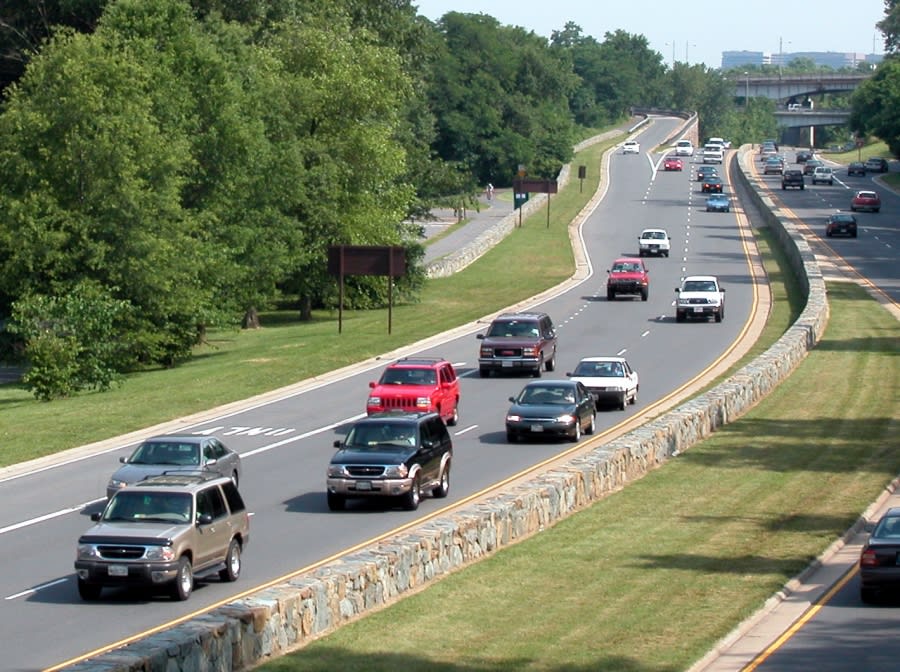
Nearly half of drivers surveyed viewed speeding as a problem on U.S. roads. Photo: AAA Foundation for Traffic Safety.
Nearly half of drivers surveyed viewed speeding as a problem on U.S. roads. Photo: AAA Foundation for Traffic Safety.
New survey results released by the National Highway Traffic Safety Administration (NHTSA) suggest that age and income can be factors in a driver’s proclivity to exceed the speed limit.
“The 2011 National Survey of Speeding Attitudes and Behavior,” released Dec. 11 of this year, found that drivers classified as speeders tended to be younger than non-speeders. One-half of the drivers 16 to 20 years old were classified as speeders, compared to 15 percent of drivers 65 or older. Speeders were also more likely to have higher household incomes. Forty-two percent of drivers with annual household incomes exceeding $100,000 were classified as speeders, while only 25 percent of drivers with annual household incomes of $30,000 or less were speeders.
According to researchers, cluster analysis identified three distinct groups of drivers with similar behavioral tendencies. Thirty percent were non-speeders, 40 percent were sometime speeders, and 30 percent were speeders.
Speeding-related deaths nationwide account for nearly a third of all traffic fatalities each year, taking close to 10,000 lives, NHTSA said.
Overall, nearly half of drivers surveyed viewed speeding as a problem on U.S. roads. Nearly half also agreed with the statement: “I worry a lot about having a crash.”
But three in five (60 percent) agreed that they often get impatient with slower drivers. One in five drivers (20 percent) agreed with the statement: “I try to get where I am going as fast as I can.”
A total of 82 percent agreed with the statement: “Driving at or near the speed limit makes it easier to avoid dangerous situations.” But 42 percent believed that driving at or near the speed limit makes it difficult to keep up with traffic, and 17 percent thought that driving at or near the speed limit makes them feel annoyed.
Twenty-seven percent agreed with the statement “Speeding is something I do without thinking.” Also, 27 percent agreed with the statement: “I enjoy the feeling of driving fast.”
Sixteen percent felt that "driving over the speed limit is not dangerous for skilled drivers." Seventeen percent agreed with the statement: “If it is your time to die, you’ll die, so it doesn’t matter whether you speed.” Just 9 percent agreed with the statement: “I consider myself a risk taker while driving.”
Nearly half of all respondents (48 percent) agreed that the speed limit should be enforced all the time. Thirty percent indicated it should be enforced often, while 18 percent said it should be enforced sometimes.
Eighty percent believed that greater use of speed cameras in dangerous or high-crash locations was a good idea, and 66 percent favored more frequent ticketing for speeding. Among drivers classified as speeders, however, just over half (54 percent) thought that increased ticketing for speeding was a good idea. Among drivers classified as sometime speeders and non-speeders, 65 percent and 78 percent, respectively, supported more ticketing.
[PAGEBREAK]
Among all drivers surveyed, 61 percent endorsed use of in-vehicle devices that notify drivers when they’re speeding. Roughly the same percentage thought such a device would help prevent them from speeding. But just 43 percent of drivers classified as speeders believed this type of device would act as a deterrent.
Eighty-nine percent of survey respondents said they drive with cell phones in their vehicle. A total of 22 percent said they talk on their phones while driving during half or more of their tips. About 5 percent reported that they text while driving during half or more of their trips. A small portion of drivers reported they talk (3 percent) or text (1 percent) while driving during all of their trips.
Among drivers 25 to 34, 16 percent reported talking on the cell phone and 6 percent said they send or read text messages on most trips. Only 3 percent of drivers 65 or older said they talk on the phone on most trips, and none reported reading or sending text messages while driving.
A total of 4 percent of drivers 16 to 20 years old reported talking on the cell phone on all or most of their trips, and 8 percent of this age group said they read or send text messages on all or most trips.
Speeders (16 percent) were more likely than sometime speeders (8 percent) and non-speeders (7 percent) to talk on their cell phones while driving.
Survey data were collected via telephone interviews with 6,144 U.S. households, NHTSA said. For more results, you can download the National Survey of Speeding Attitudes and Behavior survey.
More Safety
Tips for Driving Safely on Halloween Night
This video features a reminder from the Connecticut Department of Transportation (DOT) and the Connecticut Police Chiefs Association, urging drivers to prioritize safety this Halloween.
Read More →
IIHS Crash Avoidance Tests Reveal Safety Gaps in Cargo Vans and Work Trucks
New crash-avoidance ratings from the Insurance Institute for Highway Safety reveal inconsistent performance among commercial vehicles, with several popular cargo vans and heavy-duty pickups struggling to avoid collisions with other vehicles and pedestrians.
Read More →
What’s Next for Fleet? Safety, AI & Industry Recognition | AF News Recap
Could your company's culture be encouraging distracted driving? This week, we're exploring how workplace expectations affect driver safety, what AI, EVs, and autonomous vehicles could mean for the future of fleet management, and how fleet professionals can strengthen their award nominations.
Read More →
Does Your Fleet's Culture Encourage Distracted Driving?
What happens when the people responsible for enforcing safety rules are the ones setting the wrong example? The answer may reveal why some of the biggest risks to fleet drivers have little to do with what's written in the employee handbook.
Read More →
Fleet Manager’s Ultimate Playbook: Navigating the New Standard in OEM Connectivity
Rising operating costs, driver safety concerns, and unplanned downtime are putting unprecedented pressure on modern fleets. Discover how fleet managers use embedded OEM connectivity and real-time vehicle data to cut TCO, prevent downtime, and protect drivers without aftermarket telematics hardware.
Read More →
From Driver Well-Being to EV Charging | AF News Recap
Mental health belongs in the fleet safety conversation. This week, we’re looking at five ways fleets can support employee well-being before a crisis, plus Holman’s expansion in Mexico, new one-day Fleet Forward passes, and why EV charging demand is outpacing infrastructure growth.
Read More →
Nexar-Nauto Merger Aims to Give Fleets Better Safety Intelligence Through Larger Driving Dataset
Stefan Heck tells Automotive Fleet that combining more than 10 billion miles of driving history with Nexar's AI models will give fleets deeper insights into driver risk and roadway conditions than either company could provide independently.
Read More →
Don't Wait for a Crisis: 5 Ways to Build Mental Health Into Your Fleet Safety Program
For Suicide Prevention Month, fleet and safety leaders have an opportunity to put mental health where it belongs: at the center of workplace safety.
Read More →
How Camera Data Can Strengthen a Fleet’s Insurance Renewal
Insights from a commercial insurance carrier and a broker show how fleets can turn video telematic data, driver coaching, and improved claims results into a stronger case at insurance renewal.
Read More →
The Safest Fleets Aren’t the Ones with the Most Technology
You’ve made the telematics investment. Here’s how to capture the other half of its value and build the safest fleet on the road.
Read More →