




NHTSA Sharply Criticized By Congress
The safety agency found itself on the defensive during a congressional hearing on a day of mounting criticism over its handling of General Motors' ignition switch recall.
Screenshot via U.S. Senate.
Screenshot via U.S. Senate.
The National Highway Traffic Safety Administration came under fire on Capitol Hill on Tuesday, Sept. 16, attracting charges from both chambers that the agency failed to provide adequate regulatory oversight of General Motors before the ignition switch recall was finally issued this year.
The House Committee on Energy and Commerce released a staff report reviewing NHTSA’s handling of the ignition switch defect, with the report concluding “NHTSA had ample information to identify a potential safety defect as early as 2007.”
The report notes that back in October 2006, a single-vehicle collision involving a Chevrolet Cobalt that veered off-road killed three teenagers and seriously injured another in Wisconsin. A state trooper investigating the accident made the connection between the car’s air bag non-deployment and the ignition switch slipping into the “accessory” position. He drew this conclusion after reviewing a technical service bulletin from GM.
The trooper’s February 2007 report was made available to both GM and NHTSA, but the report “went unnoticed by GM and NHTSA for years,” the committee report said. “This report and how it was handled by GM and NHTSA, respectively, is one example of the numerous failures that prevented each institution from identifying the ignition switch defect and taking timely action.”
Though NHTSA investigators reviewed the state trooper’s report -- as well as another investigation’s findings that also pointed to the ignition switch as a potential cause of air bag failure -- the agency failed to see the similarities with other crashes involving the Chevrolet Cobalt, according to the report.
The ignition switch defect ultimately led to at least 19 fatalities.
The House committee report also concludes that the agency’s failure to follow up on the two reports’ conclusions was “compounded by a lack of understanding of the vehicle systems and functions implemented in response to the agency’s own standards.”
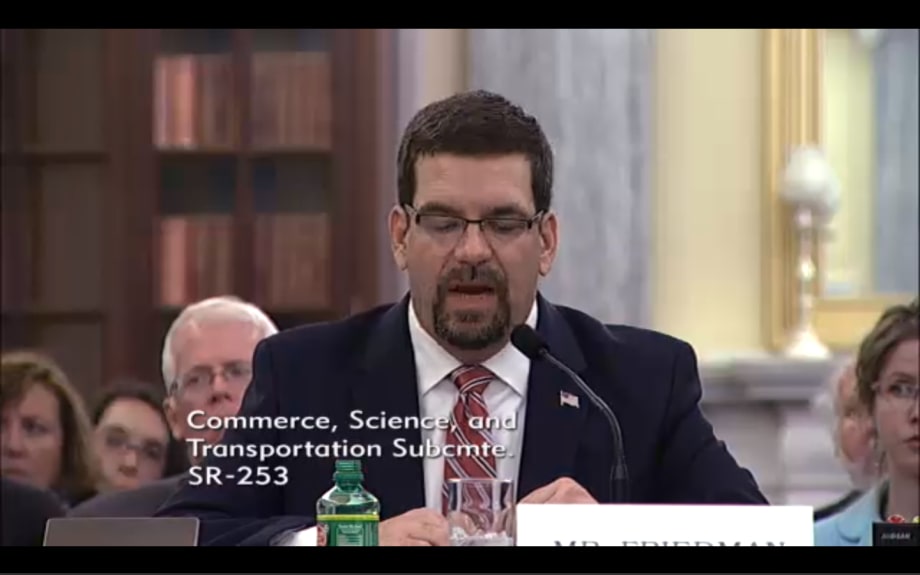
On the same day as this report’s release Sept. 16, NHTSA Deputy Administrator David Friedman appeared before a Senate subcommittee hearing. During the hearing, some members of the subcommittee – particularly chairman Claire McCaskill (D-MO) and Edward Markey (D-Mass.) – became visibly frustrated with Friedman’s responses to some of their questions.
Though Friedman expressed sympathy for the crash victims and their families, he never agreed that NHTSA’s regulatory failures were partially to blame for the collisions tied to the ignition switch defect. Instead, he stressed that GM had withheld the information needed for NHTSA to make the connection between unexpected stalling and air bag non-deployment.
“GM violated the law,” Friedman said. “They violated the law when they failed to act at a time when air bags were not working properly in millions of their products. Instead of fostering a culture of safety, GM encouraged one of denial and delay that cost lives and endangered the public.”
The subcommittee members agreed that most of the blame fell on GM, but they grew impatient with Friedman’s unwillingness to accept -- on the agency's behalf -- some of the responsibility for recall delays.
Markey and McCaskill both argued that the volume of consumer complaints about unexpected stalling in the vehicles ultimately recalled should have prompted more aggressive action from NHTSA years earlier.
McCaskill also criticized the agency’s reluctance to use its power of subpoena when GM declined to answer questions about the causes of some fatal accidents under review at the time.
When Markey pressed Friedman to give an apology to the American public on behalf of NHTSA for the agency’s regulatory missteps, Friedman didn’t provide one.
“I think we’re frustrated with you, Mr. Friedman, at this point,” McCaskill said.
Friedman did, however, say that NHTSA is "working to establish a new normal when it comes to industry responsiveness to recalls."
He added he's recently met with leaders of 12 major auto makers and delivered the message that "there is zero tolerance for failure to quickly notify the agency of a safety defect."
NHTSA is also asking for additional personnel and funding to acquire new tools to analyze data and conduct investigations, Friedman said.
Friedman joined NHTSA in May 2013.
To view a video of the hearing, click here.
To access a copy of the NHTSA report released by the House Committee on Energy and Commerce, click here.
More Safety

Does Your Fleet's Culture Encourage Distracted Driving?
What happens when the people responsible for enforcing safety rules are the ones setting the wrong example? The answer may reveal why some of the biggest risks to fleet drivers have little to do with what's written in the employee handbook.
Read More →
Fleet Manager’s Ultimate Playbook: Navigating the New Standard in OEM Connectivity
Rising operating costs, driver safety concerns, and unplanned downtime are putting unprecedented pressure on modern fleets. Discover how fleet managers use embedded OEM connectivity and real-time vehicle data to cut TCO, prevent downtime, and protect drivers without aftermarket telematics hardware.
Read More →
From Driver Well-Being to EV Charging | AF News Recap
Mental health belongs in the fleet safety conversation. This week, we’re looking at five ways fleets can support employee well-being before a crisis, plus Holman’s expansion in Mexico, new one-day Fleet Forward passes, and why EV charging demand is outpacing infrastructure growth.
Read More →
Nexar-Nauto Merger Aims to Give Fleets Better Safety Intelligence Through Larger Driving Dataset
Stefan Heck tells Automotive Fleet that combining more than 10 billion miles of driving history with Nexar's AI models will give fleets deeper insights into driver risk and roadway conditions than either company could provide independently.
Read More →
Don't Wait for a Crisis: 5 Ways to Build Mental Health Into Your Fleet Safety Program
For Suicide Prevention Month, fleet and safety leaders have an opportunity to put mental health where it belongs: at the center of workplace safety.
Read More →
How Camera Data Can Strengthen a Fleet’s Insurance Renewal
Insights from a commercial insurance carrier and a broker show how fleets can turn video telematic data, driver coaching, and improved claims results into a stronger case at insurance renewal.
Read More →
The Safest Fleets Aren’t the Ones with the Most Technology
You’ve made the telematics investment. Here’s how to capture the other half of its value and build the safest fleet on the road.
Read More →
Hidden in Plain Sight: Fleet Compliance Risks
Fleet compliance isn't just about having policies — it's about consistently enforcing them. This practical guide reveals six hidden compliance risks common in public sector and shared fleet operations and outlines proven strategies to improve visibility, accountability, and audit readiness
Read More →
NETS Sets 2026 Fleet Safety Benchmark Conference for Indianapolis
The Sept. 15–17 program will feature fleet benchmarking data, case studies, emerging technologies, and implementation strategies while running alongside the NSC Safety Congress & Expo.
Read More →
Off-the-Job Crashes Account for 43% of Employers’ $61.7 Billion Crash Burden
NETS quantifies costs dispersed across fleet, risk, HR, and other departments while providing new per-crash benchmarks for employers.
Read More →