




NHTSA Says Volt Still Safe After Investigating Battery Fire
DETROIT - NHTSA said it intends to continue to test the lithium-ion battery in the Chevrolet Volt but that based on the available data, the Volt is as safe as a gasoline-powered vehicle.
DETROIT – In response to an investigation of a battery-related fire that occurred during National Highway Traffic Safety Administration (NHTSA) crash testing of the Chevrolet Volt, General Motors has released a statement:
“First and foremost, I want to make this very clear: the Volt is a safe car,” said Jim Federico, General Motors chief engineer for electric vehicles. “We are working cooperatively with NHTSA as it completes its investigation. However, NHTSA has stated that based on available data, there’s no greater risk of fire with a Volt than a traditional gasoline-powered car.”
“We are working with other vehicle manufacturers, first responders, tow truck operators, and salvage associations with the goal of implementing industry-wide protocols.”
NHTSA said in a statement last week that it has investigated an incident involving a fire in a Chevrolet Volt that occurred more than three weeks after the organization had conducted crash tests on the vehicle. The vehicle was involved in NHTSA’s New Car Assessment crash test program on May 12, 2011. The organization concluded that the crash test damaged the Volt’s lithium-ion battery, and that damage led to the fire that occurred later.
NHTSA emphasized that electric vehicles are not more dangerous than regular, gasoline-fueled vehicles:
“Let us be clear: NHTSA does not believe electric vehicles are at a greater risk of fire than other vehicles. It is common sense that the different designs of electric vehicles will require different safety standards and precautions.”
The organization also emphasized the unique nature of this particular incident:
“That incident — which occurred at the test facility and caused property damage but no injuries — remains the only case of a battery-related fire in a crash or crash test of vehicles powered by lithium-ion batteries, despite a number of other rigorous crash tests of the Chevy Volt separately conducted by both NHTSA and General Motors.”
For the sake of comparison, the National Fire Protection Association said that in 2010, there were 184,500 on-highway vehicle fires in the U.S. in 2010 that are associated with traditionally fueled vehicles.
NHTSA stated it will conduct additional testing on the Volt's batteries, but reiterated that it doesn't believe there is an issue here.
"Based on the available data, NHTSA does not believe the Volt or other electric vehicles are at a greater risk of fire than gasoline-powered vehicles."
NHTSA provided the following safety tips for those dealing with an electric vehicle after a collision:
Operators of tow trucks and vehicle storage facilities should ensure the damaged vehicle is kept in an open area instead of a garage or other enclosed building.
Drivers should exit the vehicle safely or await the assistance of an emergency responder if they are unable to get out on their own, move a safe distance away from the vehicle, and notify the authorities of the crash.
Emergency responders should check a vehicle for markings or other indications that it is electric-powered. If it is, they should exercise caution, per published guidelines, to avoid any possible electrical shock and should disconnect the battery from the vehicle circuits if possible.
Emergency responders should also use copious amounts of water if fire is present or suspected and keeping in mind that fire can occur for a considerable period after a crash should proceed accordingly.
Rather than attempt to discharge a propulsion battery, an emergency responder, tow truck operator, or storage facility should contact experts at the vehicle's manufacturer on that subject.
Contact a local General Motors dealer with any specific questions.
By Greg Basich
Sources: NHTSA, General Motors
More Safety

Nexar-Nauto Merger Aims to Give Fleets Better Safety Intelligence Through Larger Driving Dataset
Stefan Heck tells Automotive Fleet that combining more than 10 billion miles of driving history with Nexar's AI models will give fleets deeper insights into driver risk and roadway conditions than either company could provide independently.
Read More →
Don't Wait for a Crisis: 5 Ways to Build Mental Health Into Your Fleet Safety Program
For Suicide Prevention Month, fleet and safety leaders have an opportunity to put mental health where it belongs: at the center of workplace safety.
Read More →
How Camera Data Can Strengthen a Fleet’s Insurance Renewal
Insights from a commercial insurance carrier and a broker show how fleets can turn video telematic data, driver coaching, and improved claims results into a stronger case at insurance renewal.
Read More →
The Safest Fleets Aren’t the Ones with the Most Technology
You’ve made the telematics investment. Here’s how to capture the other half of its value and build the safest fleet on the road.
Read More →
Hidden in Plain Sight: Fleet Compliance Risks
Fleet compliance isn't just about having policies — it's about consistently enforcing them. This practical guide reveals six hidden compliance risks common in public sector and shared fleet operations and outlines proven strategies to improve visibility, accountability, and audit readiness
Read More →
NETS Sets 2026 Fleet Safety Benchmark Conference for Indianapolis
The Sept. 15–17 program will feature fleet benchmarking data, case studies, emerging technologies, and implementation strategies while running alongside the NSC Safety Congress & Expo.
Read More →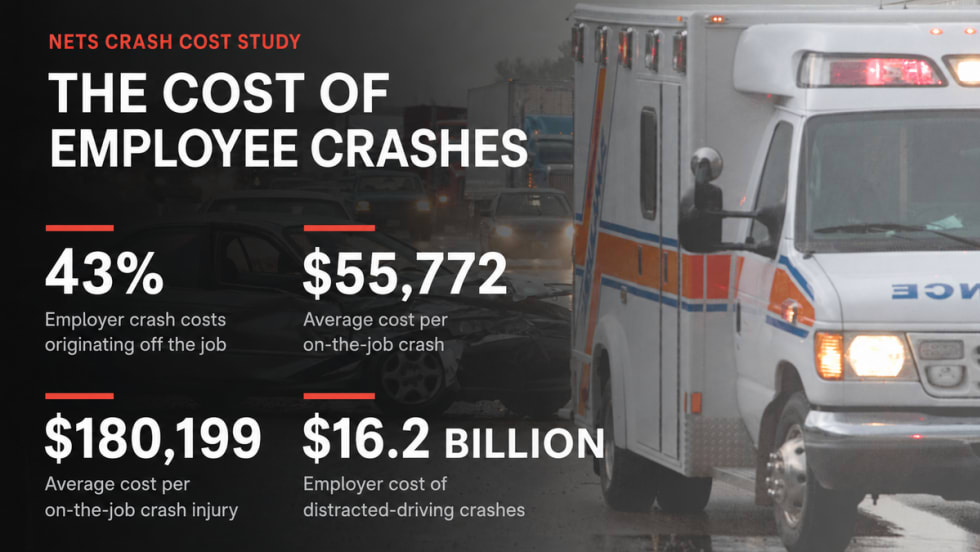
Off-the-Job Crashes Account for 43% of Employers’ $61.7 Billion Crash Burden
NETS quantifies costs dispersed across fleet, risk, HR, and other departments while providing new per-crash benchmarks for employers.
Read More →
Ram Recalls More Than 1.27 Million 1500 Pickups for Seat Belt Anchor Issue
The recall affects certain 2019-2026 Ram 1500 pickups that may have improperly attached second-row seat belt buckle anchors.
Read More →
How Better Visibility Cut Speeding Violations by 48%
Fleet leaders don't need more data, they need clearer visibility into what the data is saying. This case study explores how one utility replaced speeding-event counts with a single metric — miles driven in violation — to strengthen safety and significantly reduce speeding violations.
Read More →
Operation Safe Driver Week: Why the Industry's Oldest Safety Campaign Still Matters to Fleets
A look at how a 2007 enforcement initiative became one of the most consequential weeks on the fleet safety calendar, and what it means for your drivers in 2026.
Read More →