




NHTSA Reveals 2014-MY Vehicles It Will Rate Under 5-Star Safety Program
The federal agency will assign scores based on frontal crash, side crash and rollover resistance test results and issue an overall vehicle rating.
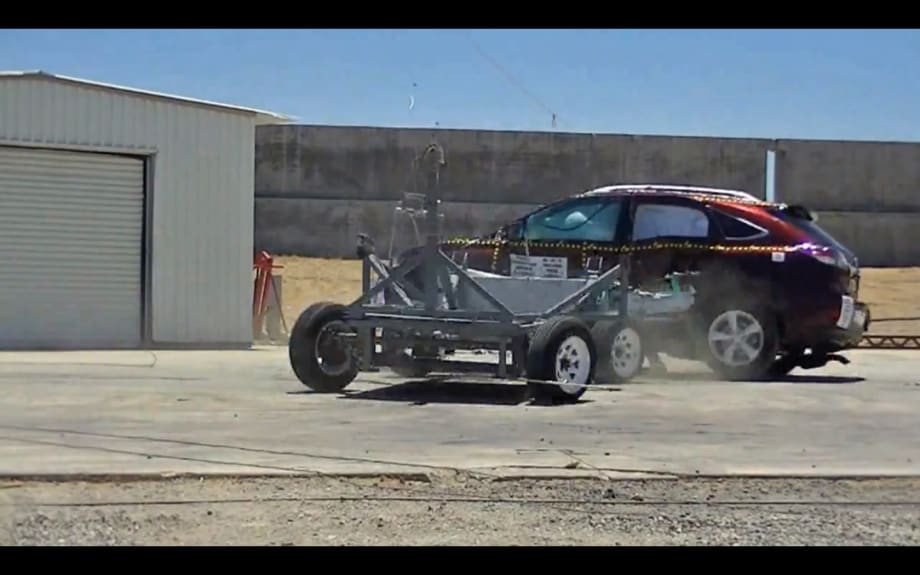
A NHTSA side-impact crash test.
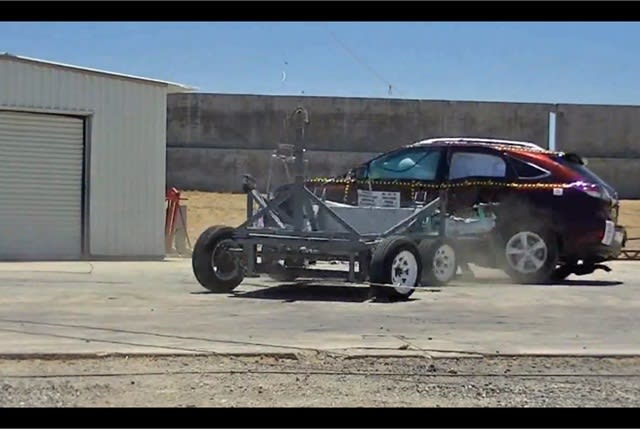
A NHTSA side-impact crash test.
The U.S. Department of Transportation's National Highway Traffic Safety Administration (NHTSA) released the lineup of 2014 model-year passenger vehicles that will be tested as part of the agency's 5-Star Safety Ratings Program.
In addition, the agency unveiled updated advertising guidelines for vehicle manufacturers, dealers and advertising agencies.
"Safety is our highest priority, and we're always working to ensure consumers have the information they need to buy safe and drive safe," said U.S. Transportation Secretary Anthony Foxx. "With today's announcement, we are continuing to provide consumers with valuable information through our world-renowned 5-star rating program so they can make more-informed car buying decisions.”
NHTSA's 5-Star Safety Ratings Program allows consumers to search crash test ratings and make informed purchasing decisions. Each vehicle tested can receive safety ratings in frontal crash, side crash and rollover resistance tests. Vehicles also receive an overall vehicle rating. One star represents the lowest score, while five stars represents the highest.
The program also highlights advanced crash-avoidance technologies, such as lane departure warning, forward collision warning, and rearview video systems, which manufacturers are voluntarily installing in vehicles to help prevent crashes.
The updated guidelines now explicitly state that ratings are always whole numbers and that NHTSA does not award a rating higher than 5 stars. Manufacturers or advertising agencies, NHTSA said, should not advertise ratings with decimal points or ratings over 5 stars, and advertisers who claim more than 5 stars are misleading the public.
[PAGEBREAK]
The guidelines also clarify that advanced technologies are not part of the star ratings. Advertisements that do not conform to these guidelines may result in "buyer alert" warnings, removal from the ratings program or referral to other federal or state authorities for appropriate action, NHTSA said.
NHTSA plans to rate approximately 87 percent of 2014 model-year vehicles sold in the U.S. for frontal and side crash protection, and 92 percent for rollover resistance. A number of 2014 model-year vehicles had carry-over designs from the previous model year or have already been tested, and these ratings are already available on www.SaferCar.gov.
NHTSA will test 48 vehicles for the 2014 model year, including 22 passenger cars, 18 sport utility vehicles, five pickups and three vans.
As the vehicles are tested, consumers can access ratings at www.SaferCar.gov and through NHTSA's SaferCar app – available for iPhone and iPod Touch devices. The agency plans to release a version of the app that is compatible with Android devices in early 2014.
Model Year 2014 Vehicles Selected for the 5-Star Safety Rating Tests
PASSENGER CARS
Make | Model | Body Style |
Buick | LaCrosse | 4DR |
Chevrolet | Impala | 4DR |
Chevrolet | Malibu | 4DR |
Chevrolet | Spark | 5HB |
Ford | Fiesta | 4DR |
Hyundai | Veloster | 2DR |
Infiniti | Q50 | 4DR |
Kia | Forte | 4DR |
Lexus | IS250 | 4DR |
Mazda | Mazda3 | 4DR |
Mazda | Mazda6 | 4DR |
Mercedes-Benz | E-Class | 4DR |
Mini | Cooper | 3HB |
Nissan | Versa Note | 5HB |
Scion | FR-S | 2DR |
Subaru | Impreza | SW |
Subaru | XV Crosstrek | SW |
Toyota | Avalon | 4DR |
Toyota | Camry | 4DR |
Toyota | Corolla | 4DR |
Toyota | Prius | 5HB |
Volkswagen | Jetta | 4DR |
[PAGEBREAK]
PICKUP TRUCKS
Make | Model | Body Style |
Chevrolet | Silverado 1500 Series | PU/CC |
Chevrolet | Silverado 1500 Series | PU/EC |
Ram | 2500 Crew | PU/CC |
Toyota | Tundra | PU/CC |
Toyota | Tundra | PU/EC |
[PAGEBREAK]
SPORTS UTILITY VEHICLES & VANS
Make | Model | Body Style |
Acura | MDX | SUV |
Acura | RDX | SUV |
Audi | Q5 | SUV |
Chevrolet | Captiva | SUV |
Dodge | Durango | SUV |
Ford | Transit Connect | VAN |
Honda | Odyssey | VAN |
Jeep | Compass | SUV |
Jeep | Grand Cherokee | SUV |
Jeep | Patriot | SUV |
Kia | Sorento | SUV |
Kia | Soul | SUV |
Mazda | CX-5 | SUV |
Mitsubishi | Outlander | SUV |
Nissan | Pathfinder | SUV |
Nissan | Rogue | SUV |
Subaru | Forester | SUV |
Toyota | 4Runner | SUV |
Toyota | Highlander | SUV |
Toyota | RAV4 | SUV |
Toyota | Sienna | VAN |
Model Year 2014 Vehicles Equipped with LDW and/or FCW
Selected for Confirmation Testing
PASSENGER CARS
Make | Model | Body Style | FCW | LDW |
Acura | RLX | 4DR | X | X |
Chevrolet | SS | 4DR | X | |
Honda | Civic IMA | 4DR | X | X |
Hyundai | Equus | 4DR | X | |
Mazda | Mazda6 | 4DR | X | |
Mercedes Benz | S Class | 4DR | X | X |
Mini | Cooper | 2DR | X | |
Mitsubishi | Mirage | 5HB | X | X |
Nissan | Altima | 4DR | X | X |
Subaru | Legacy | SW | X | X |
Toyota | Avalon | 4DR | X | |
Toyota | Prius | 5HB | X | X |
SPORT UTILITY VEHICLES, PICKUPS, & VANS
Make | Model | Body Style | FCW | LDW |
BMW | X3 or X5 | SUV | X | X |
BMW | X6 | SUV | X | |
Chevrolet | Silverado | PU/EC | X | X |
Ford | Edge | SUV | X | |
Honda | Crosstour | SUV | X | X |
Honda | Odyssey | VAN | X | X |
Mitsubishi | Outlander | SUV | X | X |
KEY: PU – Pickup, EC – Extended Cab, CC – Crew Cab, DR – Door, HB – Hatchback, SUV – Sport Utility Vehicle, SW – Station Wagon
More Safety
IIHS Crash Avoidance Tests Reveal Safety Gaps in Cargo Vans and Work Trucks
New crash-avoidance ratings from the Insurance Institute for Highway Safety reveal inconsistent performance among commercial vehicles, with several popular cargo vans and heavy-duty pickups struggling to avoid collisions with other vehicles and pedestrians.
Read More →
What’s Next for Fleet? Safety, AI & Industry Recognition | AF News Recap
Could your company's culture be encouraging distracted driving? This week, we're exploring how workplace expectations affect driver safety, what AI, EVs, and autonomous vehicles could mean for the future of fleet management, and how fleet professionals can strengthen their award nominations.
Read More →
Does Your Fleet's Culture Encourage Distracted Driving?
What happens when the people responsible for enforcing safety rules are the ones setting the wrong example? The answer may reveal why some of the biggest risks to fleet drivers have little to do with what's written in the employee handbook.
Read More →
Fleet Manager’s Ultimate Playbook: Navigating the New Standard in OEM Connectivity
Rising operating costs, driver safety concerns, and unplanned downtime are putting unprecedented pressure on modern fleets. Discover how fleet managers use embedded OEM connectivity and real-time vehicle data to cut TCO, prevent downtime, and protect drivers without aftermarket telematics hardware.
Read More →
From Driver Well-Being to EV Charging | AF News Recap
Mental health belongs in the fleet safety conversation. This week, we’re looking at five ways fleets can support employee well-being before a crisis, plus Holman’s expansion in Mexico, new one-day Fleet Forward passes, and why EV charging demand is outpacing infrastructure growth.
Read More →
Nexar-Nauto Merger Aims to Give Fleets Better Safety Intelligence Through Larger Driving Dataset
Stefan Heck tells Automotive Fleet that combining more than 10 billion miles of driving history with Nexar's AI models will give fleets deeper insights into driver risk and roadway conditions than either company could provide independently.
Read More →
Don't Wait for a Crisis: 5 Ways to Build Mental Health Into Your Fleet Safety Program
For Suicide Prevention Month, fleet and safety leaders have an opportunity to put mental health where it belongs: at the center of workplace safety.
Read More →
How Camera Data Can Strengthen a Fleet’s Insurance Renewal
Insights from a commercial insurance carrier and a broker show how fleets can turn video telematic data, driver coaching, and improved claims results into a stronger case at insurance renewal.
Read More →
The Safest Fleets Aren’t the Ones with the Most Technology
You’ve made the telematics investment. Here’s how to capture the other half of its value and build the safest fleet on the road.
Read More →
Hidden in Plain Sight: Fleet Compliance Risks
Fleet compliance isn't just about having policies — it's about consistently enforcing them. This practical guide reveals six hidden compliance risks common in public sector and shared fleet operations and outlines proven strategies to improve visibility, accountability, and audit readiness
Read More →