




NHTSA Honors 2014 Safety Advocates
The 12 winners are honored during the annual event, which was held last week in Nashville.

Award winner Police Chief Brett C. Railey of the Winter Park Police Department in Florida.
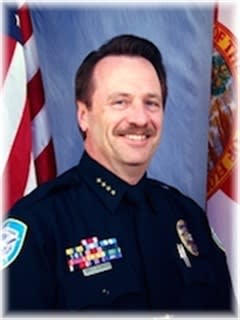
Award winner Police Chief Brett C. Railey of the Winter Park Police Department in Florida.
The National Highway Traffic Safety Administration presented 12 individuals and organizations with the agency’s Public Service Award at the 32nd annual Lifesavers Conference.
NHTSA’s top public service award recognizes efforts to advance highway safety throughout the country.
“Today’s award recipients represent the full spectrum of dedicated public servants who help us improve safety each and every day across the country,” said U.S. Transportation Secretary Anthony Foxx. “We thank them for their service, for the difference they have made and the example they are setting for others.”
The Lifesavers Conference, held last week in Nashville, annually highlights emerging traffic safety issues and explores life-saving programs and best practices.
Here are the 12 public service award winners:
Isaac T. Avery III, North Carolina Conference of District Attorneys -- In recognition of leadership and dedication to highway safety in North Carolina.
Michael R. Calvin, senior strategic advisor, American Association of Motor Vehicle Administrators -- In recognition of outstanding leadership, nationally and internationally, in developing uniform and consistent policies and procedures for training and licensing drivers of motor vehicles.
Kerry Chausmer,certification director, Safe Kids Worldwide -- In recognition of dedication and creative management of the National CPS Certification program and ongoing commitment to improving child passenger safety.
C. Stephen Hooper, operations director, Division of Motor Vehicles, Colorado Department of Revenue -- In recognition of exemplary leadership to upgrade laws and implement programs to reduce impaired driving recidivism throughout Colorado.
Angela Osterhuber, director, Pennsylvania Traffic Injury Prevention Project -- In recognition of innovative leadership and commitment to reducing crash injuries and fatalities for child passengers across the region.
Senator Mike Padden, Washington State Senate, 4th District -- In recognition of tireless and unending work to end tragedies related to alcohol abuse and DUI.
Brian and Yvette Pearse,K&J Foundation -- In recognition of taking a personal tragedy and turning it into an opportunity to educate teens about the importance of always wearing seat belts in an effort to reduce teen motor vehicle injuries and deaths.
Chief Brett Railey, Winter Park Police Department -- In recognition and appreciation for extraordinary contributions and dedication to increasing traffic enforcement.
John Smith, transportation director, Northern Arapaho and Eastern Shoshone Tribes -- In recognition of leadership in the area of tribal transportation safety, through policy initiatives, promoting awareness, and coordination with state and federal partners.
Southern Arizona DUI Task Force -- In recognition of the combined efforts of the Southern Arizona DUI Task Force member agencies to reduce DUI fatalities by more than 20 percent from 2008 to 2012.
The Limtiaco Co. -- In recognition of pedestrian safety efforts that resulted in reductions in pedestrian injuries and fatalities among senior citizens and children in Hawaii.
Robert W. Welsh, program manager, Missouri Safety Center -- In recognition of outstanding dedication to the field of drug and alcohol impaired driving.
Award winners were nominated by NHTSA staff members and selected by senior NHTSA leadership.
More Safety
Managing Road Risk at Scale: Why Fleet Safety Needs a Data-Driven Framework
Insights from the FIA Road and Driver Safety Indexes reveal how to manage road risk on a larger scale.
Read More →
Stellantis Recalls 1.3 Million Jeep Vehicles Worldwide Over Fire Risk
Stellantis is recalling more than 1.3 million Jeep Wrangler and Gladiator models worldwide over a fire risk linked to power steering pump wiring.
Read More →
Coaching Is Not Training, Even When AI Is Doing It
AI-powered safety platforms can detect risky behaviors and deliver immediate feedback. But effective driver development still requires a foundation of training followed by coaching that reinforces those skills.
Read More →
How Emotions Behind the Wheel Can Affect Fleet Safety
During National Safety Month, fleets are encouraged to look beyond distracted driving and recognize how stress, fatigue, and emotional well-being influence driver performance and crash risk.
Read More →
Nominations Open for 2026 Fleet Safety Award
Nominations have officially opened for the 2026 Fleet Safety Award Winner.
Read More →
Turning Connected Vehicle Data Into Decisions That Matter
Fleet leaders have more data than ever, but turning that data into clear, actionable decisions remains a challenge. This white paper shows how leading organizations are using connected vehicle data to improve safety, reduce costs, and optimize fleet performance. Learn how to turn insight into action across your fleet.
Read More →
Cameras, Safety and Insurance: From Reactive Claims to Real-time Prevention
Commercial auto remains one of the most challenging and costly lines of coverage for fleet operators and insurers alike. Learn more about how to effectively address these issues from Onur Aksan, Enterprise Business Development Executive, Geotab.
Read More →
NAFA Fleet Safety Symposium to Collocate With 2026 Fleet Forward Conference
The daylong certificate program will precede the Fleet Forward Conference at the Gaylord National Harbor in Maryland.
Read More →
The Distractions You Can’t Turn Off: What Drivers Face Outside the Vehicle
Fleet drivers face constant visual, cognitive, and environmental interruptions the moment they hit the road. From roadside chaos to mental fatigue and digital overload, today’s biggest driving risks often come from outside the vehicle itself.
Read More →
FLASH Weather AI Launches First Deep-Learning Hail Prediction Model With High-Resolution Forecasting
FLASH Weather AI has launched a first-of-its-kind hail prediction model capable of forecasting hail size and arrival time at 1-kilometer resolution up to 55 minutes ahead, giving fleets and insurers critical time to prepare for severe storms.
Read More →