




NHTSA Fines Hyundai $17M for Genesis Recall Delays
The recall, ultimately issued in October 2013, involved 43,500 2009-2012 model-year Genesis sedans.

Photo of 2012 Hyundai Genesis courtesy of Hyundai.

Photo of 2012 Hyundai Genesis courtesy of Hyundai.
Hyundai Motor America has agreed to pay a $17.35 million civil penalty to the National Highway Traffic Safety Administration to settle charges that last year’s recall of 2009-2012 model-year Hyundai Genesis sedans wasn’t timely enough.
In October 2013, Hyundai issued a recall of approximately 43,500 Genesis vehicles to address potential brake system component corrosion arising from the use of incompatible brake fluid. The corrosion can lead to a reduction in braking performance.
But earlier, in March 2013, Hyundai initially responded to the problem by issuing a technical service bulletin to its dealers, advising them to replace the brake fluid in the vehicles. The automaker issued the recall months later, after NHTSA opened an investigation of the issue.
Federal law requires automakers to report safety-related defects to NHTSA within five days.
No fatalities are linked to the problem, but six consumers reported collisions. Of the six crashes, two involved injuries, NHTSA said. As of Jan. 14, Hyundai had received 87 consumer complaints tied to the issue, most of which allege difficulty in braking.
NHTSA closed its investigation of the matter in April.
“NHTSA found that Hyundai had been aware in 2012 that brake fluids used in the model year 2009-2012 Hyundai Genesis did not sufficiently inhibit corrosion in key components of the vehicle’s brake system,” the federal agency said in a released statement. “Rather than issue a recall, Hyundai instructed dealers to change the brake fluid in affected vehicles without explaining the consequences of failing to change the brake fluid. Hyundai also did not inform Genesis owners of the potential safety consequences. Hyundai finally issued a recall of the affected vehicles in October 2013 as a result of a NHTSA investigation.”
In June, NHTSA and Hyundai representatives reached an agreement during meetings in Washington D.C.
As part of the settlement, Hyundai agreed to change its safety recall procedures as outlined in the terms of a consent order. The consent order requirements include revising how the company identifies, reports and communicates safety-related defects. The automaker must create a U.S. technical committee to review and make decisions regarding potential recalls of its vehicles in the U.S.
“Hyundai will ultimately be responsible for responding to safety concerns in a timely manner based on the Technical Committee’s recommendations,” NHTSA said in the released statement. This means U.S.-based executives have the authority to make safety recall decisions independently and without approval from Hyundai Motor Co.’s Korea-based management.
“In order to mitigate a situation like this in the future, Hyundai is instituting new organizational and process improvements, and enhancing the ability of the U.S. leadership team to readily respond to regulatory reporting requirements,” said David Zuchowski, president and CEO of Hyundai Motor America.
Hyundai Motor America is headquartered in Fountain Valley, Calif.
More Safety

Nexar-Nauto Merger Aims to Give Fleets Better Safety Intelligence Through Larger Driving Dataset
Stefan Heck tells Automotive Fleet that combining more than 10 billion miles of driving history with Nexar's AI models will give fleets deeper insights into driver risk and roadway conditions than either company could provide independently.
Read More →
Don't Wait for a Crisis: 5 Ways to Build Mental Health Into Your Fleet Safety Program
For Suicide Prevention Month, fleet and safety leaders have an opportunity to put mental health where it belongs: at the center of workplace safety.
Read More →
How Camera Data Can Strengthen a Fleet’s Insurance Renewal
Insights from a commercial insurance carrier and a broker show how fleets can turn video telematic data, driver coaching, and improved claims results into a stronger case at insurance renewal.
Read More →
The Safest Fleets Aren’t the Ones with the Most Technology
You’ve made the telematics investment. Here’s how to capture the other half of its value and build the safest fleet on the road.
Read More →
Hidden in Plain Sight: Fleet Compliance Risks
Fleet compliance isn't just about having policies — it's about consistently enforcing them. This practical guide reveals six hidden compliance risks common in public sector and shared fleet operations and outlines proven strategies to improve visibility, accountability, and audit readiness
Read More →
NETS Sets 2026 Fleet Safety Benchmark Conference for Indianapolis
The Sept. 15–17 program will feature fleet benchmarking data, case studies, emerging technologies, and implementation strategies while running alongside the NSC Safety Congress & Expo.
Read More →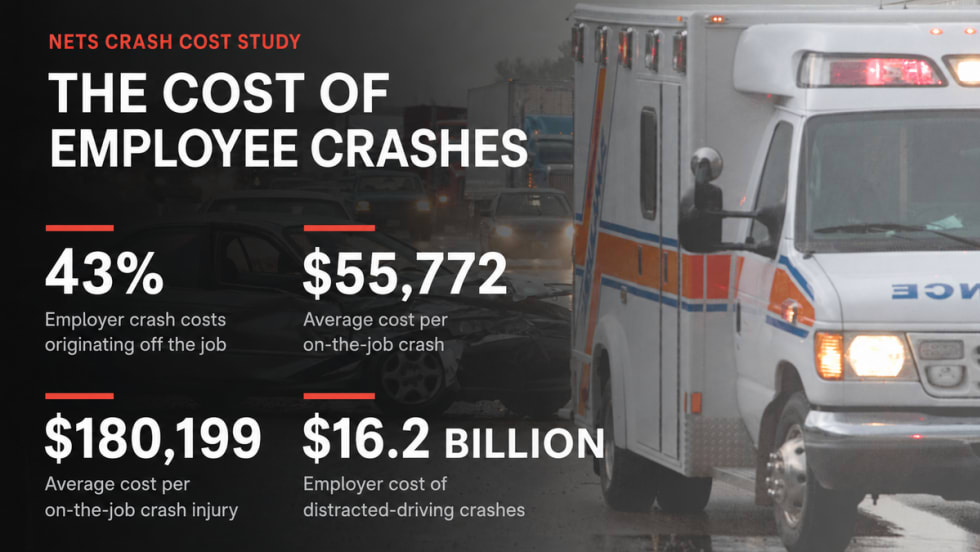
Off-the-Job Crashes Account for 43% of Employers’ $61.7 Billion Crash Burden
NETS quantifies costs dispersed across fleet, risk, HR, and other departments while providing new per-crash benchmarks for employers.
Read More →
Ram Recalls More Than 1.27 Million 1500 Pickups for Seat Belt Anchor Issue
The recall affects certain 2019-2026 Ram 1500 pickups that may have improperly attached second-row seat belt buckle anchors.
Read More →
How Better Visibility Cut Speeding Violations by 48%
Fleet leaders don't need more data, they need clearer visibility into what the data is saying. This case study explores how one utility replaced speeding-event counts with a single metric — miles driven in violation — to strengthen safety and significantly reduce speeding violations.
Read More →
Operation Safe Driver Week: Why the Industry's Oldest Safety Campaign Still Matters to Fleets
A look at how a 2007 enforcement initiative became one of the most consequential weeks on the fleet safety calendar, and what it means for your drivers in 2026.
Read More →