




NHTSA Fines Honda $70M for Lapses in Reporting
The federal safety agency imposes two $35 million civil penalties after the automaker fails to submit all required early-warning reports and warranty claims.

SCHOSTEK

SCHOSTEK
The National Highway Traffic Safety Administration has ordered Honda to pay $70 million in fines for failing to report all deaths, injuries and warranty claims tied to the automaker’s vehicles.
A third-party audit, ordered by federal safety regulators in September, uncovered that Honda under-reported deaths, injuries and warranty claims to NHTSA for 11 years. This was in violation of the Transportation Recall Enhancement, Accountability and Documentation (TREAD) Act, which went into effect in 2000.
In November, Honda admitted that the audit identified 1,729 instances of under-reporting written claims or notices concerning injuries or deaths from July 1, 2003, through June 30, 2014. The automaker attributed the reporting lapses to “various errors, including errors related to data entry and computer coding.”
Questions about Honda’s TREAD Act compliance were initially raised during NHTSA’s investigation of the Takata air bag defects.
The new fine comprises two $35 million civil penalties, NHTSA said. The first penalty is tied to Honda's failure to report 1,729 death and injury claims to NHTSA between 2003 and 2014. The second civil penalty is due to the manufacturer's failure to report certain warranty claims and claims under customer satisfaction campaigns throughout the same time period.
NHTSA, part of the U.S. Department of Transportation, also noted that Honda has agreed to greater oversight and third-party audits “to ensure that all required reporting is completed now and into the future.”
"We have resolved this matter and will move forward to build on the important actions Honda has already taken to address our past shortcomings in early warning reporting," said Rick Schostek, executive vice president of Honda North America Inc. "We continue to fully cooperate with NHTSA to achieve greater transparency and to further enhance our reporting practices."
Honda said it is introducing new training regimens, changing internal reporting policy, making staffing and organizational changes, and enhancing oversight of its early warning reporting process.
Additional details are available in the audit report prepared for Honda by Bowman and Brooke and in Honda's Response to NHTSA's Special Order addressing the violations.
"Today's announcement sends a very clear message to the entire industry that manufacturers have responsibility for the complete and timely reporting of this critical safety information," said NHTSA Administrator Mark Rosekind. "The actions we are requiring will push Honda to significantly raise the bar on the effectiveness of its EWR [early warning reports] reporting program. Our ongoing oversight will ensure compliance and determine if there is cause for additional actions."
In 2014, NHTSA issued more than $126 million in civil penalties, exceeding the total amount the agency had previously collected during its 43-year history. Rosekind, who was sworn in as the safety agency’s new head on Dec. 22, also advocates increasing the current $35 million limit on individual penalties – a change that would require Congressional action.
More Safety

Nexar-Nauto Merger Aims to Give Fleets Better Safety Intelligence Through Larger Driving Dataset
Stefan Heck tells Automotive Fleet that combining more than 10 billion miles of driving history with Nexar's AI models will give fleets deeper insights into driver risk and roadway conditions than either company could provide independently.
Read More →
Don't Wait for a Crisis: 5 Ways to Build Mental Health Into Your Fleet Safety Program
For Suicide Prevention Month, fleet and safety leaders have an opportunity to put mental health where it belongs: at the center of workplace safety.
Read More →
How Camera Data Can Strengthen a Fleet’s Insurance Renewal
Insights from a commercial insurance carrier and a broker show how fleets can turn video telematic data, driver coaching, and improved claims results into a stronger case at insurance renewal.
Read More →
The Safest Fleets Aren’t the Ones with the Most Technology
You’ve made the telematics investment. Here’s how to capture the other half of its value and build the safest fleet on the road.
Read More →
Hidden in Plain Sight: Fleet Compliance Risks
Fleet compliance isn't just about having policies — it's about consistently enforcing them. This practical guide reveals six hidden compliance risks common in public sector and shared fleet operations and outlines proven strategies to improve visibility, accountability, and audit readiness
Read More →
NETS Sets 2026 Fleet Safety Benchmark Conference for Indianapolis
The Sept. 15–17 program will feature fleet benchmarking data, case studies, emerging technologies, and implementation strategies while running alongside the NSC Safety Congress & Expo.
Read More →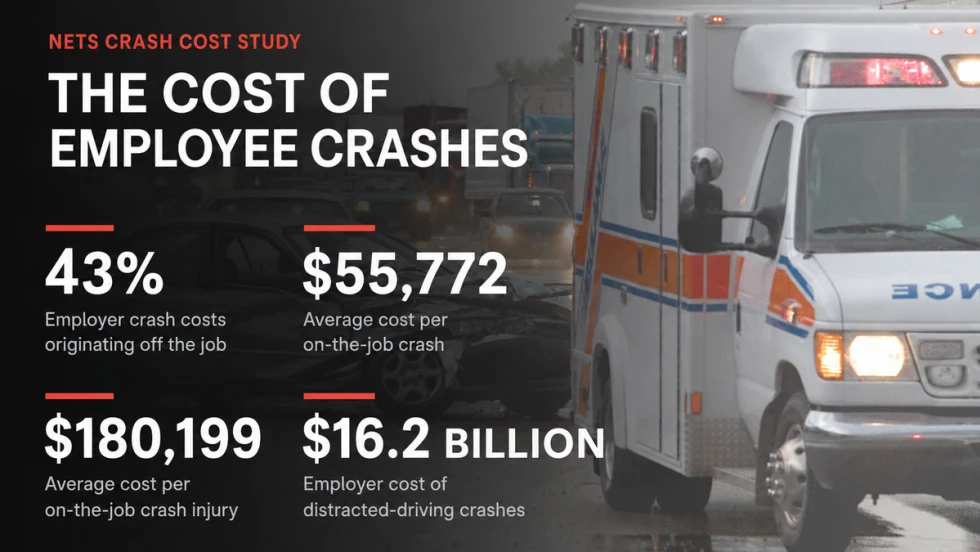
Off-the-Job Crashes Account for 43% of Employers’ $61.7 Billion Crash Burden
NETS quantifies costs dispersed across fleet, risk, HR, and other departments while providing new per-crash benchmarks for employers.
Read More →
Ram Recalls More Than 1.27 Million 1500 Pickups for Seat Belt Anchor Issue
The recall affects certain 2019-2026 Ram 1500 pickups that may have improperly attached second-row seat belt buckle anchors.
Read More →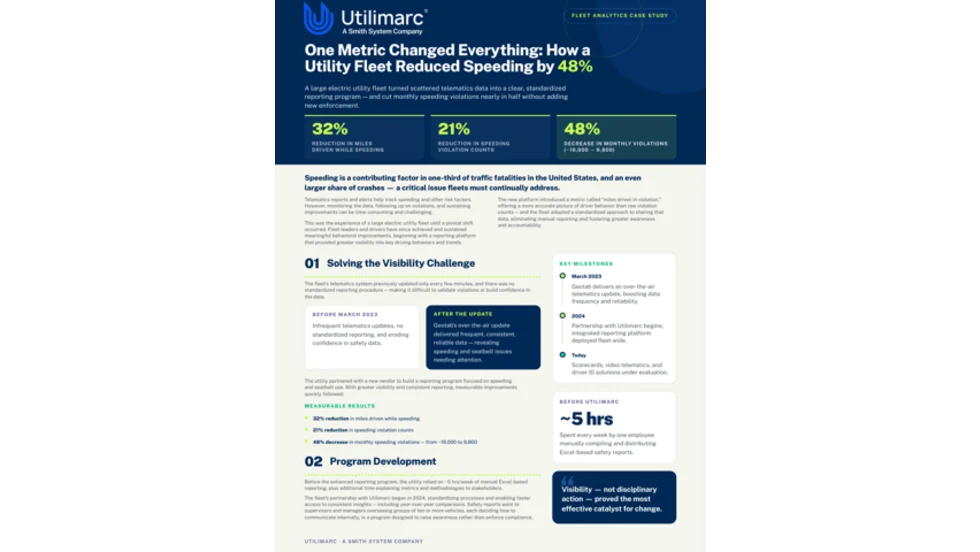
How Better Visibility Cut Speeding Violations by 48%
Fleet leaders don't need more data, they need clearer visibility into what the data is saying. This case study explores how one utility replaced speeding-event counts with a single metric — miles driven in violation — to strengthen safety and significantly reduce speeding violations.
Read More →
Operation Safe Driver Week: Why the Industry's Oldest Safety Campaign Still Matters to Fleets
A look at how a 2007 enforcement initiative became one of the most consequential weeks on the fleet safety calendar, and what it means for your drivers in 2026.
Read More →