




New York City's Comptroller Refuses to Approve Nissan Taxi Contract
NEW YORK – New York City’s Comptroller John C. Liu said he would reject the contract that would make Nissan’s NV200 the “Taxi of Tomorrow” until the city’s entire taxi fleet makes its cabs wheelchair accessible.

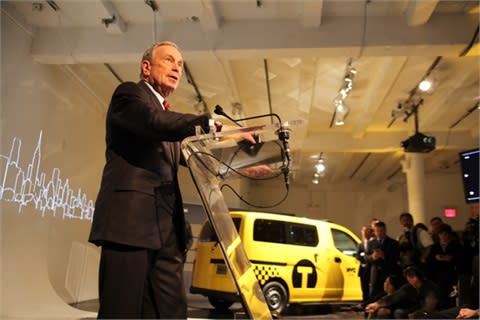
NYC's Mayor Michael Bloomberg joined Nissan CEO Carlos Ghosn in unveiling the "Taxi of Tomorrow" in early April, 2012.
Photo Credit: Kristen Artz
Kristen Artz
NEW YORK – New York City’s Comptroller John C. Liu said he would reject the contract that would make Nissan’s NV200 the “Taxi of Tomorrow” until the city’s entire taxi fleet makes its cabs wheelchair accessible.
In his letter to NYC Mayor Michael Bloomberg, Liu said that on Dec. 23, 2011, a federal court found that the New York City Taxi & Limousine Commission was in violation of Title II of the Americans with Disabilities Act ("ADA"). His letter went on to say that “TLC was not providing meaningful taxicab access to disabled people who required wheelchairs, and that the lack of access was a direct result of TLC's pervasive policies, practices, and regulations of taxicabs in the City.”
"The new contract for taxis presents us with a historic opportunity to right a wrong that New Yorkers with disabilities have been fighting to achieve for nearly two decades," Liu said. "Requiring cabs to have independent passenger climate controls is nice, but when you fail to make them accessible to a growing number of New Yorkers, it's not just a slap in the face, it's illegal. We will send back any plan that does not uphold the civil rights demanded by the Americans with Disabilities Act."
Liu stated that although the City controls sales of taxi medallions, it currently doesn’t require taxis to be wheelchair accessible, and that currently less than 2% of them allow wheelchair access (231 out of a total fleet of 13,000).
Although a proposal exists to modify the NV200 taxis to make them wheelchair-accessible, and for a separate dispatch system that would direct passengers who use wheelchairs to appropriately equipped taxis, Liu said this fails to address the problem, which is a lack of wheelchair-accessible taxis. Liu goes on to say the City should modify the contract with Nissan and require the entire fleet of NV200 taxis to be wheelchair accessible.
More Operations

How Fleets Can Recruit and Train Veterans for Technician Roles
Here's how the technician shortage has affected uptime for fleets, and what to do about it.
Read More →
Avis Budget Group Deploys Neology Toll Management Technology Across Major Brands
Neology’s neoFleet platform will manage toll transactions and toll-authority operations for vehicles across Avis, Budget, Payless, Budget Truck and Zipcar.
Read More →
Fleet Personal-Use Charges Edge Higher in 2026
Nearly eight in 10 surveyed fleets allow personal use of company vehicles, while just over half of respondents report charging employees for the privilege.
Read More →
The Future of Fleet + What’s Changing Right Now | AF News Recap
Could developments overseas offer a preview of what’s coming for U.S. fleets? This week, we’re looking at the future of AI, autonomy, and electrification, plus Ford Pro’s new certified pre-owned program, smarter vehicle offboarding, and a new way for fleets to manage toll expenses.
Read More →
How to Handle Vehicle Offboarding
What do fleet managers need to do when a driver leaves?
Read More →
Fleet Manager’s Ultimate Playbook: Navigating the New Standard in OEM Connectivity
Rising operating costs, driver safety concerns, and unplanned downtime are putting unprecedented pressure on modern fleets. Discover how fleet managers use embedded OEM connectivity and real-time vehicle data to cut TCO, prevent downtime, and protect drivers without aftermarket telematics hardware.
Read More →
U.S. Bank Adds Verra Mobility Toll Management to Voyager Fleet Platform
The integration allows U.S. Bank Voyager fleet customers to manage toll payments and violations alongside fuel, EV charging and maintenance expenses.
Read More →
ADAS Prevents Crashes. But Repairs Cost More | AF News Recap
ADAS-equipped vehicles may crash less often, but they can cost more when they do. This week, we’re breaking down what that tradeoff means for fleets, plus Subaru’s first Forester Wilderness Hybrid, Nissan’s new e-POWER Rogue, and why Calstart has become Catalyst Mobility.
Read More →
Moventum Fleet Management Names Mark Iorillo Head of Sales
Iorillo brings nearly 20 years of fleet management and sales experience to the role, including previous positions at Element Fleet Management, CEI, Donlen and Ryder.
Read More →
Fleet Has a Talent Pipeline Problem. What Comes Next? | AF News Recap
Where will fleet’s next generation of leaders come from? This week, we’re looking at the industry’s talent pipeline, what certification can add to a fleet career, how to build an award-worthy track record, and the return of Automotive Fleet’s Personal Use Survey.
Read More →