




New Rules Target Medically Unfit Drivers
WASHINGTON, D.C. --- Federal officials are implementing regulatory reforms aimed at getting medically unfit truck and bus drivers off the road.
WASHINGTON, D.C. --- Federal officials are implementing regulatory reforms aimed at getting medically unfit truck and bus drivers off the road.
Under a rule approved by the Federal Motor Carrier Safety Administration, states will be required to merge commercial truck and bus drivers' licenses with drivers' medical examination certificates into a single electronic record, the Associated Press reported this week. Linking the two will make it easier to check whether drivers comply with medical requirements to operate commercial vehicles. States will have three years to meet requirements.
The administration has also proposed creating a registry of medical examiners qualified to award certificates to drivers, AP reported. Examiners who fail to meet minimum standards could be barred from issuing fitness-to-drive certificates.
"These actions will support and strengthen our continuing commitment to ensure that only medically qualified individuals are allowed to operate an interstate truck or bus. Safety is our paramount responsibility," John Hill, head of the motor carrier safety administration, said in a statement.
Earlier this year at a House hearing, agency officials drew sharp criticism for going years without addressing the problem of medically unfit drivers despite repeated warnings from Congress.
The rule finalized on Monday addresses some of the recommendations that the National Transportation Safety Board made in 2001 in response to a motorcoach accident two years earlier in New Orleans that killed 22.
In the New Orleans accident, NTSB said the 46-year-old bus driver suffered life-threatening kidney and heart conditions but still held a valid commercial license and certificate saying he was fit to drive. A passenger recounted seeing the driver slumped in his seat moments before the crash, AP reported.
Tractor-trailer and bus drivers have suffered seizures, heart attacks or unconscious spells while behind the wheel. Such illnesses have been linked to thousands of serious truck accidents.
Many commercial vehicle drivers whose serious medical conditions are known to their employers, health care providers and others are never reported to motor vehicle licensing authorities, NTSB said.
Earlier this year, a Government Accountability Office study concluded that hundreds of thousands of drivers operate trucks and buses even though they qualify for federal medical disability payments.
A separate study by the House Transportation and Infrastructure Committee found that fabricating medical certificates required to operate commercial trucks and buses was so easy there was little incentive for drivers to obtain a legitimate document.
"Because so few attempts are made to authenticate a certificate, there is little risk that a driver will be caught if he or she forges or adulterates a certificate," the study said.
More Safety

Nexar-Nauto Merger Aims to Give Fleets Better Safety Intelligence Through Larger Driving Dataset
Stefan Heck tells Automotive Fleet that combining more than 10 billion miles of driving history with Nexar's AI models will give fleets deeper insights into driver risk and roadway conditions than either company could provide independently.
Read More →
Don't Wait for a Crisis: 5 Ways to Build Mental Health Into Your Fleet Safety Program
For Suicide Prevention Month, fleet and safety leaders have an opportunity to put mental health where it belongs: at the center of workplace safety.
Read More →
How Camera Data Can Strengthen a Fleet’s Insurance Renewal
Insights from a commercial insurance carrier and a broker show how fleets can turn video telematic data, driver coaching, and improved claims results into a stronger case at insurance renewal.
Read More →
The Safest Fleets Aren’t the Ones with the Most Technology
You’ve made the telematics investment. Here’s how to capture the other half of its value and build the safest fleet on the road.
Read More →
Hidden in Plain Sight: Fleet Compliance Risks
Fleet compliance isn't just about having policies — it's about consistently enforcing them. This practical guide reveals six hidden compliance risks common in public sector and shared fleet operations and outlines proven strategies to improve visibility, accountability, and audit readiness
Read More →
NETS Sets 2026 Fleet Safety Benchmark Conference for Indianapolis
The Sept. 15–17 program will feature fleet benchmarking data, case studies, emerging technologies, and implementation strategies while running alongside the NSC Safety Congress & Expo.
Read More →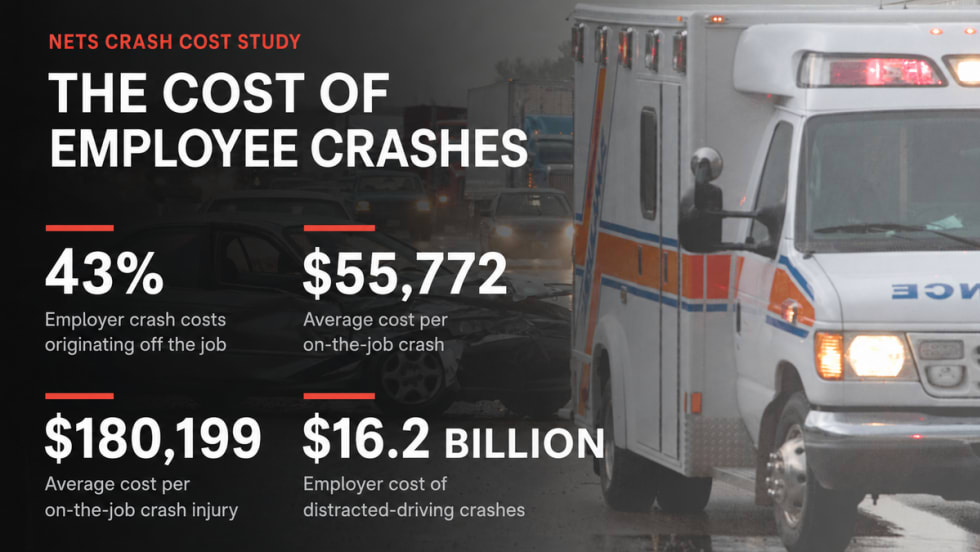
Off-the-Job Crashes Account for 43% of Employers’ $61.7 Billion Crash Burden
NETS quantifies costs dispersed across fleet, risk, HR, and other departments while providing new per-crash benchmarks for employers.
Read More →
Ram Recalls More Than 1.27 Million 1500 Pickups for Seat Belt Anchor Issue
The recall affects certain 2019-2026 Ram 1500 pickups that may have improperly attached second-row seat belt buckle anchors.
Read More →
How Better Visibility Cut Speeding Violations by 48%
Fleet leaders don't need more data, they need clearer visibility into what the data is saying. This case study explores how one utility replaced speeding-event counts with a single metric — miles driven in violation — to strengthen safety and significantly reduce speeding violations.
Read More →
Operation Safe Driver Week: Why the Industry's Oldest Safety Campaign Still Matters to Fleets
A look at how a 2007 enforcement initiative became one of the most consequential weeks on the fleet safety calendar, and what it means for your drivers in 2026.
Read More →