




New Report Grades States on Legislative Action to Make Highways Safer
Advocates for Highway and Auto Safety on Jan. 15 released the group's 10th annual "roadmap" report, grading all 50 states and the District of Columbia on their action – or lack thereof – on 15 basic highway safety laws.
Advocates for Highway and Auto Safety on Jan. 15 released the group's 10th annual "roadmap" report, grading all 50 states and the District of Columbia on their action – or lack thereof – on 15 basic highway safety laws.
In the report, titled “The 2013 Roadmap of State Highway Safety Laws,” the safety advocacy group asserts that adoption of these 15 state laws is “essential to save lives, prevent injuries, and reduce health care and other costs.” To learn about your state's status on each of the 15 laws cited by the group, click here.
In 2011, more than 32,000 people were killed and an estimated 2.2 million were injured in motor vehicle crashes in the U.S.
“In this year’s report we call on elected leaders in all states to make adoption of these 15 basic laws a top public health and safety priority during the 2013 legislative session,” said Jacqueline S. Gillan, president of Advocates for Highway and Auto Safety, in the report’s opening.
This year’s report also focuses on new incentive grant programs created in July 2012 under the Moving Ahead for Progress in the 21st Century Act. The programs are aimed at encouraging state enactment of teen driver licensing laws, all-offender ignition interlock laws, distracted driving laws and occupant protection efforts.
In the view of Advocates for Highway and Auto Safety, state adoption of the following 15 laws is essential in the fight to make U.S. roads safer:
Adult Occupant Protection
Primary Enforcement Seat Belt Law -- Allows law enforcement officers to stop and ticket the driver when they see a violation of the seat belt law for front seat occupants.
All-Rider Motorcycle Helmet Law -- Requires all motorcycle riders, regardless of age, to use a helmet that meets U.S. DOT standards or face a fine.
Child Passenger Safety
Booster Seat Law -- Requires, at a minimum, that children ages four through seven be placed in a child restraint system (booster seat) that is certified to meet U.S. DOT safety standards.
Teen Driving/ Graduated Licensing Programs
Learner’s Stage: Minimum Age 16 for Learner’s Permit -- A beginning teen driver is prohibited from obtaining a learner’s permit until the age of 16.
Learner’s Stage: Six-Month Holding Period Provision -- A beginning teen driver must be supervised by an adult licensed driver at all times during the learner’s stage. If the learner remains citation-free for six months, he or she may progress to the intermediate stage.
Learner’s Stage: 30-50 Hours of Supervised Driving Provision -- A beginning teen driver must receive at least 30-50 hours of behind-the-wheel training with an adult licensed driver during the learner’s stage.
Intermediate Stage: Nighttime Driving Restriction Provision -- Unsupervised driving is prohibited from at least 10 p.m. to 5 a.m.
Intermediate Stage: Passenger Restriction Provision -- This provision limits the number of teenage passengers who may legally ride with a teen driver without adult supervision. The optimal limit is no more than one non-familial teenage passenger.
Cell Phone Restriction -- This restriction prohibits all use of cellular devices (hand-held, hands-free and text messaging) by beginning teen drivers, except in the case of an emergency.
Age 18 for Unrestricted License -- A teen driver is prohibited from obtaining an unrestricted license until the age of 18, and one or both of the nighttime and passenger restrictions must last until age 18.
Impaired Driving
Ignition Interlock Devices (IIDs) -- This law mandates the installation of IIDs on the vehicles of any convicted drunk driving offenders.
Child Endangerment -- This law enhances an existing penalty for an impaired driving offender who endangers a minor.
Mandatory BAC Testing for Killed and Surviving Drivers -- These statutes require the blood alcohol content (BAC) testing of the driver of a vehicle involved in a fatal crash regardless of whether the driver survived the crash or was killed in the crash.
Open Container -- This law prohibits open containers of alcohol in the passenger area of a motor vehicle. To comply with federal requirements, the law must prohibit both possession of any open alcoholic beverage container and the consumption of alcohol from an open container; apply to the entire passenger area of any motor vehicle; apply to all vehicle occupants except for passengers of buses, taxi cabs, limousines or persons in the living quarters of motor homes; apply to vehicles on the shoulder of public highways; and require primary enforcement of the law.
Distracted Driving
All-Driver Text Messaging Restriction -- This law prohibits all drivers from sending, receiving or reading a text message from any handheld or electronic data communication device, except in the case of an emergency.
To access the full report and learn how your state fared, click here.
More Safety

Nexar-Nauto Merger Aims to Give Fleets Better Safety Intelligence Through Larger Driving Dataset
Stefan Heck tells Automotive Fleet that combining more than 10 billion miles of driving history with Nexar's AI models will give fleets deeper insights into driver risk and roadway conditions than either company could provide independently.
Read More →
Don't Wait for a Crisis: 5 Ways to Build Mental Health Into Your Fleet Safety Program
For Suicide Prevention Month, fleet and safety leaders have an opportunity to put mental health where it belongs: at the center of workplace safety.
Read More →
How Camera Data Can Strengthen a Fleet’s Insurance Renewal
Insights from a commercial insurance carrier and a broker show how fleets can turn video telematic data, driver coaching, and improved claims results into a stronger case at insurance renewal.
Read More →
The Safest Fleets Aren’t the Ones with the Most Technology
You’ve made the telematics investment. Here’s how to capture the other half of its value and build the safest fleet on the road.
Read More →
Hidden in Plain Sight: Fleet Compliance Risks
Fleet compliance isn't just about having policies — it's about consistently enforcing them. This practical guide reveals six hidden compliance risks common in public sector and shared fleet operations and outlines proven strategies to improve visibility, accountability, and audit readiness
Read More →
NETS Sets 2026 Fleet Safety Benchmark Conference for Indianapolis
The Sept. 15–17 program will feature fleet benchmarking data, case studies, emerging technologies, and implementation strategies while running alongside the NSC Safety Congress & Expo.
Read More →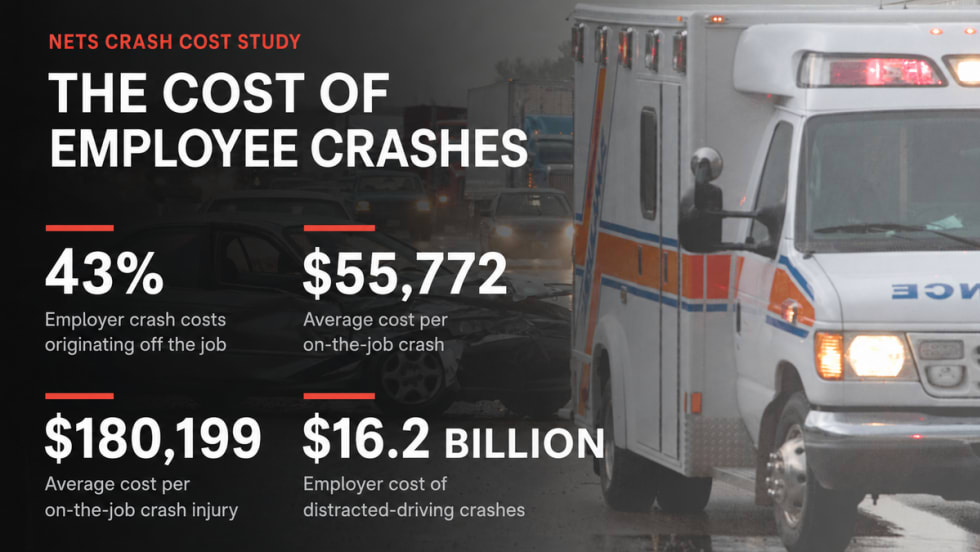
Off-the-Job Crashes Account for 43% of Employers’ $61.7 Billion Crash Burden
NETS quantifies costs dispersed across fleet, risk, HR, and other departments while providing new per-crash benchmarks for employers.
Read More →
Ram Recalls More Than 1.27 Million 1500 Pickups for Seat Belt Anchor Issue
The recall affects certain 2019-2026 Ram 1500 pickups that may have improperly attached second-row seat belt buckle anchors.
Read More →
How Better Visibility Cut Speeding Violations by 48%
Fleet leaders don't need more data, they need clearer visibility into what the data is saying. This case study explores how one utility replaced speeding-event counts with a single metric — miles driven in violation — to strengthen safety and significantly reduce speeding violations.
Read More →
Operation Safe Driver Week: Why the Industry's Oldest Safety Campaign Still Matters to Fleets
A look at how a 2007 enforcement initiative became one of the most consequential weeks on the fleet safety calendar, and what it means for your drivers in 2026.
Read More →