




New Jersey DOT Adds Travel-Time Signage for Highways
These permanently installed signs will also alert motorists of highway incidents and provide information such as temporary road or lane closures.
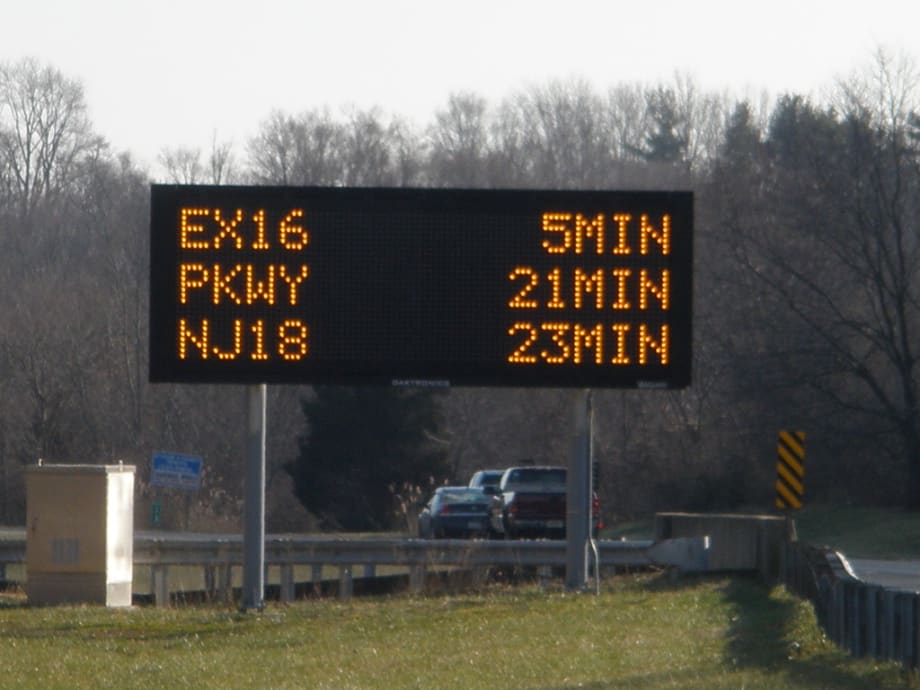
New Jersey travel-time DMS units
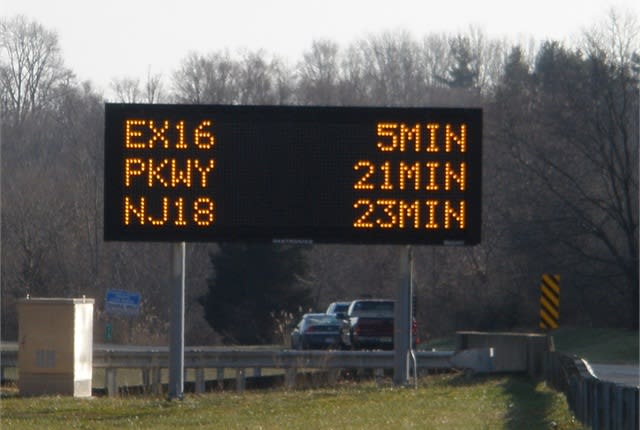
New Jersey travel-time DMS units
The New Jersey Department of Transportation this month introduced travel-time messages displayed on dynamic message signs (DMS) along interstate highways. The initiative capitalizes on state investments in intelligent transportation systems (ITS) technology, the state’s DOT said.
“This initiative alerts motorists to traffic conditions miles down the road, equipping them with information they can use to make decisions about possibly altering the route to their destination,” New Jersey DOT Commissioner James Simpson said. “At the very least, trip-time information confirms that traffic is flowing well or warns motorists about congestion ahead and helps them approach in a safe manner.”
The Department has completed the testing phase on 15 DMS units on I-287 and I-195. The signs display major waypoints, such as intersecting highways or significant roadway features, and indicate how many minutes it will take to reach that waypoint.
By Memorial Day, the Department expects to provide similar information to motorists on I-78, I-80, I-280, I-295 and on a segment of I-95 in Mercer County. About 50 DMS units will provide trip-time information. The plan is to initially provide trip times only during the morning and afternoon peak periods.
Trip-time information is continuously re-calculated for accuracy based on information gathered automatically by vehicle progress data gathered by roadside devices or by GPS devices that owners choose to be probed.
The travel times displayed on DMS units reflect the experience of motorists who have recently completed travel along a specific highway segment. Traffic conditions and travel times can change quickly, however – a fact that motorists need to keep in mind.
These permanently installed signs will also alert motorists of highway incidents and provide information such as temporary road or lane closures. The New Jersey DOT said it will maintain the flexibility to post such information at any time.
The Department is increasingly turning to technology to help maximize the operational capacity of New Jersey’s heavily traveled roadways. Travel-time information is an example of that focus, Simpson said, because when motorists know about current traffic conditions and avoid pockets of congestion, everyone on the road benefits.
The travel-time messages supplement traffic information available on a variety of platforms, including www.511nj.org, broadcast traffic reports and personalized text alerts available for free at 511nj.org.
More Safety

Nexar-Nauto Merger Aims to Give Fleets Better Safety Intelligence Through Larger Driving Dataset
Stefan Heck tells Automotive Fleet that combining more than 10 billion miles of driving history with Nexar's AI models will give fleets deeper insights into driver risk and roadway conditions than either company could provide independently.
Read More →
Don't Wait for a Crisis: 5 Ways to Build Mental Health Into Your Fleet Safety Program
For Suicide Prevention Month, fleet and safety leaders have an opportunity to put mental health where it belongs: at the center of workplace safety.
Read More →
How Camera Data Can Strengthen a Fleet’s Insurance Renewal
Insights from a commercial insurance carrier and a broker show how fleets can turn video telematic data, driver coaching, and improved claims results into a stronger case at insurance renewal.
Read More →
The Safest Fleets Aren’t the Ones with the Most Technology
You’ve made the telematics investment. Here’s how to capture the other half of its value and build the safest fleet on the road.
Read More →
Hidden in Plain Sight: Fleet Compliance Risks
Fleet compliance isn't just about having policies — it's about consistently enforcing them. This practical guide reveals six hidden compliance risks common in public sector and shared fleet operations and outlines proven strategies to improve visibility, accountability, and audit readiness
Read More →
NETS Sets 2026 Fleet Safety Benchmark Conference for Indianapolis
The Sept. 15–17 program will feature fleet benchmarking data, case studies, emerging technologies, and implementation strategies while running alongside the NSC Safety Congress & Expo.
Read More →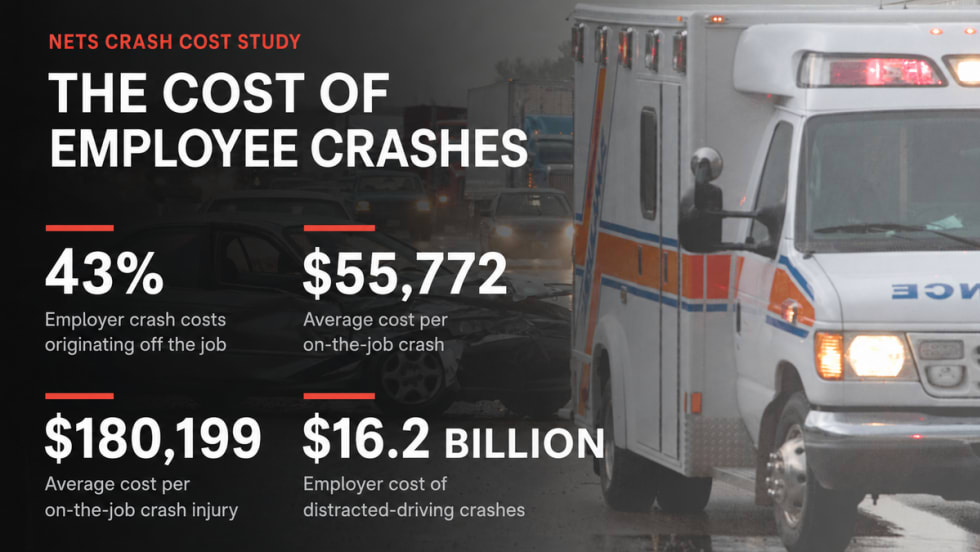
Off-the-Job Crashes Account for 43% of Employers’ $61.7 Billion Crash Burden
NETS quantifies costs dispersed across fleet, risk, HR, and other departments while providing new per-crash benchmarks for employers.
Read More →
Ram Recalls More Than 1.27 Million 1500 Pickups for Seat Belt Anchor Issue
The recall affects certain 2019-2026 Ram 1500 pickups that may have improperly attached second-row seat belt buckle anchors.
Read More →
How Better Visibility Cut Speeding Violations by 48%
Fleet leaders don't need more data, they need clearer visibility into what the data is saying. This case study explores how one utility replaced speeding-event counts with a single metric — miles driven in violation — to strengthen safety and significantly reduce speeding violations.
Read More →
Operation Safe Driver Week: Why the Industry's Oldest Safety Campaign Still Matters to Fleets
A look at how a 2007 enforcement initiative became one of the most consequential weeks on the fleet safety calendar, and what it means for your drivers in 2026.
Read More →