




New Cruise Control System With Active Braking Introduced
ORLANDO, Fla. --- Meritor WABCO Vehicle Control Systems has introduced OnGuard, a radar-based adaptive cruise control system with active braking for commercial vehicles in North America.
ORLANDO, Fla. --- Meritor WABCO Vehicle Control Systems has introduced OnGuard, a radar-based adaptive cruise control system with active braking for commercial vehicles in North America.
OnGuard, a technology designed to further improve commercial vehicle safety, is now installed on nearly 200 vehicles and is targeted for third quarter 2008 availability as a factory-installed option at several OEM brands.
Active braking improves vehicle safety by automatically using the vehicle foundation brakes to alert the driver and decelerate the vehicle when a pre-set vehicle following distance is compromised.
"As part of our ongoing efforts to improve vehicle safety for highways, drivers and fleets, OnGuard was designed to equip drivers with automated features that help ensure safe following distances and provide active braking as needed," said Jon Morrison, president and general manager of Meritor WABCO Vehicle Control Systems. "The driver is still the most important element in maintaining vehicle safety. However, the system can provide the additional split-second deceleration needed to maintain control of the vehicle in an emergency situation."
Automatic foundation brake intervention distinguishes OnGuard from existing passive collision warning systems, which can only alert the driver to a potentially dangerous situation through alarm and engine braking. With this new product on the truck, if the pre-determined "safe" distance is compromised, OnGuard will provide visual and audible warning to the driver, vehicle deceleration through engine control, retarder control and most importantly, noticeable foundation braking. Foundation brake deceleration can be as great as one-third of a full brake application for the vehicle but within safe limits for the driver to take control.
Moreover, OnGuard fully integrates with the joint venture's anti-lock braking and stability control systems. Morrison added that this allows the customer to build a pyramid of safety for the vehicle with stability control and collision safety system via a single brake ABS ECU versus having additional "add-on" systems.
According to the U.S. National Highway Transportation Safety Administration, rear-end collisions account for over 20 percent of all heavy-truck crashes. The truck is the striking vehicle in 60 percent of those accidents. Inattention or poor decisions (e.g. driving too fast for the conditions or following too closely) is the primary factor in 66 percent of the collisions where fault is assigned to the truck driver.
OnGuard's mono-pulse radar sensor can detect multiple moving and fixed objects at distances up to 500 feet away. It quickly and reliably coordinates responses from the engine, transmission and anti-lock braking systems through communications across the SAE J1939 data network. It provides feedback to the driver through the in-cab dash display, which includes a progressive audible alert.
This sequence of monitoring, warning and intervention is an important part of Meritor WABCO's strategy to reduce false alarms. OnGuard uses a proprietary time-to-collision algorithm, unlike the simple two-second headway alarms used by today's passive braking systems. Driver feedback from field tests covering over 10 million fleet miles over a two-year period showed significantly better performance, reliability and driver confidence in OnGuard compared to collision warning systems currently available in North America, Meritor WABCO Vehicle Control Systems said.
More Safety

Nexar-Nauto Merger Aims to Give Fleets Better Safety Intelligence Through Larger Driving Dataset
Stefan Heck tells Automotive Fleet that combining more than 10 billion miles of driving history with Nexar's AI models will give fleets deeper insights into driver risk and roadway conditions than either company could provide independently.
Read More →
Don't Wait for a Crisis: 5 Ways to Build Mental Health Into Your Fleet Safety Program
For Suicide Prevention Month, fleet and safety leaders have an opportunity to put mental health where it belongs: at the center of workplace safety.
Read More →
How Camera Data Can Strengthen a Fleet’s Insurance Renewal
Insights from a commercial insurance carrier and a broker show how fleets can turn video telematic data, driver coaching, and improved claims results into a stronger case at insurance renewal.
Read More →
The Safest Fleets Aren’t the Ones with the Most Technology
You’ve made the telematics investment. Here’s how to capture the other half of its value and build the safest fleet on the road.
Read More →
Hidden in Plain Sight: Fleet Compliance Risks
Fleet compliance isn't just about having policies — it's about consistently enforcing them. This practical guide reveals six hidden compliance risks common in public sector and shared fleet operations and outlines proven strategies to improve visibility, accountability, and audit readiness
Read More →
NETS Sets 2026 Fleet Safety Benchmark Conference for Indianapolis
The Sept. 15–17 program will feature fleet benchmarking data, case studies, emerging technologies, and implementation strategies while running alongside the NSC Safety Congress & Expo.
Read More →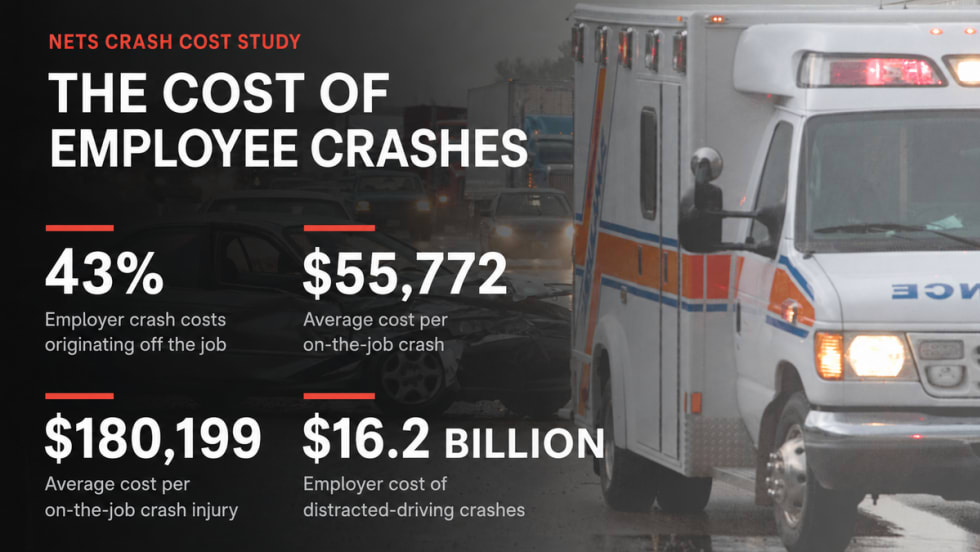
Off-the-Job Crashes Account for 43% of Employers’ $61.7 Billion Crash Burden
NETS quantifies costs dispersed across fleet, risk, HR, and other departments while providing new per-crash benchmarks for employers.
Read More →
Ram Recalls More Than 1.27 Million 1500 Pickups for Seat Belt Anchor Issue
The recall affects certain 2019-2026 Ram 1500 pickups that may have improperly attached second-row seat belt buckle anchors.
Read More →
How Better Visibility Cut Speeding Violations by 48%
Fleet leaders don't need more data, they need clearer visibility into what the data is saying. This case study explores how one utility replaced speeding-event counts with a single metric — miles driven in violation — to strengthen safety and significantly reduce speeding violations.
Read More →
Operation Safe Driver Week: Why the Industry's Oldest Safety Campaign Still Matters to Fleets
A look at how a 2007 enforcement initiative became one of the most consequential weeks on the fleet safety calendar, and what it means for your drivers in 2026.
Read More →