




NETS Releases Online Toolkit for Fleet Drivers
The traffic safety group is helping employers gear up for a Drive Safely Work Week campaign that stresses the importance of planning ahead.
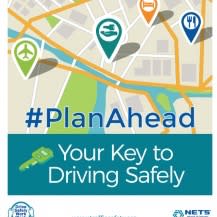
Graphic courtesy of NETS.
Graphic courtesy of NETS.
The Network of Employers for Traffic Safety (NETS) has launched a free online toolkit to help employers prepare for Drive Safely Work Week (DSWW), the October workplace campaign that seeks to improve the safety of employees, employee family members and their communities.
You can download the toolkit by clicking here.
The campaign theme this year is “#PlanAhead — Your Key to Driving Safely.” Campaign materials underscore that planning may be the most critical leg of any driving trip, whether the trip takes place on the job or off.
“Planning is critical to safe driving from many different perspectives,” said Joe McKillips, chairperson of NETS and director of commercial environment, health and safety for healthcare company Abbott. “It can be as simple as planning the best route. Other times, it can mean planning for a designated driver, setting aside time with your teen driver to practice, or talking to an older family member about the possibility of limiting their driving. These considerations and more are covered in this year’s campaign materials.”
The campaign was developed using the expertise of NETS’ member companies, collectively representing a fleet of more than half a million vehicles that travel in excess of 11 billion miles globally each year.
“Actionable steps are provided to help drivers be at their best behind the wheel,” the group said.
These steps include:
Remember to take time to plan the journey – even those that feel routine.
Prepare for driving situations that take you into unfamiliar areas.
Take precautions to ensure you’re driving with a clear head.
Learn to navigate the changes we all experience as we age and how they may affect driving.
Think through ways to plan ahead for driving situations that involve family members.
The free DSWW toolkit provides Web-based resources, including facts and tips, downloadable graphics, and activities tailored for each day of the campaign week. The toolkit also includes materials geared toward management to encourage the review of safe driving policies and guidelines. There’s also information about integrating road safety into existing wellness programs.
Drive Safely Work Week is an initiative of NETS and its member companies. Board member companies include Abbott, AmeriFleet Transportation, Chubb Group of Insurance Companies, The Coca-Cola Co., Hess Corp., Johnson & Johnson, Liberty Mutual Insurance Group, Monsanto Co., Nationwide Mutual Insurance Group, Shell International Petroleum Co. and UPS.
In addition, the National Highway Traffic Safety Administration and the National Institute for Occupational Safety and Health serve as federal liaisons to the board of directors.
NETS is a member of the United Nations Road Safety Collaboration, which provides guidance to the Decade of Action for Road Safety 2011-2020 global initiative.
For more information on NETS, visit www.trafficsafety.org or contact jhanley@trafficsafety.org.
More Safety

Nexar-Nauto Merger Aims to Give Fleets Better Safety Intelligence Through Larger Driving Dataset
Stefan Heck tells Automotive Fleet that combining more than 10 billion miles of driving history with Nexar's AI models will give fleets deeper insights into driver risk and roadway conditions than either company could provide independently.
Read More →
Don't Wait for a Crisis: 5 Ways to Build Mental Health Into Your Fleet Safety Program
For Suicide Prevention Month, fleet and safety leaders have an opportunity to put mental health where it belongs: at the center of workplace safety.
Read More →
How Camera Data Can Strengthen a Fleet’s Insurance Renewal
Insights from a commercial insurance carrier and a broker show how fleets can turn video telematic data, driver coaching, and improved claims results into a stronger case at insurance renewal.
Read More →
The Safest Fleets Aren’t the Ones with the Most Technology
You’ve made the telematics investment. Here’s how to capture the other half of its value and build the safest fleet on the road.
Read More →
Hidden in Plain Sight: Fleet Compliance Risks
Fleet compliance isn't just about having policies — it's about consistently enforcing them. This practical guide reveals six hidden compliance risks common in public sector and shared fleet operations and outlines proven strategies to improve visibility, accountability, and audit readiness
Read More →
NETS Sets 2026 Fleet Safety Benchmark Conference for Indianapolis
The Sept. 15–17 program will feature fleet benchmarking data, case studies, emerging technologies, and implementation strategies while running alongside the NSC Safety Congress & Expo.
Read More →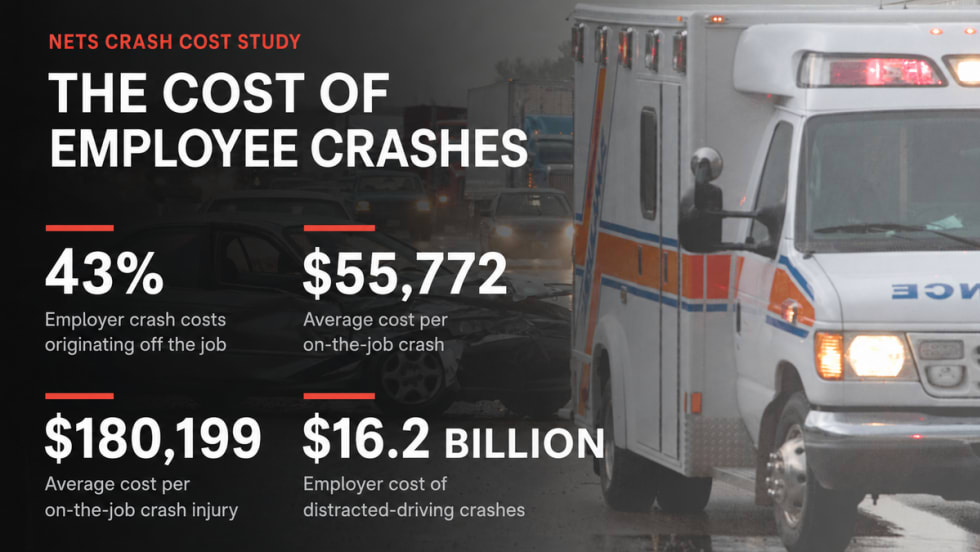
Off-the-Job Crashes Account for 43% of Employers’ $61.7 Billion Crash Burden
NETS quantifies costs dispersed across fleet, risk, HR, and other departments while providing new per-crash benchmarks for employers.
Read More →
Ram Recalls More Than 1.27 Million 1500 Pickups for Seat Belt Anchor Issue
The recall affects certain 2019-2026 Ram 1500 pickups that may have improperly attached second-row seat belt buckle anchors.
Read More →
How Better Visibility Cut Speeding Violations by 48%
Fleet leaders don't need more data, they need clearer visibility into what the data is saying. This case study explores how one utility replaced speeding-event counts with a single metric — miles driven in violation — to strengthen safety and significantly reduce speeding violations.
Read More →
Operation Safe Driver Week: Why the Industry's Oldest Safety Campaign Still Matters to Fleets
A look at how a 2007 enforcement initiative became one of the most consequential weeks on the fleet safety calendar, and what it means for your drivers in 2026.
Read More →