




Nearly 80% of Motorists Express Anger on the Road
A new AAA study raises concerns about drivers’ willingness to retaliate after another driver has agitated them.

The survey found that nearly two in three drivers believe that aggressive driving is a bigger problem today than three years ago. Photo courtesy of AAA Foundation for Traffic Safety.

The survey found that nearly two in three drivers believe that aggressive driving is a bigger problem today than three years ago. Photo courtesy of AAA Foundation for Traffic Safety.
Nearly 80% of drivers expressed significant anger, aggression, or road rage behind the wheel at least once in the past year, according to a new study released by the AAA Foundation for Traffic Safety.
The most alarming findings suggest that approximately 8 million U.S. drivers engaged in extreme examples of road rage, including purposefully ramming another vehicle or getting out of the car to confront another driver.
“Inconsiderate driving, bad traffic, and the daily stresses of life can transform minor frustrations into dangerous road rage,” said Jurek Grabowski, director of research for the AAA Foundation for Traffic Safety. “Far too many drivers are losing themselves in the heat of the moment and lashing out in ways that could turn deadly.”
A significant number of U.S. drivers reported engaging in angry and aggressive behaviors over the past year, according to the study’s estimates:
Purposefully tailgating: 51% (104 million drivers)
Yelling at another driver: 47% (95 million drivers)
Honking to show annoyance or anger: 45% (91 million drivers)
Making angry gestures: 33% (67 million drivers)
Trying to block another vehicle from changing lanes: 24% (49 million drivers)
Cutting off another vehicle on purpose: 12% (24 million drivers)
Getting out of the vehicle to confront another driver: 4% (7.6 million drivers)
Bumping or ramming another vehicle on purpose: 3% (5.7 million drivers).
The study found that nearly two in three drivers believe that aggressive driving is a bigger problem today than three years ago. Nine out of 10 believe aggressive drivers are a serious threat to their personal safety.
Aggressive driving and road rage varied considerably among drivers:
Male and younger drivers ages 19-39 were significantly more likely to engage in aggressive behaviors. For example, male drivers were more than three times as likely as female drivers to have gotten out of a vehicle to confront another driver or rammed another vehicle on purpose.
Drivers living in the Northeast were significantly more likely to yell, honk, or gesture angrily than people living in other parts of the country. For example, drivers in the Northeast were nearly 30% more likely to have made an angry gesture than drivers in other parts of the country.
Drivers who reported other unsafe behaviors behind the wheel, such as speeding and running red lights, also were more likely to show aggression. For example, drivers who reported speeding on a freeway in the past month were four times more likely to have cut off another vehicle on purpose.
“It’s completely normal for drivers to experience anger behind the wheel, but we must not let our emotions lead to destructive choices,” said Jake Nelson, AAA’s director of traffic safety advocacy and research. “Don’t risk escalating a frustrating situation because you never know what the other driver might do. Maintain a cool head, and focus on reaching your destination safely.”
Researchers analyzed data from a nationally representative online survey in 2014. A total of 2,705 licensed drivers responded to the survey.
AAA offers these tips to help prevent road rage:
Don’t Offend: Never cause another driver to change speed or direction. That means not forcing another driver to use brakes, or turn the steering wheel in response to something you have done.
Be Tolerant and Forgiving: The other driver may just be having a really bad day. Assume that it’s not personal.
Do Not Respond: Avoid eye contact, don’t make gestures, maintain space around your vehicle, and contact 9-1-1 if needed.
To download the full study, click here.
More Safety

Nexar-Nauto Merger Aims to Give Fleets Better Safety Intelligence Through Larger Driving Dataset
Stefan Heck tells Automotive Fleet that combining more than 10 billion miles of driving history with Nexar's AI models will give fleets deeper insights into driver risk and roadway conditions than either company could provide independently.
Read More →
Don't Wait for a Crisis: 5 Ways to Build Mental Health Into Your Fleet Safety Program
For Suicide Prevention Month, fleet and safety leaders have an opportunity to put mental health where it belongs: at the center of workplace safety.
Read More →
How Camera Data Can Strengthen a Fleet’s Insurance Renewal
Insights from a commercial insurance carrier and a broker show how fleets can turn video telematic data, driver coaching, and improved claims results into a stronger case at insurance renewal.
Read More →
The Safest Fleets Aren’t the Ones with the Most Technology
You’ve made the telematics investment. Here’s how to capture the other half of its value and build the safest fleet on the road.
Read More →
Hidden in Plain Sight: Fleet Compliance Risks
Fleet compliance isn't just about having policies — it's about consistently enforcing them. This practical guide reveals six hidden compliance risks common in public sector and shared fleet operations and outlines proven strategies to improve visibility, accountability, and audit readiness
Read More →
NETS Sets 2026 Fleet Safety Benchmark Conference for Indianapolis
The Sept. 15–17 program will feature fleet benchmarking data, case studies, emerging technologies, and implementation strategies while running alongside the NSC Safety Congress & Expo.
Read More →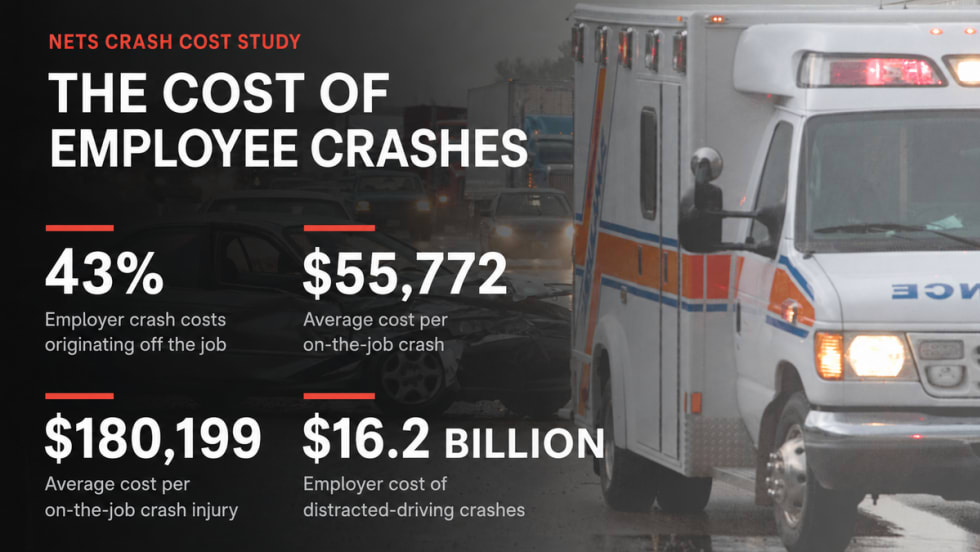
Off-the-Job Crashes Account for 43% of Employers’ $61.7 Billion Crash Burden
NETS quantifies costs dispersed across fleet, risk, HR, and other departments while providing new per-crash benchmarks for employers.
Read More →
Ram Recalls More Than 1.27 Million 1500 Pickups for Seat Belt Anchor Issue
The recall affects certain 2019-2026 Ram 1500 pickups that may have improperly attached second-row seat belt buckle anchors.
Read More →
How Better Visibility Cut Speeding Violations by 48%
Fleet leaders don't need more data, they need clearer visibility into what the data is saying. This case study explores how one utility replaced speeding-event counts with a single metric — miles driven in violation — to strengthen safety and significantly reduce speeding violations.
Read More →
Operation Safe Driver Week: Why the Industry's Oldest Safety Campaign Still Matters to Fleets
A look at how a 2007 enforcement initiative became one of the most consequential weeks on the fleet safety calendar, and what it means for your drivers in 2026.
Read More →