




National Safety Council Calls for Ban on Behind-the-Wheel Phone Use
ITASCA, IL --- The National Safety Council has launched a new campaign aimed at ending driver use of cell phones and texting devices.
ITASCA, IL --- The National Safety Council has launched a new campaign aimed at ending driver use of cell phones and texting devices.
The group is also urging businesses to enact policies prohibiting the practice, and urging governors and legislators in all 50 states and the District of Columbia to pass laws banning the behavior.
"Studies show that driving while talking on a cell phone is extremely dangerous and puts drivers at a four times greater risk of a crash," said Janet Froetscher, president and CEO of the NSC. "Driving drunk is also dangerous and against the law. When our friends have been drinking, we take the car keys away. It's time to take the cell phone away."
A study from the Harvard Center of Risk Analysis estimates that cell phone use while driving contributes to 6 percent of crashes, which equates to 636,000 crashes, 330,000 injuries, 12,000 serious injuries and 2,600 deaths each year. The study also put the annual financial toll of cell phone-related crashes at $43 billion.
Talking on a cell phone may be less distracting than some other activities people may engage in while driving, but the use of cell phones and texting devices is much more pervasive, making it more dangerous overall, Froetscher said. The NSC also points to studies from researchers at the University of Utah that show that hands-free devices do not make cell phone calls while driving safe. Another study demonstrates that talking to passengers, as opposed to talking on a cell phone, actually makes adult drivers safer, because passengers help alert drivers to potential driving risks.
"When you're on a call, even if both hands are on the wheel, your head is in the call, and not on your driving," Froetscher said. "Unlike the passenger sitting next to you, the person on the other end of the call is oblivious to your driving conditions. The passenger provides another pair of eyes on the road."
A significant amount of vehicular cell phone use is done on the job. Many businesses have already acknowledged the injuries and costs associated with this behavior by adopting policies that ban cell phone use by employees on the roads, the NSC said. Among NSC member businesses that responded to a survey, 45 percent said they have company policies prohibiting on-road cell phone use. Of those, 85 percent said the policies make no difference in business productivity.
"Anyone with a busy job knows the temptation to multi-task and stay in touch with the office while driving," Froetscher said. "Believe me, I've been there. I didn't realize how much risk I was taking. Most people don't. Employers understand how dangerous the behavior is and their potential liability. We are asking all businesses to join us by adopting policies banning calling and texting while driving on the job."
Froetscher is sending letters to all governors and state legislative leaders, encouraging them to adopt statewide bans. She acknowledged that achieving and enforcing bans in all states will be a challenge, but she said the NSC has successfully faced similar challenges in the past, such as seatbelt enforcement.
"It may be hard for some people to imagine how certain laws, such as those concerning drunk driving, teen driving, seatbelt use and booster seats, can be enforced by observation alone," Froetscher said. "Smart people in law enforcement get together to address such issues. They develop creative and successful measures to identify violators, such as high-visibility enforcement strategies."
The NSC said it will take a three-fold approach to promoting change: advocating legislation, educating the public and businesses about the risk of cell phone use while driving, and supplementing distracted driving content in its training of 1.5 million people annually in defensive driving.
"The change we are looking for, to stop cell phone use while driving, won't happen overnight. There will be a day, however, when we look back and wonder how we could have been so reckless with our cell phones and texting devices," Froetscher said.
More Safety

Nexar-Nauto Merger Aims to Give Fleets Better Safety Intelligence Through Larger Driving Dataset
Stefan Heck tells Automotive Fleet that combining more than 10 billion miles of driving history with Nexar's AI models will give fleets deeper insights into driver risk and roadway conditions than either company could provide independently.
Read More →
Don't Wait for a Crisis: 5 Ways to Build Mental Health Into Your Fleet Safety Program
For Suicide Prevention Month, fleet and safety leaders have an opportunity to put mental health where it belongs: at the center of workplace safety.
Read More →
How Camera Data Can Strengthen a Fleet’s Insurance Renewal
Insights from a commercial insurance carrier and a broker show how fleets can turn video telematic data, driver coaching, and improved claims results into a stronger case at insurance renewal.
Read More →
The Safest Fleets Aren’t the Ones with the Most Technology
You’ve made the telematics investment. Here’s how to capture the other half of its value and build the safest fleet on the road.
Read More →
Hidden in Plain Sight: Fleet Compliance Risks
Fleet compliance isn't just about having policies — it's about consistently enforcing them. This practical guide reveals six hidden compliance risks common in public sector and shared fleet operations and outlines proven strategies to improve visibility, accountability, and audit readiness
Read More →
NETS Sets 2026 Fleet Safety Benchmark Conference for Indianapolis
The Sept. 15–17 program will feature fleet benchmarking data, case studies, emerging technologies, and implementation strategies while running alongside the NSC Safety Congress & Expo.
Read More →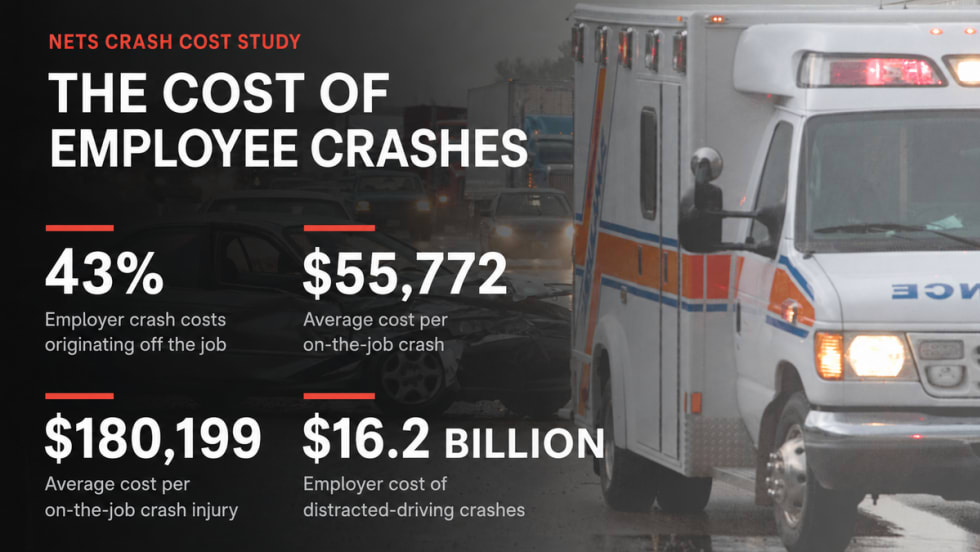
Off-the-Job Crashes Account for 43% of Employers’ $61.7 Billion Crash Burden
NETS quantifies costs dispersed across fleet, risk, HR, and other departments while providing new per-crash benchmarks for employers.
Read More →
Ram Recalls More Than 1.27 Million 1500 Pickups for Seat Belt Anchor Issue
The recall affects certain 2019-2026 Ram 1500 pickups that may have improperly attached second-row seat belt buckle anchors.
Read More →
How Better Visibility Cut Speeding Violations by 48%
Fleet leaders don't need more data, they need clearer visibility into what the data is saying. This case study explores how one utility replaced speeding-event counts with a single metric — miles driven in violation — to strengthen safety and significantly reduce speeding violations.
Read More →
Operation Safe Driver Week: Why the Industry's Oldest Safety Campaign Still Matters to Fleets
A look at how a 2007 enforcement initiative became one of the most consequential weeks on the fleet safety calendar, and what it means for your drivers in 2026.
Read More →