




National Insurance Crime Bureau Bolsters Efforts to ID Stolen Vehicles
DES PLAINES, IL --- Through formal information exchange agreements with three private companies, the National Insurance Crime Bureau has boosted efforts to detect and identify stolen vehicles.
DES PLAINES, IL --- Through formal information exchange agreements with three private companies, the National Insurance Crime Bureau has boosted efforts to detect and identify stolen vehicles.
As of July 31, 2008, the data sharing effort with CARCO, Experian, and Carfax has identified 200 stolen vehicles with a combined value of $3,419,623.
CARCO, Experian Automotive and Carfax each have worked with NICB to identify suspect vehicle identification numbers (VINs) of several thousand vehicles that they process within their unique business environments.
CARCO performs pre-insurance physical damage vehicle inspections in over 20 states and provides NICB access to vehicle-specific data relating to those inspections. Typically, a CARCO inspection will contain photographs of a vehicle's VIN and federal certificate along with vehicle options, accessories and damage. Over a period of more than 30 years, CARCO has developed multi-tiered automated and manual inspection expertise in recognizing "suspect" VINs -- those appearing to be manipulated or altered -- and will often refer those VINs to NICB for additional investigation. Numerous stolen vehicles have been identified and recovered from CARCO leads.
Recently, acting on information provided by CARCO, NICB identified several domestic and foreign luxury vehicles which had been cloned, re-tagged or were displaying counterfeit VINs. During the recovery of these stolen vehicles, NICB identified and recovered additional stolen vehicles at various locations.
Experian Automotive has been providing data sets to NICB containing VINs which meet specific "indicators" of insurance fraud and/or vehicle theft. Through its AutoCheck vehicle history reports, Experian has the unique ability to query data with those indicators that have been identified by NICB analysts as consistently evident in stolen vehicle trafficking.
In a recent example, NICB analysts asked Experian Automotive to research registration data on a given year make and model vehicles that were suspected of being registered with specific altered VIN patterns. This joint cooperation resulted in the recovery of multiple stolen vehicles in various states.
Carfax provides information to NICB on vehicles identified as potential clones. A clone is a stolen vehicle which carries the same VIN of a legally registered vehicle. Analyzing the nearly six billion vehicle records in its database, Carfax has pioneered efforts to identify various types of vehicle fraud, including VIN cloning, in vehicle history reports.
In one example, Carfax information helped identify a late-model truck that had an active registration in Canada but also had a concurrent registration in Florida. Further investigation by NICB agents determined that the Florida vehicle was stolen and registered with the Canadian VIN using an altered title from the Washington, D.C. Department of Motor Vehicles.
"This kind of cooperative information-sharing arrangement among the acknowledged leaders within the vehicle history and vehicle inspection industries and NICB demonstrates the power of targeted analysis," said Joe Wehrle, president and CEO of NICB. "Vehicle theft schemes continue to evolve and by combining the talent within each of our organizations, we are able to ferret out criminal activity that is increasingly more complex. Staying ahead of the bad guys helps keep insurance costs down for all consumers."
The National Insurance Crime Bureau is a not-for-profit organization dedicated to preventing, detecting and defeating insurance fraud and vehicle theft through information analysis, investigations, training and public awareness.
More Safety

Nexar-Nauto Merger Aims to Give Fleets Better Safety Intelligence Through Larger Driving Dataset
Stefan Heck tells Automotive Fleet that combining more than 10 billion miles of driving history with Nexar's AI models will give fleets deeper insights into driver risk and roadway conditions than either company could provide independently.
Read More →
Don't Wait for a Crisis: 5 Ways to Build Mental Health Into Your Fleet Safety Program
For Suicide Prevention Month, fleet and safety leaders have an opportunity to put mental health where it belongs: at the center of workplace safety.
Read More →
How Camera Data Can Strengthen a Fleet’s Insurance Renewal
Insights from a commercial insurance carrier and a broker show how fleets can turn video telematic data, driver coaching, and improved claims results into a stronger case at insurance renewal.
Read More →
The Safest Fleets Aren’t the Ones with the Most Technology
You’ve made the telematics investment. Here’s how to capture the other half of its value and build the safest fleet on the road.
Read More →
Hidden in Plain Sight: Fleet Compliance Risks
Fleet compliance isn't just about having policies — it's about consistently enforcing them. This practical guide reveals six hidden compliance risks common in public sector and shared fleet operations and outlines proven strategies to improve visibility, accountability, and audit readiness
Read More →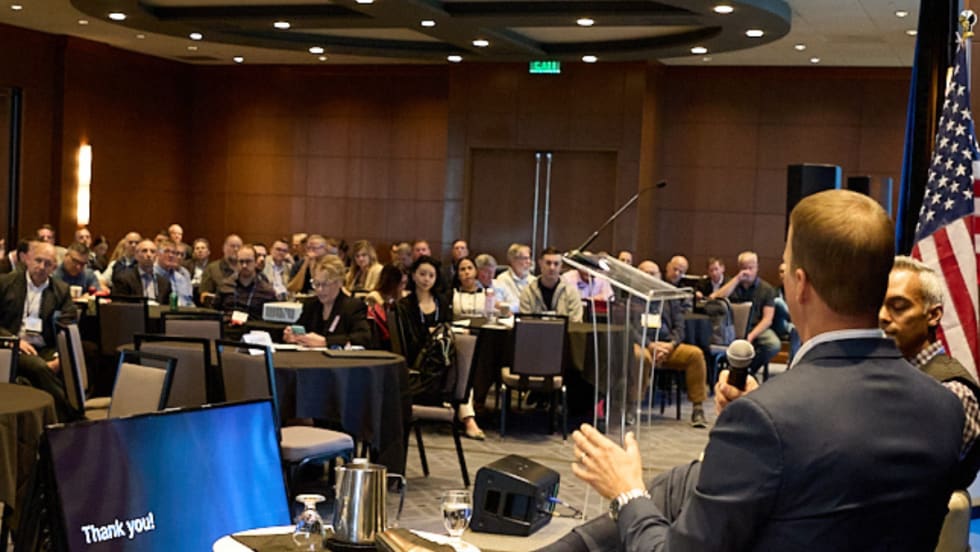
NETS Sets 2026 Fleet Safety Benchmark Conference for Indianapolis
The Sept. 15–17 program will feature fleet benchmarking data, case studies, emerging technologies, and implementation strategies while running alongside the NSC Safety Congress & Expo.
Read More →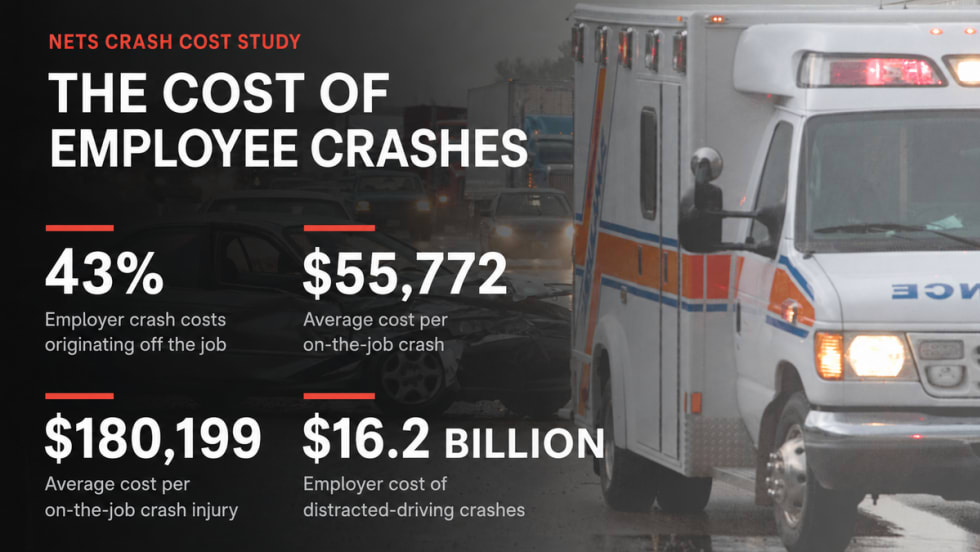
Off-the-Job Crashes Account for 43% of Employers’ $61.7 Billion Crash Burden
NETS quantifies costs dispersed across fleet, risk, HR, and other departments while providing new per-crash benchmarks for employers.
Read More →
Ram Recalls More Than 1.27 Million 1500 Pickups for Seat Belt Anchor Issue
The recall affects certain 2019-2026 Ram 1500 pickups that may have improperly attached second-row seat belt buckle anchors.
Read More →
How Better Visibility Cut Speeding Violations by 48%
Fleet leaders don't need more data, they need clearer visibility into what the data is saying. This case study explores how one utility replaced speeding-event counts with a single metric — miles driven in violation — to strengthen safety and significantly reduce speeding violations.
Read More →
Operation Safe Driver Week: Why the Industry's Oldest Safety Campaign Still Matters to Fleets
A look at how a 2007 enforcement initiative became one of the most consequential weeks on the fleet safety calendar, and what it means for your drivers in 2026.
Read More →