




National Cost of Crashes Reaches $871B
A new study from the National Highway Traffic Administration underscores the high economic toll and societal impact of motor vehicle collisions in the U.S. each year.
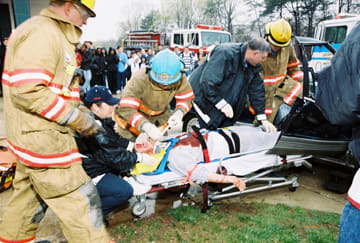
Crash photo courtesy of NHTSA.
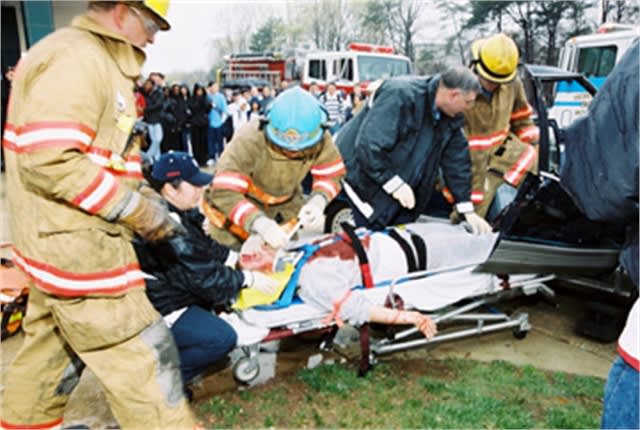
Crash photo courtesy of NHTSA.
The annual price tag for crashes in the U.S. reaches about $871 billion in economic loss and societal harm, according to a new study from the National Highway Traffic Safety Administration. This total includes $277 billion in economic costs – nearly $900 for each person living in the U.S. based on 2010 data — and $594 billion in harm from the loss of life and the pain and diminished quality of life tied to injuries.
NHTSA is an agency within the U.S. Department of Transportation.
"No amount of money can replace the life of a loved one, or stem the suffering associated with motor vehicle crashes," said U.S. Secretary of Transportation Anthony Foxx. "While the economic and societal costs of crashes are staggering, today's report clearly demonstrates that investments in safety are worth every penny used to reduce the frequency and severity of these tragic events."
NHTSA's new study, The Economic and Societal Impact of Motor Vehicle Crashes, 2010, cites several behavioral factors as contributing to the huge cost of roadway crashes. The cost is based on the 32,999 fatalities, 3.9 million non-fatal injuries, and 24 million damaged vehicles that took place in 2010. Key findings include:
Drunk Driving: Crashes caused by drivers under the influence of alcohol accounted for 18 percent of the total economic loss arising from vehicle crashes. These crashes cost the nation $49 billion, an average price tag of $158 for every person in the U.S. Including lost quality of life, these crashes were responsible for $199 billion or 23 percent of the overall societal harm caused by motor vehicle crashes. Over 90 percent of these costs occurred in crashes involving a drunk driver with a blood alcohol concentration (BAC) of .08 or higher.
Speeding: Crashes involving a speeding vehicle traveling over the posted speed limit or too fast for conditions accounted for 21 percent of the total economic loss and cost the nation $59 billion in 2010. That breaks down to an average cost of $191 for every person in the U.S. Including lost quality of life, these crashes were responsible for $210 billion or 24 percent of the overall societal harm caused by motor vehicle crashes.
Distraction: Crashes involving a distracted driver accounted for 17 percent of the total economic loss and cost the nation $46 billion in 2010 -- an average cost of $148 for every person in the U.S. Including lost quality of life, these crashes were responsible for $129 billion or 15 percent of the overall societal harm caused by motor vehicle crashes.
Pedestrians and Bicyclists: Crashes involving pedestrians and bicyclists accounted for 7 percent of the total economic loss and cost the nation $19 billion in 2010. Including lost quality of life, these crashes were responsible for $90 billion or 10 percent of the overall societal harm caused by motor vehicle crashes.
Seatbelts: Seatbelt use prevented $69 billion in medical care, lost productivity, and other injury-related costs. Conversely, preventable fatalities and injuries to unbelted occupants accounted for 5 percent of the total economic loss and cost the nation $14 billion in 2010. Including lost quality of life, failure to wear seatbelts caused $72 billion or 8 percent of the overall societal harm caused by motor vehicle crashes.
"We want Americans to live long and productive lives, but vehicle crashes all too often make that impossible," said NHTSA Acting Administrator David Friedman. "This new report underscores the importance of our safety mission and why our efforts and those of our partners to tackle these important behavioral issues and make vehicles safer are essential to our quality of life and our economy."
The economic cost of motor vehicle crashes in the U.S. is the equivalent of 1.9 percent of the $14.96 trillion gross domestic product (GDP) in 2010. Factors contributing to the price tag include productivity losses, property damage, medical and rehabilitation costs, congestion costs, legal and court costs, emergency services, insurance administration costs, and the costs to employers, among others.
Overall, nearly 75 percent of these costs are paid through taxes, insurance premiums, and congestion related costs such as travel delay, excess fuel consumption, and increased environmental impacts. These costs, borne by society rather than individual crash victims, totaled over $200 billion.
View the full report: The Economic and Societal Impact of Motor Vehicle Crashes, 2010
More Safety

What’s Next for Fleet? Safety, AI & Industry Recognition | AF News Recap
Could your company's culture be encouraging distracted driving? This week, we're exploring how workplace expectations affect driver safety, what AI, EVs, and autonomous vehicles could mean for the future of fleet management, and how fleet professionals can strengthen their award nominations.
Read More →
Does Your Fleet's Culture Encourage Distracted Driving?
What happens when the people responsible for enforcing safety rules are the ones setting the wrong example? The answer may reveal why some of the biggest risks to fleet drivers have little to do with what's written in the employee handbook.
Read More →
Fleet Manager’s Ultimate Playbook: Navigating the New Standard in OEM Connectivity
Rising operating costs, driver safety concerns, and unplanned downtime are putting unprecedented pressure on modern fleets. Discover how fleet managers use embedded OEM connectivity and real-time vehicle data to cut TCO, prevent downtime, and protect drivers without aftermarket telematics hardware.
Read More →
From Driver Well-Being to EV Charging | AF News Recap
Mental health belongs in the fleet safety conversation. This week, we’re looking at five ways fleets can support employee well-being before a crisis, plus Holman’s expansion in Mexico, new one-day Fleet Forward passes, and why EV charging demand is outpacing infrastructure growth.
Read More →
Nexar-Nauto Merger Aims to Give Fleets Better Safety Intelligence Through Larger Driving Dataset
Stefan Heck tells Automotive Fleet that combining more than 10 billion miles of driving history with Nexar's AI models will give fleets deeper insights into driver risk and roadway conditions than either company could provide independently.
Read More →
Don't Wait for a Crisis: 5 Ways to Build Mental Health Into Your Fleet Safety Program
For Suicide Prevention Month, fleet and safety leaders have an opportunity to put mental health where it belongs: at the center of workplace safety.
Read More →
How Camera Data Can Strengthen a Fleet’s Insurance Renewal
Insights from a commercial insurance carrier and a broker show how fleets can turn video telematic data, driver coaching, and improved claims results into a stronger case at insurance renewal.
Read More →
The Safest Fleets Aren’t the Ones with the Most Technology
You’ve made the telematics investment. Here’s how to capture the other half of its value and build the safest fleet on the road.
Read More →
Hidden in Plain Sight: Fleet Compliance Risks
Fleet compliance isn't just about having policies — it's about consistently enforcing them. This practical guide reveals six hidden compliance risks common in public sector and shared fleet operations and outlines proven strategies to improve visibility, accountability, and audit readiness
Read More →
NETS Sets 2026 Fleet Safety Benchmark Conference for Indianapolis
The Sept. 15–17 program will feature fleet benchmarking data, case studies, emerging technologies, and implementation strategies while running alongside the NSC Safety Congress & Expo.
Read More →