




NAFA Names New Association President
PRINCETON, NJ -- Gayle Pratt, director of fleet and indirect purchasing, Global Operations, for Ecolab Inc., with a fleet of more than 12,000 vehicles, was named president of the National Association of Fleet Administrators (NAFA) during the association's conference in Houston.
PRINCETON, NJ -- Gayle Pratt, director of fleet and indirect purchasing, Global Operations, for Ecolab Inc., with a fleet of more than 12,000 vehicles, was named president of the National Association of Fleet Administrators (NAFA) during the association’s conference in Houston.
A NAFA member since 1991, her fleet career spans more than 28 years in the private and public sectors. Pratt held her first national committee chair position in 1995 and first served on the Board of Trustees as treasurer in 1997. She brings a well-rounded perspective of the profession to the office of president.
In a speech to the membership, Pratt said it was “with excitement and anticipation” that she begins her two-year-term at the helm of an organization undergoing change and modernization to better support members now and into the future.
She spoke about diversity within the association, making sure members have a stake in the organization, creating a greater visibility for NAFA and working to reduce greenhouse gas emissions.
“We need to build a place that accepts and embraces diversity, a place that ensures all are welcome, regardless of where you work or the types of vehicles in your fleet,” Pratt said.
She said she was speaking from experience as the first woman to manage union truck drivers at a company where she managed a private truck fleet early in her career. She said she was often the only woman at industry meetings and conferences.
Pratt said she went on to manage and direct a national fleet of light-duty vehicles and their distribution operation, and then she directed the State of Michigan’s fleet operations.
Today she directs Ecolab’s $80 million U.S. fleet operations and oversees the global fleet activities.
Pratt credited NAFA with helping her learn more about specific aspects of fleet management throughout her career.
“I was able to call on experts in this association, regardless of what type of vehicles we were operating or where my paycheck came from,” she said. “That’s why this association can’t pigeon-hole itself or allow itself have tunnel vision. We can’t be an association for, say, just public service fleet managers, or just corporate fleet managers. That’s too narrow, too restricting, and, frankly, won’t serve anyone’s needs well.”
Pratt said there has been more of a separation in the past few years in the way fleets are identified, such as private sector, public sector, law enforcement, pharmaceutical, university sectors and more. She said one of her goals during her presidency is to “break down the silos that exist as fleet segments and create a harmonized, unified fleet community.”
Another goal is to create a personal and emotional connection between NAFA and each of its members, on the local chapter or national association level, so they know they have a stake in the organization.
Pratt said she plans to create stronger strategic alliances, greater visibility and increased involvement with the global marketplace for NAFA and to continue to look for ways to leverage the association’s strength through associations with other organizations.
“NAFA also needs to do a better job of marketing itself and creating a buzz about itself,” she said. “There are so many resources within NAFA but very few really know about them.”
Among those resources are certifications, and one strategy is to get the CAFM program recognized for college credit. Not only would that increase recognition of the program, but it also would increase the number of enrollments and help to build a continual source of new members and new leaders for the industry, she said.
Pratt said she also believes there is an opportunity for NAFA to increase its visibility and prominence in the global marketplace and to help fleet managers understand the impact of greenhouse gas emissions on the environment.
“We’ve already established friendly relations with fleet organizations in Europe and Australia, but we need to make the next move and coordinate efforts on common topics,” she said. “For instance, China is a potential huge player in our industry and will likely have a major impact on automotive manufacturing in the future. It will likely change the vehicles we select for our operations, and may even change the way we do our jobs.”
Pratt said she would like to see NAFA collaborate more with the OEMs and articulate to fleet managers the total cost of ownership and the impact the global automotive industry will have on fleets in the U.S. and around the world.
“Collaborating with the fleet leasing companies, OEMs and climate leaders, NAFA can better help fleet managers understand the environmental impact of greenhouse gas emissions – which are a global concern,” Pratt said. “Just by understanding the impact, establishing a baseline for the vehicles we operate in our fleets, we can then create and write a business plan to reduce emissions. Together we can make an impact a change that will resonate worldwide.”
More Operations
How to Manage Conflict for Your Fleet Operations
Conflict management is becoming a core leadership skill. Here are five strategies fleet leaders should know.
Read More →
Turning Connected Vehicle Data Into Decisions That Matter
Fleet leaders have more data than ever, but turning that data into clear, actionable decisions remains a challenge. This white paper shows how leading organizations are using connected vehicle data to improve safety, reduce costs, and optimize fleet performance. Learn how to turn insight into action across your fleet.
Read More →
Cameras, Safety and Insurance: From Reactive Claims to Real-time Prevention
Commercial auto remains one of the most challenging and costly lines of coverage for fleet operators and insurers alike. Learn more about how to effectively address these issues from Onur Aksan, Enterprise Business Development Executive, Geotab.
Read More →

Are You Tracking Your Fleet's True Total Cost of Ownership?
Bobit Business Media surveyed 190 fleet professionals and found that while most fleets are tracking costs, fragmented systems and data gaps are keeping true TCO visibility out of reach. With rising pressure to control spend in an increasingly volatile environment, the gap between what fleets think they know and what the data actually shows is wider than you might expect. See how your peers are managing costs today and where the industry still has room to improve.
Read More →
Turn Fleet Data Into Smarter Decisions
Fleet leaders have access to more operational data than ever, but disconnected systems and unclear metrics often slow decision-making instead of improving it. This whitepaper outlines five practical steps fleets can take to transform fragmented data into actionable insights that improve planning, safety, utilization, and long-term performance.
Read More →
Hybrids: Electrification Without the Challenges
For fleet managers, fuel is one of the biggest line items in the budget — and it's one hybrids can shrink without changing how your people work. Download the eBook to see the numbers, understand the technology, and get a step-by-step guide to making the switch.
Read More →
How NOV Uses Telematics to Improve Fleet Safety Across 160 Locations
James Victory of NOV discusses how the company manages fleet safety, maintenance, and telematics across more than 150 locations supporting oilfield operations throughout the U.S.
Read More →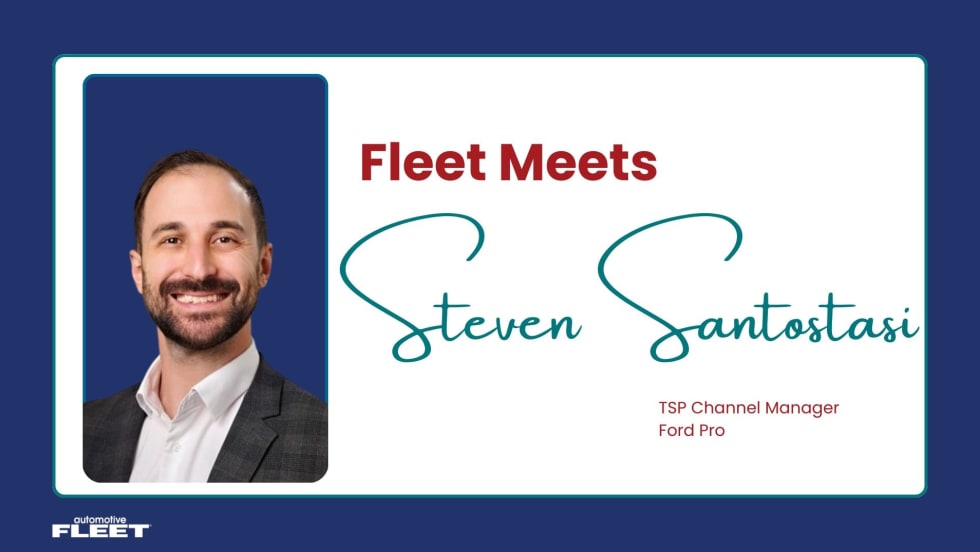
Fleet Meets: Steven Santostasi
This edition of the Fleet Meets series features Steven Santostasi, the current TSP channel manager for Ford Pro.
Read More →
Why Fleet Managers Are Replacing Departmental Vehicles with Shared Motor Pools
Departmentally assigned vehicles often create hidden costs through underutilization, poor visibility, and increased administrative burden. This white paper explores how shared motor pool strategies help fleets reduce costs, improve accountability, and optimize vehicle utilization.
Read More →
Soap Box Derby Challenge: Assembling the Crew
Meet Gabriel, Matthew, and Angel — the team helping bring this soap box derby build to life.
Read More →