





More News: Morgan Olson, EAVX, REE Automotive Demo Electric Proxima
Morgan Olson Reveals New C250 Truck for Canada Post
The step-van company's newest model was built for Canada's postal delivery system and was displayed at the 2023 Work Truck Week.
March 8, 2023
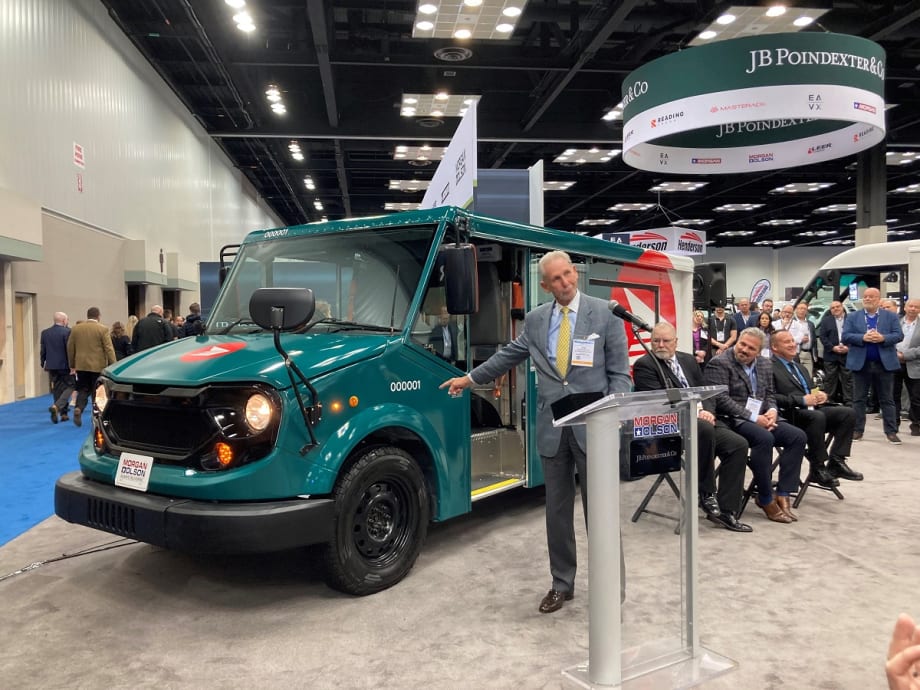
CEO & Chairman John B, Poindexter points to the first prototype of the Canadian mail truck.
Photo: Chis Brown
2 min to read
Morgan Olson announced its newest innovation for the postal delivery industry during the 2023 NTEA Work Truck Week in Indianapolis. The company's C250 truck will serve as the next-generation postal truck for Canada's mail system, the Canada Post.
Body design improvements in driver ergonomics, safety, and cargo delivery efficiencies, along with an all-electric demonstration of the EV platform and improved fuel-efficient chassis, provides Canada Post with its newest fleet vehicle, the company announced on March 8. The C250 features a purpose-built cargo management system engineered by Masterack, a JBPCO subsidiary and partner to Morgan Olson. The result is a performance-tested vehicle that delivers maximum usable parcel package cargo space. Additionally, the 4-wheel drive system option provides postal drivers traction-control improvements during inclement weather and poor road conditions.
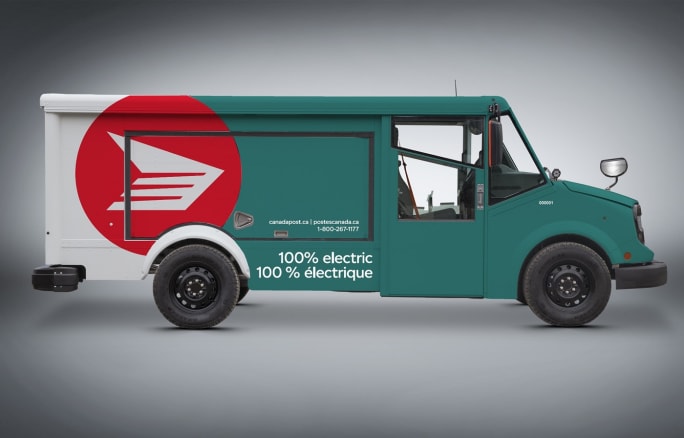
The new van is currently being built at the company's factory in Ringgold, Va.
Photo: Morgan Olson
"This C250 has special meaning to me," said Larry Palmer, Morgan Olson's vice president of sales and marketing. "In the 1980s, I was a member of the team that designed and delivered the LLV to Canada Post. Here we are almost 40 years later, and our team at Morgan Olson listened and worked closely with Canada Post designing this new C250."
The ICE C250 is currently rolling off the production lines at a new high-tech factory utilizing state-of-the-art manufacturing practices at Morgan Olson's newest complex in Ringgold, Va.
“The C250 is a critically important, custom-designed vehicle that prioritizes employee safety and comfort as well as increased capacity to support the long-term growth of our delivery business,” said Alexandre Brisson, vice president, operations transformation at Canada Post. “We’re committed to achieving net zero emissions by 2050, and electrifying our fleet will be key to that. The all-electric demonstration vehicle we unveiled today is a symbol of our ongoing innovation and the important steps we're taking now to create a zero-emission fleet by 2040 for various vehicle classes, including right-hand drives.”
More Operations

Avis Budget Group Deploys Neology Toll Management Technology Across Major Brands
Neology’s neoFleet platform will manage toll transactions and toll-authority operations for vehicles across Avis, Budget, Payless, Budget Truck and Zipcar.
Read More →
Fleet Personal-Use Charges Edge Higher in 2026
Nearly eight in 10 surveyed fleets allow personal use of company vehicles, while just over half of respondents report charging employees for the privilege.
Read More →
The Future of Fleet + What’s Changing Right Now | AF News Recap
Could developments overseas offer a preview of what’s coming for U.S. fleets? This week, we’re looking at the future of AI, autonomy, and electrification, plus Ford Pro’s new certified pre-owned program, smarter vehicle offboarding, and a new way for fleets to manage toll expenses.
Read More →
How to Handle Vehicle Offboarding
What do fleet managers need to do when a driver leaves?
Read More →
Sponsored•October 1, 2026
Fleet Manager’s Ultimate Playbook: Navigating the New Standard in OEM Connectivity
Rising operating costs, driver safety concerns, and unplanned downtime are putting unprecedented pressure on modern fleets. Discover how fleet managers use embedded OEM connectivity and real-time vehicle data to cut TCO, prevent downtime, and protect drivers without aftermarket telematics hardware.
Read More →
U.S. Bank Adds Verra Mobility Toll Management to Voyager Fleet Platform
The integration allows U.S. Bank Voyager fleet customers to manage toll payments and violations alongside fuel, EV charging and maintenance expenses.
Read More →
ADAS Prevents Crashes. But Repairs Cost More | AF News Recap
ADAS-equipped vehicles may crash less often, but they can cost more when they do. This week, we’re breaking down what that tradeoff means for fleets, plus Subaru’s first Forester Wilderness Hybrid, Nissan’s new e-POWER Rogue, and why Calstart has become Catalyst Mobility.
Read More →
Moventum Fleet Management Names Mark Iorillo Head of Sales
Iorillo brings nearly 20 years of fleet management and sales experience to the role, including previous positions at Element Fleet Management, CEI, Donlen and Ryder.
Read More →
Fleet Has a Talent Pipeline Problem. What Comes Next? | AF News Recap
Where will fleet’s next generation of leaders come from? This week, we’re looking at the industry’s talent pipeline, what certification can add to a fleet career, how to build an award-worthy track record, and the return of Automotive Fleet’s Personal Use Survey.
Read More →
Smith System Launches Driver Risk Management Program
Fleets have more driver data than ever, but identifying risky behavior doesn't necessarily correct it. Smith System's new Driver Risk Management program combines monitoring, training, and follow-up coaching to help fleets connect risk signals with driver intervention.
Read More →