




MIT Research Predicts Which Cars Likeliest to Run Red Lights
CAMBRIDGE, MA - In order to reduce the number of accidents at intersections, researchers at the Massachusetts Institute of Technology have devised an algorithm that predicts when an oncoming car is likely to run a red light.
CAMBRIDGE, MA - In order to reduce the number of accidents at intersections, researchers at the Massachusetts Institute of Technology (MIT) have devised an algorithm that predicts when an oncoming car is likely to run a red light.
Based on parameters such as the vehicle’s deceleration and its distance from a light, the group was able to determine which cars were potential “violators” — those likely to cross into an intersection after a light has turned red — and which were “compliant.”
The researchers tested the algorithm on data collected from an intersection in Virginia, finding that it accurately identified potential violators within a couple of seconds of reaching a red light — enough time, according to the researchers, for other drivers at an intersection to be able to react to the threat if alerted. Compared to other efforts to model driving behavior, the MIT algorithm generated fewer false alarms, an important advantage for systems providing guidance to human drivers. The researchers report their findings in a paper that will appear in the journal IEEE Transactions on Intelligent Transportation Systems.
Jonathan How, professor of aeronautics and astronautics at MIT, said “smart” cars of the future may use such algorithms to help drivers anticipate and avoid potential accidents.
In 2008, according to the National Highway Traffic Safety Administration, 2.3 million automobile crashes occurred at intersections across the United States, resulting in about 7,000 deaths. More than 700 of those fatalities were due to drivers running red lights. But, according to the Insurance Institute for Highway Safety, half of the people killed in such accidents are not the drivers who ran the light, but other drivers, passengers and pedestrians.
To view a video showing the MIT team’s algorithm in action, with robots negotiating a busy intersection and avoiding potential accidents, visit MIT's website.
“If you had some type of heads-up display for the driver, it might be something where the algorithms are analyzing and saying, ‘We’re concerned,’” explained How, who is one of the paper’s authors. “Even though your light might be green, it may recommend you not go, because there are people behaving badly that you may not be aware of.”
How said that in order to implement such warning systems, vehicles would need to be able to “talk” with each other, wirelessly sending and receiving information such as a car’s speed and position data. Such vehicle-to-vehicle (V2V) communication, he said, can potentially improve safety and avoid traffic congestion.
Today, the U.S. Department of Transportation (DOT) is exploring V2V technology, along with several major car manufacturers — including Ford Motor Co., which this year has been road-testing prototypes with advanced Wi-Fi and collision-avoidance systems.
“You might have a situation where you get a snowball effect where, much more rapidly than people envisioned, this [V2V] technology may be accepted,” How said.
In the meantime, researchers including How are developing algorithms to analyze vehicle data that would be broadcast via such V2V systems. Georges Aoude, a former student of How’s, designed an algorithm based on a technique that has been successfully applied in many artificial intelligence domains, but is relatively new to the transportation field. This algorithm can capture a vehicle’s motion in multiple dimensions using a highly accurate and efficient classifier that can be executed in less than five milliseconds.
Along with colleagues Vishnu Desaraju and Lauren Stephens, an MIT undergraduate, How and Aoude tested the algorithm using an extensive set of traffic data collected at a busy intersection in Christianburg, Va. The intersection was heavily monitored as part of a safety-prediction project sponsored by the DOT. The DOT outfitted the intersection with a number of instruments that tracked vehicle speed and location, as well as when lights turned red.
Aoude and colleagues applied their algorithm to data from more than 15,000 approaching vehicles at the intersection, and found that it was able to correctly identify red-light violators 85 percent of the time — an improvement of 15 to 20 percent over existing algorithms.
The researchers were able to predict, within a couple of seconds, whether a car would run a red light. The researchers actually found a “sweet spot” — one to two seconds in advance of a potential collision — when the algorithm has the highest accuracy and when a driver may still have enough time to react.
Compared to similar safety-prediction technologies, the group found that its algorithm generated fewer false positives. How said this may be due to the algorithm’s ability to analyze multiple parameters. He added that other algorithms tend to be “skittish,” erring on the side of caution in flagging potential problems, which may itself be a problem when cars are outfitted with such technology.
“The challenge is, you don’t want to be overly pessimistic,” How said. “If you’re too pessimistic, you start reporting there’s a problem when there really isn’t, and then very rapidly, the human’s going to push a button that turns this thing off.”
The researchers are now investigating ways to design a closed-loop system — to give drivers a recommendation of what to do in response to a potential accident — and are also planning to adapt the existing algorithm to air traffic control, in order to predict the behavior of aircraft.
Source: Jennifer Chu, MIT News Office
More Safety

Nexar-Nauto Merger Aims to Give Fleets Better Safety Intelligence Through Larger Driving Dataset
Stefan Heck tells Automotive Fleet that combining more than 10 billion miles of driving history with Nexar's AI models will give fleets deeper insights into driver risk and roadway conditions than either company could provide independently.
Read More →
Don't Wait for a Crisis: 5 Ways to Build Mental Health Into Your Fleet Safety Program
For Suicide Prevention Month, fleet and safety leaders have an opportunity to put mental health where it belongs: at the center of workplace safety.
Read More →
How Camera Data Can Strengthen a Fleet’s Insurance Renewal
Insights from a commercial insurance carrier and a broker show how fleets can turn video telematic data, driver coaching, and improved claims results into a stronger case at insurance renewal.
Read More →
The Safest Fleets Aren’t the Ones with the Most Technology
You’ve made the telematics investment. Here’s how to capture the other half of its value and build the safest fleet on the road.
Read More →
Hidden in Plain Sight: Fleet Compliance Risks
Fleet compliance isn't just about having policies — it's about consistently enforcing them. This practical guide reveals six hidden compliance risks common in public sector and shared fleet operations and outlines proven strategies to improve visibility, accountability, and audit readiness
Read More →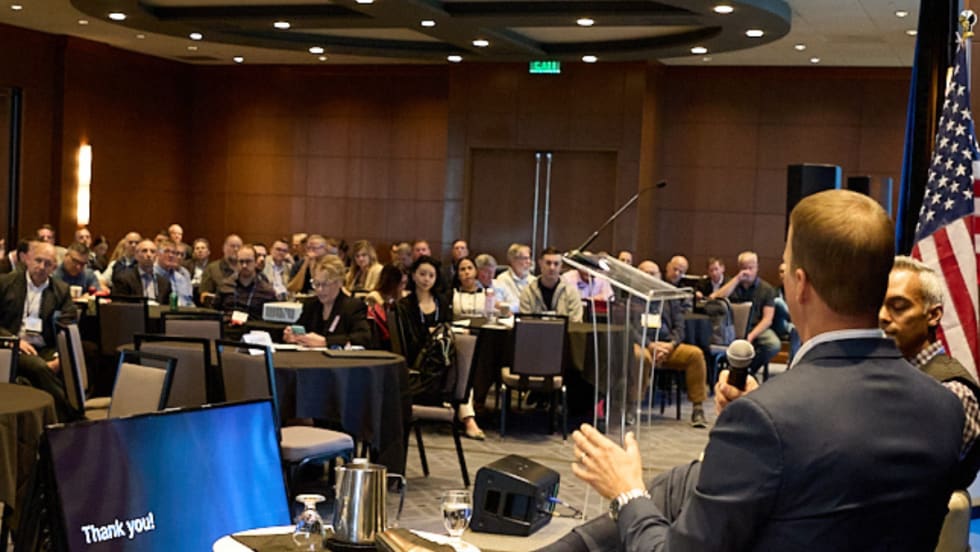
NETS Sets 2026 Fleet Safety Benchmark Conference for Indianapolis
The Sept. 15–17 program will feature fleet benchmarking data, case studies, emerging technologies, and implementation strategies while running alongside the NSC Safety Congress & Expo.
Read More →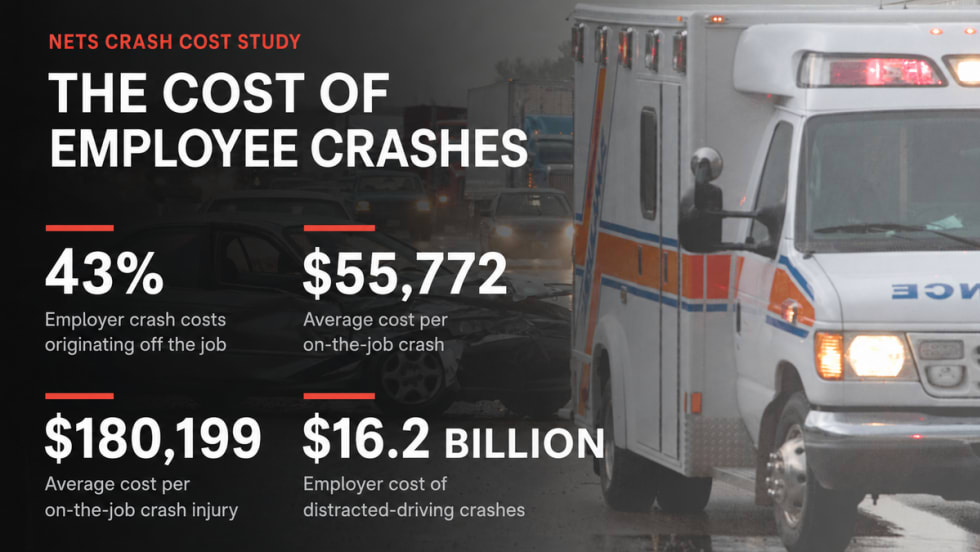
Off-the-Job Crashes Account for 43% of Employers’ $61.7 Billion Crash Burden
NETS quantifies costs dispersed across fleet, risk, HR, and other departments while providing new per-crash benchmarks for employers.
Read More →
Ram Recalls More Than 1.27 Million 1500 Pickups for Seat Belt Anchor Issue
The recall affects certain 2019-2026 Ram 1500 pickups that may have improperly attached second-row seat belt buckle anchors.
Read More →
How Better Visibility Cut Speeding Violations by 48%
Fleet leaders don't need more data, they need clearer visibility into what the data is saying. This case study explores how one utility replaced speeding-event counts with a single metric — miles driven in violation — to strengthen safety and significantly reduce speeding violations.
Read More →
Operation Safe Driver Week: Why the Industry's Oldest Safety Campaign Still Matters to Fleets
A look at how a 2007 enforcement initiative became one of the most consequential weeks on the fleet safety calendar, and what it means for your drivers in 2026.
Read More →