




MIT Exploring EV Rapid-Charging Technology
CAMBRIDGE, MA - A team of students at the Massachusetts Institute of Technology is busy testing a rapid-recharging system for electric vehicles, the MIT News Office reported.
CAMBRIDGE, MA - A team of students at the Massachusetts Institute of Technology is busy testing a rapid-recharging system for electric vehicles, the MIT News Office reported.
These student researchers have already performed extensive testing of the system with an individual battery cell and with a motorcycle they converted to all-electric operation. In coming months, they hope to demonstrate the system on a full-sized sedan they converted. The goal is to demonstrate that recharging can be accomplished routinely in under 30 minutes without severely reducing the operating lifetime of the batteries or causing other problems.
In the year since the MIT Electric Vehicle Team started working on the project, new and established companies have begun to offer commercial rapid-recharging systems. What's more, Japan has officially adopted a new standard for the connectors for such systems and has begun installing the systems in more than 100 locations.
The Nissan Leaf, a pure electric five-passenger car to be introduced in the U.S. later this year, is already capable of rapid recharging in 30 minutes in places that have the necessary "Level III" charging system. But so far, just one such station exists in the U.S. That's in Portland, Ore., MIT said.
Lennon Rodgers, a doctoral student in mechanical engineering and a member of the MIT Electric Vehicle Team, presented a paper on the team's rapid-charging tests at the 12th International Conference on Advanced Vehicle and Tire Technologies in Montreal. The paper was co-authored by fellow team members Radu Gogoana, a master's student in mechanical engineering; Paul Karplus, an undergraduate at Stanford; and Michael Nawrot.
Rapid charging, also known as Level III, requires much higher voltages and current than what's supplied by conventional household circuits. The Japanese rapid-charging standard, called CHAdeMO, provides DC power at up to 500 volts with a current of 125 amps.
Typical chargers operate on standard AC power, using either 110 volt household current (Level I), which generally can recharge an electric car's batteries overnight, or special systems that use 220 volts (Level II), which can cut the charging time in half.
"Rapid charging" systems typically refer to those that can charge the batteries to at least 80 percent of capacity within 30 minutes. This fast-recharge technology might be installed in central recharging stations comparable to today's gas stations, where the cost of the necessary infrastructure could be warranted and where a fast turnaround is necessary, MIT said. In many cases, rapid charging systems can provide a 50 percent charge -- typically enough to travel 50 miles -- in under five minutes. That's comparable to the time it takes to fill a gas tank.
[PAGEBREAK]
While rapid charging is beginning to attract attention, there has been relatively little testing on the effects of repeated rapid charging on battery life and performance.
Rodgers said that the chemistry used in lithium-ion batteries made by A123 Systems is the best suited for rapid charging. These batteries, based on research carried out at MIT in the lab of Yet-Ming Chiang, professor of materials science and engineering, have been selected for several planned new electric vehicles. These include cars from Fisker Automotive and buses and trucks from Daimler and Navistar.
In the team's tests, students ran one of these battery cells through 1,500 charge and discharge cycles, using an automated system. After 1,500 cycles, the battery had lost less than 10 percent of its initial power capacity, Rodgers said. The team used a fan to prevent overheating, which by stressing the chemical and mechanical components can lead to degradation.
To test a rapid-charging system under realistic conditions, the team converted a motorcycle to all-electric operation, and then performed a successful rapid-charging test, reaching more than 80 percent charge within 10 minutes.
The MIT EV Team has also completed the conversion of a 2010 Mercury Milan hybrid (donated by Ford) into a pure electric vehicle. The initial conversion was successfully completed last summer, and this summer students have been making major improvements. These include reinstalling the 8,000 lithium-ion phosphate battery cells provided by A123, rewiring the system with a new control system, adding a powerful cooling system for the batteries, and making changes to make the car street-legal.
The students hope to use the car for testing of rapid-charging technology, although they are still looking for funding to get the necessary equipment. Commercial rapid-charging systems can cost tens of thousands of dollars.
Kristen Helsel, vice president of EV Solutions for Aerovironment, a company that makes charging systems for electric vehicles, said that it's unlikely anyone will start installing rapid-charging stations in the U.S. in substantial numbers until the country adopts an official standard. There are still multiple designs under consideration. However, a rapid-charging capability is going to be crucial for widespread acceptance of electric vehicles, no matter what their driving range is on a full charge, because people will always want the option to drive farther, she said.
In the meantime, research such as that being carried out by the MIT EV Team can play a useful role, she said.
In addition to analyzing battery performance, the team has also analyzed the impact that rapid charging of electric vehicles might have on the electric grid. The students concluded that spikes of usage that might present problems for the grid could be eliminated by using an intermediate battery system. Instead of directly charging the vehicle from the grid, a large battery pack could be slowly charged using a "trickle charge" from the grid. This approach would use low-cost, off-peak power, and then rapidly transfer its charge to the vehicle's batteries.
More Green Fleet

EV Charging Use Is Outpacing Infrastructure Growth
ChargePoint’s 2026 Charging Forward Report points to rising charger use, higher-powered charging, commercial vehicle electrification, and energy-management technology. Here’s what fleets should know.
Read More →
Merchants Fleet Reports 290M EV Miles as Fleets Navigate Changing Electrification Market
From millions in operating savings to hundreds of millions of EV miles, Merchants Fleet’s latest report reveals what’s working and what’s changing in fleet electrification.
Read More →
The EV Breakdown Nobody's Talking About: Why Most Electric Vehicle Roadside Calls Aren't Mechanical Failures
Here's why EV breakdowns are widely misunderstood.
Read More →
ChargePoint Now Available in Energy Pass
ChargePoint and additional planned charging network integrations were added to GM's Energy Pass.
Read More →

First Look: Slate Auto's Electric Fleet Pickup
Could an affordable, modular EV pickup make electrification more practical for fleets?
Read More →
Slate Debuts Colorful, Unique EV Models
A recent media and client event, studded with electric vehicles dressed up on platforms, planted a new position for the manufacturer in the wider EV market. Fleets will find cost-saving advantages.
Read More →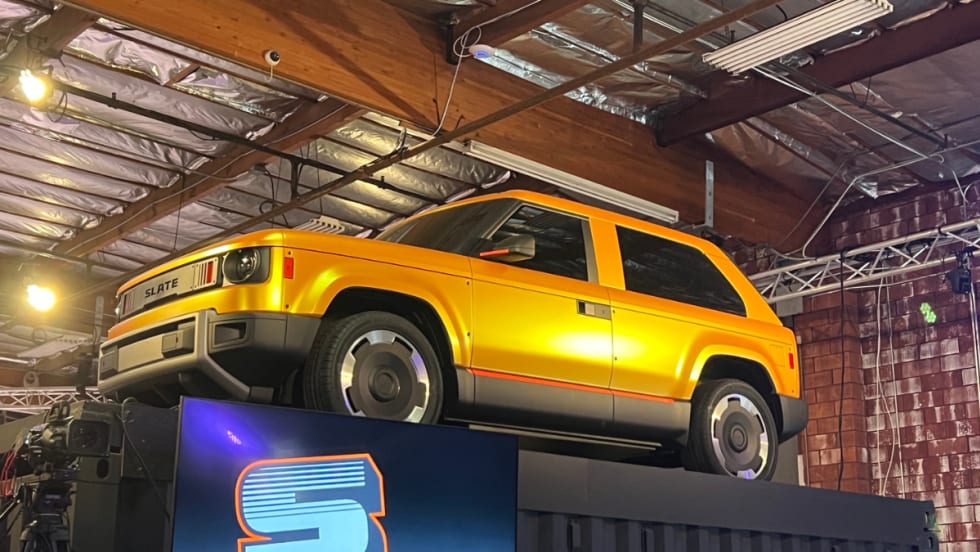
Slate Electric SUV, Pickup Switchable Model Aims For Light-Duty Fleets
Everything about this EV is counterintuitive and understated, making it stand out from the crowd.
Read More →
Inspiration Mobility Acquires Key Electrada Assets
Inspiration Mobility Group has acquired select assets of Electrada, adding the fleet electrification provider's team, technology, and charging infrastructure development capabilities to its energy management business.
Read More →
Turning Connected Vehicle Data Into Decisions That Matter
Fleet leaders have more data than ever, but turning that data into clear, actionable decisions remains a challenge. This white paper shows how leading organizations are using connected vehicle data to improve safety, reduce costs, and optimize fleet performance. Learn how to turn insight into action across your fleet.
Read More →