




Related: Michigan Discusses Plans to Create Mobility Testing Corridor
Michigan Plans Connected, Autonomous Vehicle Corridor
The project envisions connecting Detroit and Ann Arbor along with key communities and destinations along Michigan Avenue and Interstate 94 in Wayne County and Washtenaw County with an innovative infrastructure solution that allows for a mix of connected and autonomous vehicles, traditional transit vehicles, shared mobility, and freight and personal vehicles.
by Staff
August 17, 2020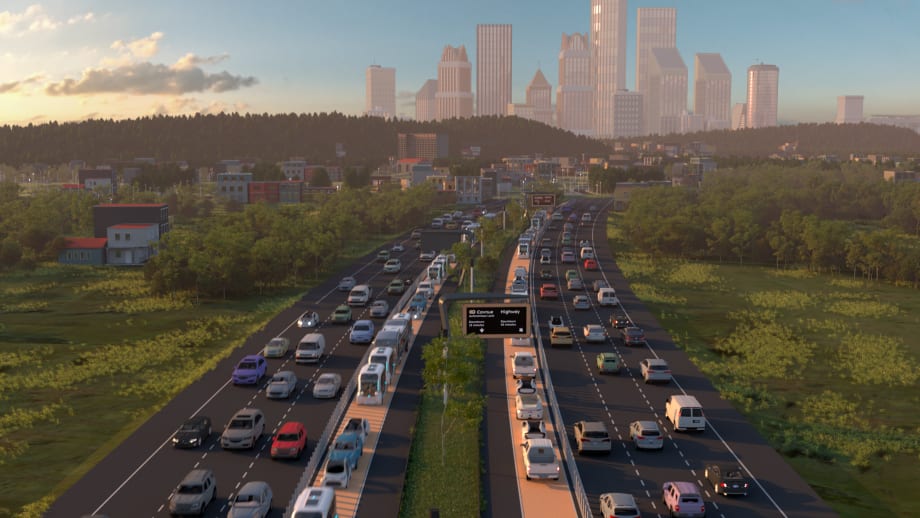
At its core, the project is designed to be “future proofed” and evolve to meet transportation goals, beginning with connected buses and shared mobility vehicles such as vans and shuttles, and expanding to additional types of CAVs such as freight and personal vehicles.
Photo courtesy of Michigan Economic Development Corporation.
4 min to read
Michigan Governor Gretchen Whitmer announced an initiative to develop a first-of-its-kind corridor for connected and autonomous vehicles designed to improve transportation for communities in Southeast Michigan.
The project envisions connecting Detroit and Ann Arbor along with key communities and destinations along Michigan Avenue and Interstate 94 in Wayne County and Washtenaw County with an innovative infrastructure solution that allows for a mix of connected and autonomous vehicles, traditional transit vehicles, shared mobility, and freight and personal vehicles.
It will build on existing investments made by the state of Michigan and local communities in smart infrastructure and transit and will link key destinations including the University of Michigan, Detroit Metropolitan Airport, and Michigan Central Station. The corridor includes up to a dozen Opportunity Zones, where expanded mobility will connect individuals, small businesses, and communities to Southeast Michigan’s most important industrial, technological, and academic clusters. This includes leading test tracks, universities, automotive companies, and key economic anchors.
The vision for the corridor is intended to create lanes that are purpose built to accelerate and enhance the full potential of CAVs and move people. To achieve this, Cavnue — a subsidiary of Sidewalk Infrastructure Partners that has been selected by the state to serve as master developer of the project — will work with regional partners to plan, design, and develop the roadway.
At its core, the project is designed to be “future proofed” and evolve to meet transportation goals, beginning with connected buses and shared mobility vehicles such as vans and shuttles, and expanding to additional types of CAVs such as freight and personal vehicles.
The project reflects an evolution of transportation across the United States with CAVs providing the potential to reduce thousands of traffic crashes caused by human error, cut the growing hours commuters spend stuck in traffic, and increase access to personal and shared mobility options. According to the Michigan State Police, there have been almost 10,000 fatal automobile crashes in Michigan in the last decade. And the National Highway Traffic Safety Administration states 94% of automobile crashes are attributed to human error.
“The action we’re taking today is good for our families, our businesses, and our economy as a whole. Here in Michigan, the state that put the world on wheels, we are taking the initial steps to build the infrastructure to help us test and deploy the cars of the future,” Whitmer said in a statement. “As we rebuild our roads to ensure every Michigander can drive to work and drop their kids at school safely, we will also continue working to build smart infrastructure to help prepare us for the roads of tomorrow. In Michigan, where the health of our workers and our economy are directly tied to the health of our auto industry, we will continue this innovative work to secure our state’s position as the automotive capital of the world.”
The project will advance key policy goals, including improving safety, achieving neutrality among vehicle OEMs through standards-based approaches, enhancing accessibility, affordability, and equity, and aligning with regional planning, thus encouraging innovation, R&D, economic development, open data access and shared learnings, cybersecurity, and replicability.
During the feasibility analysis in Phase One, work will focus on technology testing and roadway design, and exploring different financing models with an aim toward determining project viability from both a technology and business perspective. Subsequent construction and implementation would be part of future phases of the project, to be determined following the initial 24-month period.
Cavnue will develop OEM-neutral standards and technology for the implementation of the corridor and permit connected and autonomous vehicles meeting specified safety and other standards to operate on the corridor regardless of the vehicle manufacturer. In developing OEM-neutral standards for the implementation of the corridor, Cavnue will draw on an advisory committee of automotive and autonomous mobility companies, including Argo AI, Arrival, BMW, Honda, Ford, GM, Toyota, TuSimple, and Waymo.
Initial project partners include Ford Motor Company, which has pioneered mobility innovation in Michigan for more than 100 years; the University of Michigan, with its CAV research center and world-class Mcity Test Facility, Transportation Research Institute (UMTRI), and facilities along the proposed corridor; and the American Center for Mobility (ACM), a leading testing facility. Ford’s chairman Bill Ford envisioned a connected corridor linking Detroit to Ann Arbor as part of the company’s Michigan Central development. In June 2018, Ford outlined his vision that the company’s new Corktown innovation hub would be a critical east end node in a circuit running from Detroit to Ann Arbor and Detroit Metropolitan Airport.
Cavnue will work with the Michigan Department of Transportation, the Michigan Office of Future Mobility and Electrification, the Michigan Economic Development Corporation, the Michigan Department of Labor and Economic Opportunity, and industry and local project partners throughout Phase One of the effort, expected to last approximately 24 months.
More Fleet Forward

Fleet Forward Conference Introduces One-Day Passes for 2026
New one-day registration gives fleet professionals the flexibility to attend Tuesday, Wednesday, or Thursday, with passes available for $199 through Sept. 18.
Read More →
Vibe Coding: When Fleet Managers Become Software Builders
Five fleet professionals — none with programming skills — discuss how they’re using AI to build fleet solutions in-house and in a fraction of the time.
Read More →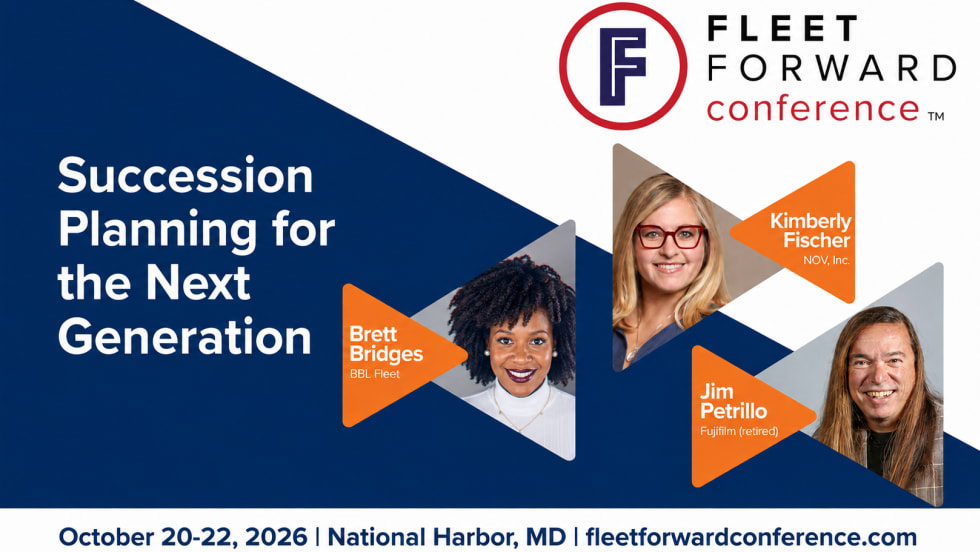
Fleet Forward Conference Tackles Fleet Industry’s Growing Leadership Gap
This session will examine succession planning, knowledge transfer, and the skills the next generation of fleet leaders will need as veteran professionals leave the industry.
Read More →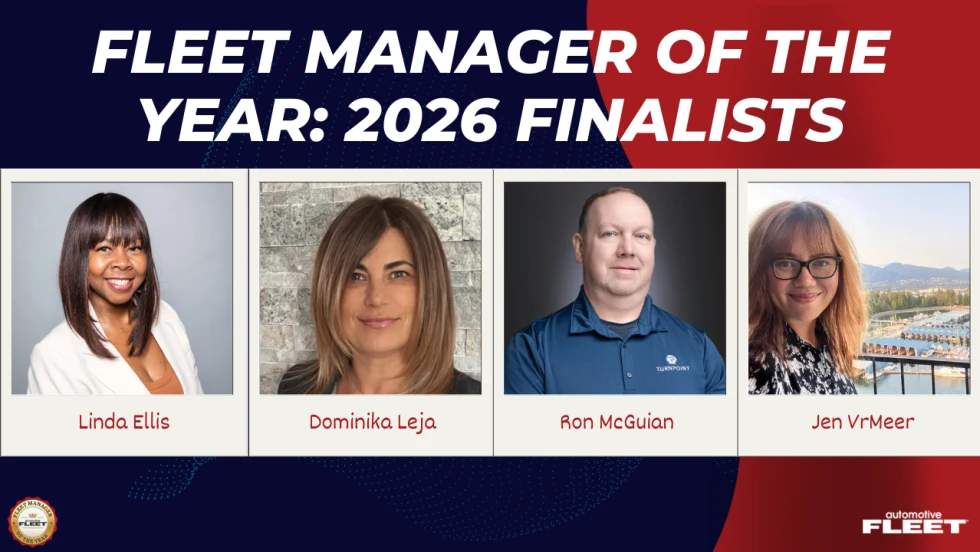
2026 Fleet Manager of the Year Finalists Announced
Who are the 2026 Fleet Manager of the Year finalists?
Read More →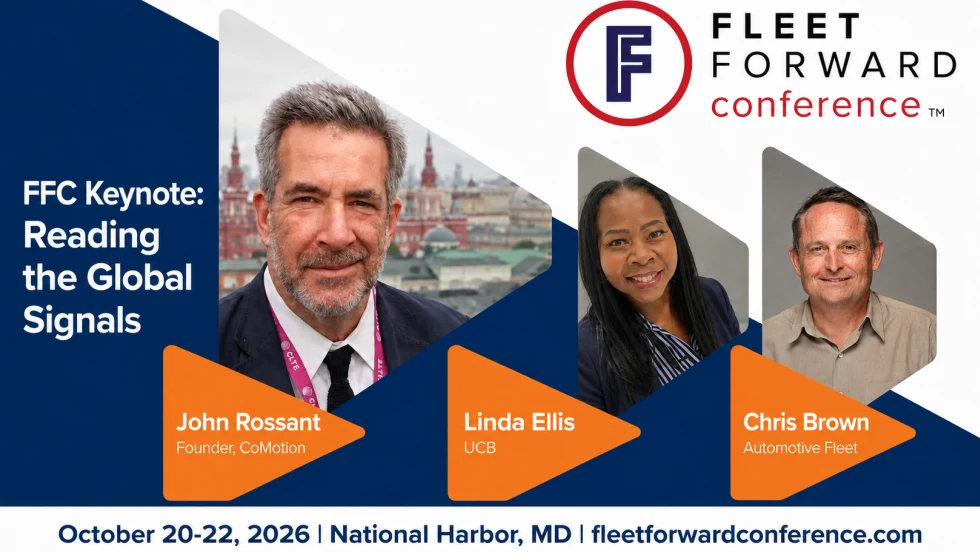
John Rossant to Deliver Opening Keynote at 2026 Fleet Forward Conference
The CoMotion founder will draw on developments across Europe, China, the Middle East, and other international markets to identify trends that could influence how U.S. fleets plan for the coming decade.
Read More →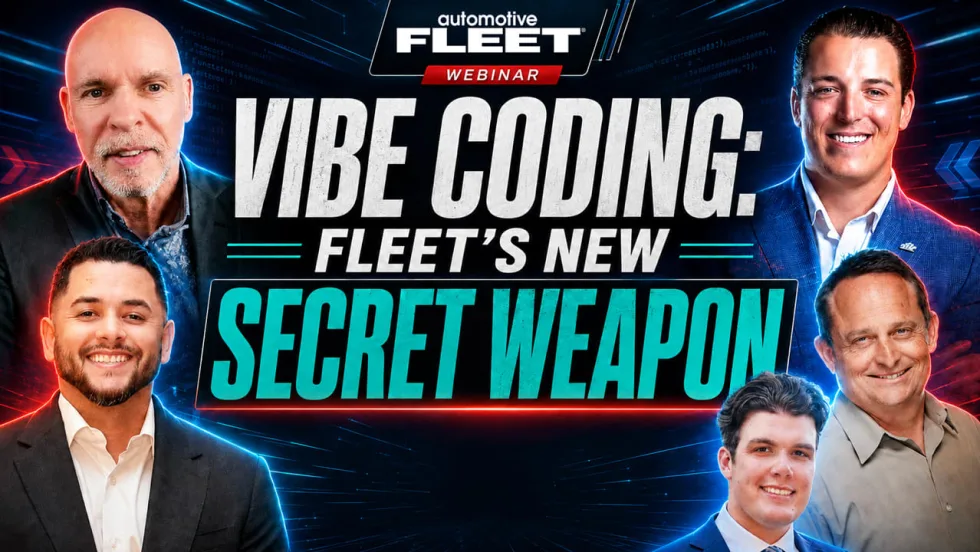
How to Build Custom Fleet Tools With AI and Vibe Coding [Webinar]
A new Automotive Fleet webinar explores how fleet managers are using AI and vibe coding to automate routine work and create simple operational tools without traditional programming skills.
Read More →
Is Fleet Ready for Its New Disruptors?
Three emerging leaders from a corporate fleet, public fleet, and the automotive supply chain will bring new ideas and a willingness to challenge industry norms to the Fleet Forward Conference stage.
Read More →
NAFA Announces 2026 Fleet Safety Symposium Education Program
Register for NAFA’s Fleet Safety Symposium and save $200 on your Fleet Forward Conference registration.
Read More →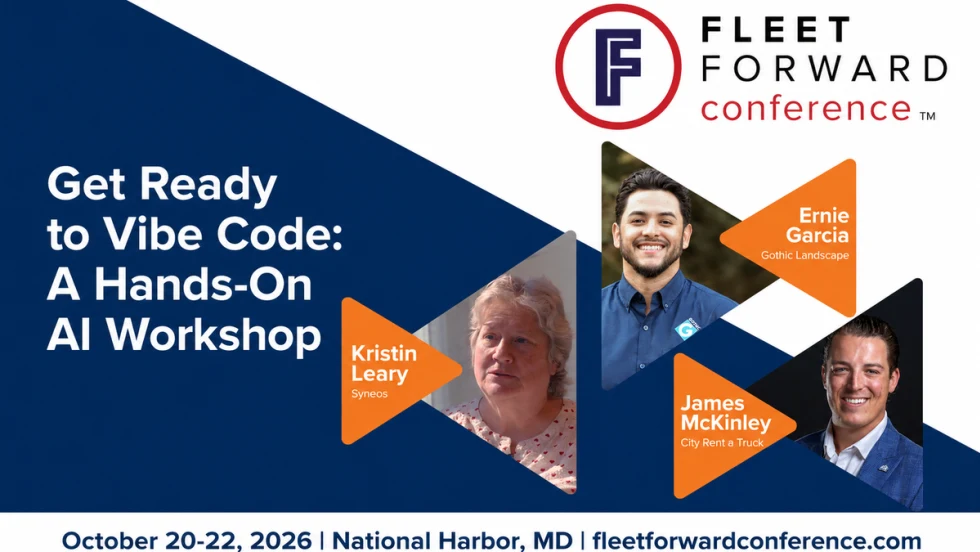
Fleet Managers Take the Lead in Hands-On AI Workshop at FFC
The fleet manager-led session will show how to use “vibe coding” to build practical fleet tools without a traditional programming background.
Read More →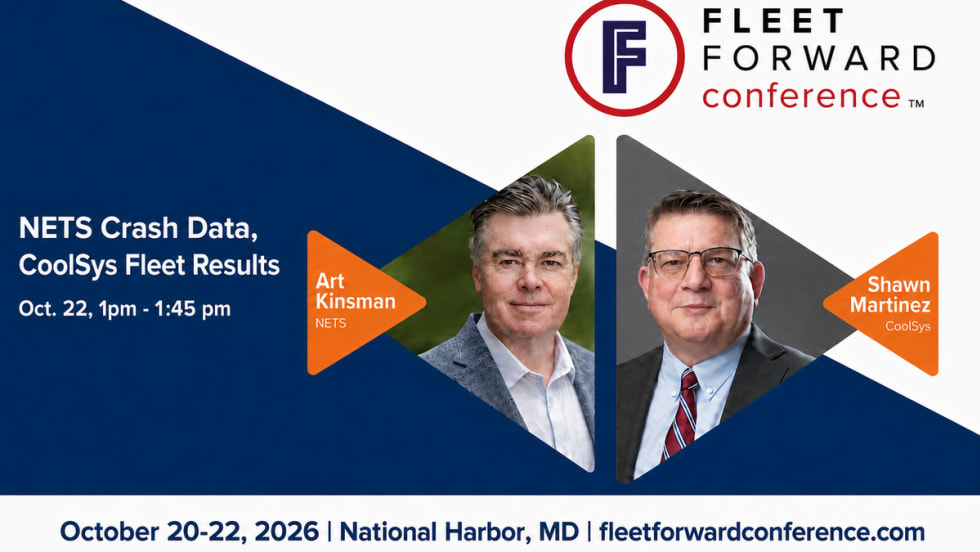
NETS Crash-Cost Data and CoolSys’ 80% Loss Reduction Take Center Stage at FFC
NETS will present findings from its latest Cost of Crashes research, then CoolSys safety leader and author Shawn Martinez will explain how the company built a safer driving culture across 3,500 employees.
Read More →