




Mercedes-Benz, City of Boston to Help Improve Uneven Roads
Boston's Citywide Analytics Team will analyze data and the perspective it shows on the major causes and locations of uneven road surfaces in Boston.


Data will be collected anonymously from vehicles whose owners have opted into data sharing via the Mercedes me connect App1to help monitor, analyze, and improve infrastructure.
Photo: Mercedes-Benz USA
Mercedes-Benz USA (MBUSA) Urban Mobility Solutions and Boston's Mayor's Office of New Urban Mechanics and Citywide Analytics Team announced a pilot partnership to identify the causes of uneven roads using vehicle data analytics.
MBUSA is using an algorithm to process vehicle data and use it for infrastructure analytics. Participating MBUSA vehicles collect information on where they experience bumps in the road.
The data are then anonymized, aggregated, and analyzed to identify patterns and hot spots of uneven roads.
How MBUSA, City of Boston Will Work Together
The City of Boston's Analytics Team will evaluate the effectiveness of MBUSA's technology by comparing surface damage analytics to data the City has (such as data from Boston's constituent service system, known as Boston 311) as well as through on-street inspections.
Vehicles equipped with the necessary sensors will not only register bumps along the roadway but also their intensity and development over time.
"Mercedes-Benz is synonymous with innovation and technology," said Dimitris Psillakis, president/CEO of Mercedes-Benz USA. "This partnership with The City of Boston aims to offer a deeper understanding of the infrastructure in which vehicles operate by securely gathering, processing, and visualizing anonymized vehicle data. The sophisticated systems in our vehicles can provide valuable insights regarding what is happening along roadways. These data can help effectively and efficiently improve the condition of infrastructure to make roads safer and more enjoyable for everyone to navigate."
Mercedes-Benz vehicles equipped with advanced suspension systems register bumps during sudden suspension compression and rebound at the front axle, as well as at the rear axle with a certain time delay.
A similar algorithm detects speed bumps: in this case via the compression and rebound sequence. Further analysis completed in the Mercedes-Benz Cloud takes vehicle type, wheel spin, and damper level into consideration.
Experience Working with Data
Since 2021, this capability has equipped Mercedes-Benz drivers with advanced warning of obstacles such as potholes through Car-to-X communication in the vehicle.
The Surface Damages data product builds upon this technology and provides valuable data to cities to help monitor, analyze, and improve infrastructure.
The City of Boston is experienced in this area, using accelerometers and GPS in smartphones to identify roadway defects. That experiment -- called Street Bump -- identified that the biggest defects in Boston's roads at that time were caused by utility covers that had slightly sunk or shifted over time.
That finding reinforced the City's work with utility companies to maintain their assets on City streets. Similarly, the City is interested in learning from this pilot partnership so that it can provide smoother roads for all via innovative technologies.
Currently, Boston receives information about the status of its roadways through an annual pavement condition review and the City's constituent service system, known as Boston 311.
"It is well known that not all neighborhoods and communities use Boston 311 at the same rate, yet 311 is a major driver of how some City resources are allocated," said Stefanie Costa Leabo, the City of Boston's chief data officer. "We are always eager to find ways to mitigate this bias in reporting, and are excited to evaluate whether by testing new technologies or incorporating these new data we can identify cases that otherwise would have gone unreported and unaddressed in order to distribute city resources more equitably."
The City of Boston maintains 2,000 lane miles of roadway.
More Telematics
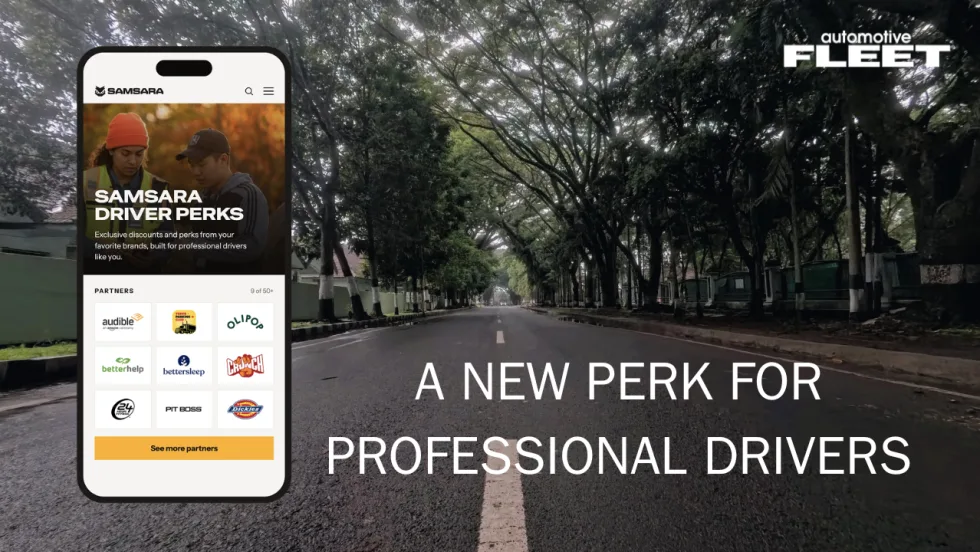
Samsara Driver Perks Adds New Benefit for Corporate Fleet Drivers
The rewards program gives eligible professional drivers access to discounts from more than 50 brands while giving fleets another way to support recruitment, retention, and the driver experience.
Read More →
Inside the Church of Jesus Christ of Latter-day Saints’ Two-Track Telematics Strategy
With 20,000 vehicles and two fundamentally different driver populations, the Church faced a fleet management problem that a single telematics program couldn't solve. How it responded offers a replicable framework for any fleet where one size doesn't fit every driver.
Read More →
How Conversational AI Can Make Fleet Tasks Easier for Drivers
While most generative AI tools help fleet managers interpret data at their desks, Connex2X is applying voice interaction to tasks behind the wheel.
Read More →
Why Fleets Are Creating Dedicated Fleet Analyst Positions
Are fleet analyst positions the new norm? Listen here to find out.
Read More →
Teletrac Navman Begins Next Chapter as Standalone Private Company
What's new with Teletrac Navman and its new owner?
Read More →
Why Fleets Are Creating Dedicated Fleet Analyst Positions
Telematics, AI, EVs, and connected technologies are generating more fleet data than traditional teams can effectively manage. Reed Jackson explains why dedicated fleet analytics roles are emerging to turn that information into better operational decisions.
Read More →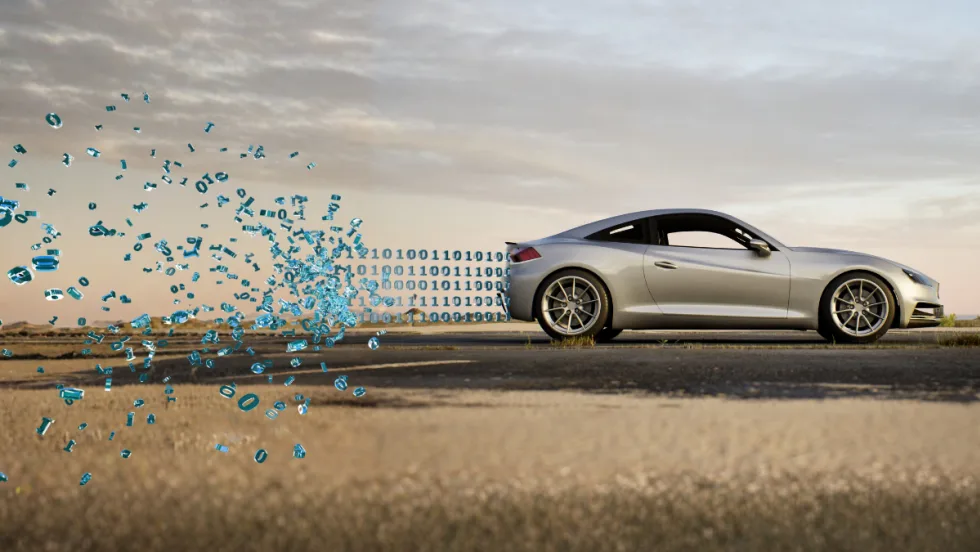
Deleting Driver Data Is No Longer Enough in Connected Vehicles
A factory reset may erase what's stored inside a vehicle, but it doesn't always end a former driver's digital connection. Here's how fleets can make digital offboarding part of every vehicle transition to reduce privacy, security, and compliance risks.
Read More →
How AI Can Help Fleet Managers Build Their Own Solutions
Syneos Health Fleet Manager Kristin Leary is exploring how AI-powered development tools, telematics data, and predictive analytics could help fleets solve operational challenges without waiting for a vendor roadmap.
Read More →
Cameras, Safety and Insurance: From Reactive Claims to Real-Time Prevention (Part 2 of 2)
Part Two: Commercial auto remains one of the most challenging and costly lines of coverage for fleet operators and insurers alike. Continue learning more about how to effectively address these issues from Onur Aksan, Enterprise Business Development Executive, Geotab
Read More →
100% Fleet Uptime? Here's Stellantis' Strategy
Keeping commercial vehicles on the road is becoming just as important as getting them into service. Stellantis’ U.S. fleet chief Michael Ferreira shares how connected technology and AI are changing the way fleets manage uptime.
Read More →