




Magazine Honors Volt's Propulsion System
PONTIAC, MI - Ward's AutoWorld has included the Chevrolet Volt's propulsion system on the magazine's list of "10 Best Engines" for 2011 in North America.
PONTIAC, MI - Ward's AutoWorld has included the Chevrolet Volt's propulsion system on the magazine's list of "10 Best Engines" for 2011 in North America.
Ward's editors used several criteria for selecting their annual "10 Best Engines" winners, including noise, vibration and harshness (NVH), fuel efficiency, new technology and comparative data for similar systems.
"Brave. Inspired. Brilliant," said Drew Winter, editor-in-chief of Ward's AutoWorld. "We don't often use these words in the same sentence as 'propulsion system,' but that's the only way to describe the magic under the hood of the Chevy Volt. General Motors engineers have changed the course of history by creating an electric vehicle with true mass appeal."
The heart of the Volt is its Voltec propulsion system, which combines pure electric drive and an efficient, range-extending engine, giving the Volt up to 379 total miles of driving before charging or filling up.
"The recognition from Ward's is important for us because it validates that we are providing the customer the best EV solution, which is what we set out to do from the beginning," said Pam Fletcher, Voltec propulsion system chief engineer.
The Voltec's propulsion system consists of three main components -- a long-life battery; a 1.4-liter, range-extending engine and an electric drive unit to deliver power to the wheels.
The Volt's long-life battery consists of a 5.5-foot, 435-pound (198.1 kg) T-shaped, 16-kWh lithium-ion battery pack. It supplies energy to an advanced, 111-kW (149-hp) electric drive unit to propel the vehicle. Using only the energy stored in the battery, the Volt delivers 35 miles of gas- and tailpipe emissions-free electric driving, depending on terrain, driving techniques and temperature.
The Volt can continue to operate after the battery's energy is depleted -- a feature that eliminates the range limitations associated with electric-only vehicles. The Volt's 344 miles of extended range come from the 1.4L, 63-kW (84 hp) gasoline-powered engine that provides power to the electric motors.
The Volt's electric drive unit is positioned under the hood next to the engine and packages a pair of electric motors and a multi-mode transaxle with continuously variable capability. Inside the drive unit, one or both of the motors drives the vehicle based on performance and speed to optimize efficiency. One of the motors serves a dual function, either to help drive the wheels or to operate as a generator to keep the battery pack at its minimum buffer.
The battery is assembled in Brownstown, Mich. The engine is currently produced in Aspern, Austria. Engine production is expected to begin in 2011 in Flint, Mich.
More Green Fleet
The EV Breakdown Nobody's Talking About: Why Most Electric Vehicle Roadside Calls Aren't Mechanical Failures
Here's why EV breakdowns are widely misunderstood.
Read More →
ChargePoint Now Available in Energy Pass
ChargePoint and additional planned charging network integrations were added to GM's Energy Pass.
Read More →

First Look: Slate Auto's Electric Fleet Pickup
Could an affordable, modular EV pickup make electrification more practical for fleets?
Read More →
Slate Debuts Colorful, Unique EV Models
A recent media and client event, studded with electric vehicles dressed up on platforms, planted a new position for the manufacturer in the wider EV market. Fleets will find cost-saving advantages.
Read More →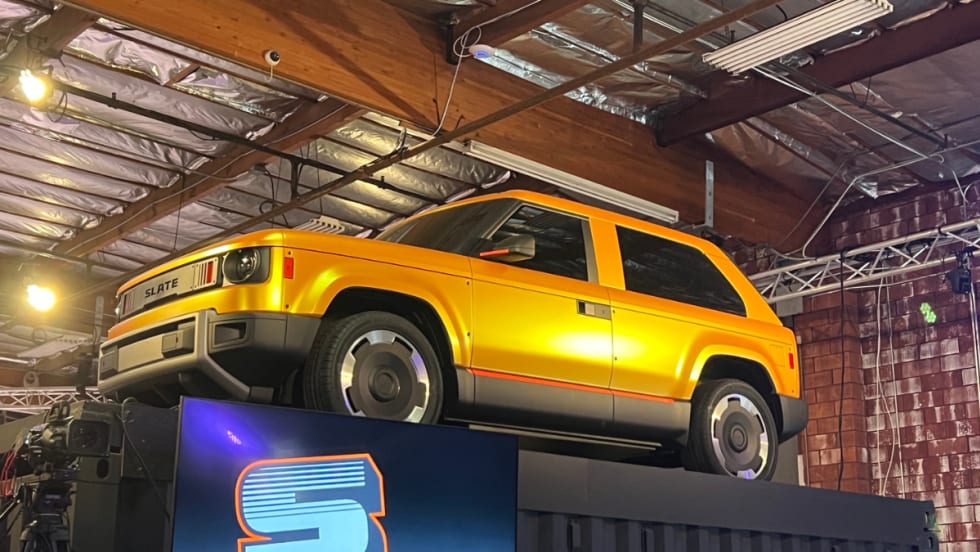
Slate Electric SUV, Pickup Switchable Model Aims For Light-Duty Fleets
Everything about this EV is counterintuitive and understated, making it stand out from the crowd.
Read More →
Inspiration Mobility Acquires Key Electrada Assets
Inspiration Mobility Group has acquired select assets of Electrada, adding the fleet electrification provider's team, technology, and charging infrastructure development capabilities to its energy management business.
Read More →
Turning Connected Vehicle Data Into Decisions That Matter
Fleet leaders have more data than ever, but turning that data into clear, actionable decisions remains a challenge. This white paper shows how leading organizations are using connected vehicle data to improve safety, reduce costs, and optimize fleet performance. Learn how to turn insight into action across your fleet.
Read More →
Are You Tracking Your Fleet's True Total Cost of Ownership?
Bobit Business Media surveyed 190 fleet professionals and found that while most fleets are tracking costs, fragmented systems and data gaps are keeping true TCO visibility out of reach. With rising pressure to control spend in an increasingly volatile environment, the gap between what fleets think they know and what the data actually shows is wider than you might expect. See how your peers are managing costs today and where the industry still has room to improve.
Read More →
Hybrids: Electrification Without the Challenges
For fleet managers, fuel is one of the biggest line items in the budget — and it's one hybrids can shrink without changing how your people work. Download the eBook to see the numbers, understand the technology, and get a step-by-step guide to making the switch.
Read More →