





Related: Senate Asks Hyundai, Kia to Testify About Vehicle Fires
Kia Recalls Vehicles Again to Address Engine Fires
Despite the government shutdown, Kia is recalling approximately 68,000 vehicles in the U.S. because of a fuel injector pipe issue that can potentially lead to engine fires, reports the Associated Press.
January 17, 2019
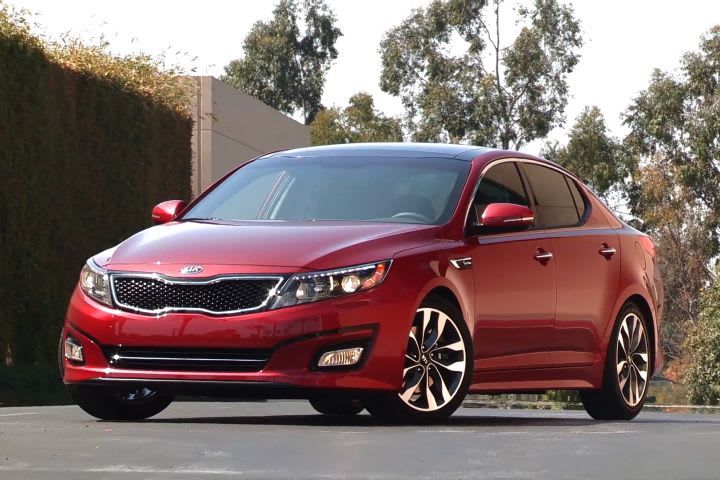
Kia has said it will recall 68,000 vehicles again, including the 2014 Optima (shown), for a fuel injector pipe issue that could lead to engine fires. The vehicles were initially recalled for this issue in 2015.
Photo courtesy of Kia.
2 min to read
Despite the government shutdown, Kia is recalling approximately 68,000 vehicles in the U.S. because of a fuel injector pipe issue that can potentially lead to engine fires, reports the Associated Press.
Specifically, the recall covers 2011-2014 Optima midsize sedans, 2012-2014 Sorento midsize SUVs, and 2011-2013 Sportage compact SUVs with 2.0-liter and 2.4-liter four-cylinder engines.
Ordinarily, the National Highway Traffic Safety Administration would oversee the recall, but NHTSA safety investigators are not presently working due to the shutdown.
The current Kia recall originates from a previous recall that involved inadequate repairs. In 2015, both Hyundai — who uses the same engines as Kia — and Kia began recalling 1.7 million vehicles. Approximately 618,000 of those were Kia vehicles.
That original recall was due to manufacturing debris that could potentially restrict oil flow to connecting bearing rods. That situation can cause bearings in 2.0-liter and 4.0-liter four-cylinder engines to wear and fail and also cause fires, according to the report.
While the appropriate repair is an engine block replacement, Kia is now saying the engine replacements may have been improperly performed. The high-pressure fuel pipe may have been damaged, misaligned or improperly tightened while the engines were being replaced. Any of these scenarios can allow fuel to leak and hit hot engine parts, resulting in fires.
To fix the current problem, Kia sent letters to dealers around Jan. 10 and the automaker says owners will also be notified of the recall by letter.
It is unclear why Kia plans to make the repair on just 68,000 of its 618,000 vehicles, reports the Associated Press. Kia also said it will install sensors in 1.7 million U.S. vehicles that will alert drivers to possible engine failures and send the cars into a reduced-speed "limp" mode if problems are detected.
More Safety

Sponsored•October 1, 2026
Fleet Manager’s Ultimate Playbook: Navigating the New Standard in OEM Connectivity
Rising operating costs, driver safety concerns, and unplanned downtime are putting unprecedented pressure on modern fleets. Discover how fleet managers use embedded OEM connectivity and real-time vehicle data to cut TCO, prevent downtime, and protect drivers without aftermarket telematics hardware.
Read More →
From Driver Well-Being to EV Charging | AF News Recap
Mental health belongs in the fleet safety conversation. This week, we’re looking at five ways fleets can support employee well-being before a crisis, plus Holman’s expansion in Mexico, new one-day Fleet Forward passes, and why EV charging demand is outpacing infrastructure growth.
Read More →
Nexar-Nauto Merger Aims to Give Fleets Better Safety Intelligence Through Larger Driving Dataset
Stefan Heck tells Automotive Fleet that combining more than 10 billion miles of driving history with Nexar's AI models will give fleets deeper insights into driver risk and roadway conditions than either company could provide independently.
Read More →
Don't Wait for a Crisis: 5 Ways to Build Mental Health Into Your Fleet Safety Program
For Suicide Prevention Month, fleet and safety leaders have an opportunity to put mental health where it belongs: at the center of workplace safety.
Read More →
How Camera Data Can Strengthen a Fleet’s Insurance Renewal
Insights from a commercial insurance carrier and a broker show how fleets can turn video telematic data, driver coaching, and improved claims results into a stronger case at insurance renewal.
Read More →
The Safest Fleets Aren’t the Ones with the Most Technology
You’ve made the telematics investment. Here’s how to capture the other half of its value and build the safest fleet on the road.
Read More →
Sponsored•August 7, 2026
Hidden in Plain Sight: Fleet Compliance Risks
Fleet compliance isn't just about having policies — it's about consistently enforcing them. This practical guide reveals six hidden compliance risks common in public sector and shared fleet operations and outlines proven strategies to improve visibility, accountability, and audit readiness
Read More →
NETS Sets 2026 Fleet Safety Benchmark Conference for Indianapolis
The Sept. 15–17 program will feature fleet benchmarking data, case studies, emerging technologies, and implementation strategies while running alongside the NSC Safety Congress & Expo.
Read More →
Off-the-Job Crashes Account for 43% of Employers’ $61.7 Billion Crash Burden
NETS quantifies costs dispersed across fleet, risk, HR, and other departments while providing new per-crash benchmarks for employers.
Read More →
Ram Recalls More Than 1.27 Million 1500 Pickups for Seat Belt Anchor Issue
The recall affects certain 2019-2026 Ram 1500 pickups that may have improperly attached second-row seat belt buckle anchors.
Read More →