




It's Time to Revisit AAA's Winter Driving Tips
NEW YORK --- Arctic air enveloped much of the nation on Monday, triggering low temperatures, strong winds and dangerous wind chill factors, the Associated Press reported.
NEW YORK --- Arctic air enveloped much of the nation on Monday, triggering low temperatures, strong winds and dangerous wind chill factors, the Associated Press reported.
Bands of lake-effect snow showers developed over areas of the Northeast and the Great Lakes. High wind gusts produced blowing snow and whiteout conditions across parts of New York, AP reported.
Strong, gusty winds as high as 35 mph accompanied rain showers across Southern California and Arizona. In addition, most of the northern Rockies and the Four Corners area were placed under winter storm warnings and winter weather advisories.
With winter driving conditions in full force, now is a good time to revisit AAA's winter driving tips:
-- Avoid driving while you're fatigued. Getting the proper amount of rest before taking on winter weather tasks reduces driving risks.
-- Never warm up a vehicle in an enclosed area, such as a garage.
-- Make certain your tires are properly inflated.
-- Never mix radial tires with other tire types.
-- Keep your gas tank at least half full to avoid gas line freeze-up.
-- If possible, avoid using your parking brake in cold, rainy and snowy weather.
-- Do not use cruise control when driving on any slippery surface (wet, ice, sand).
-- Always look and steer where you want to go.
-- Use your seat belt every time you get into your vehicle.
Here are some tips for long-distance winter trips:
-- Watch weather reports prior to a long-distance drive or before driving in isolated areas. Delay trips when especially bad weather is expected. If you must leave, let others know your route, destination and estimated time of arrival.
-- Have your car inspected to make sure it is in peak operating condition.
-- Keep at least half a tank of gasoline in your vehicle at all times.
-- Pack a cellular telephone, blankets, gloves, hats, food, water and any needed medication in your vehicle.
-- If you become snow-bound, stay with your vehicle. It provides temporary shelter and makes it easier for rescuers to locate you. Don't try to walk in a severe storm. It's easy to lose sight of your vehicle in blowing snow and become lost.
-- Don't over-exert yourself if you try to push or dig your vehicle out of the snow.
-- Tie a brightly colored cloth to the antenna or place a cloth at the top of a rolled up window to signal distress. At night, keep the dome light on if possible. It only uses a small amount of electricity and will make it easier for rescuers to find you.
-- Make sure the exhaust pipe isn't clogged with snow, ice or mud. A blocked exhaust could cause deadly carbon monoxide gas to leak into the passenger compartment with the engine running.
-- Use whatever is available to insulate your body from the cold. This could include floor mats, newspapers or paper maps.
-- If possible, run the engine and heater just long enough to remove the chill and to conserve gasoline.
Tips for driving in the snow:
-- Accelerate and decelerate slowly. Applying the gas slowly to accelerate is the best method for retraining traction and avoiding skids. Don't try to get moving in a hurry. And take time to slow down for a stoplight. Remember, it takes longer to slow down on icy roads.
-- Drive slowly. Everything takes longer on snow-covered roads. Accelerating, stopping, turning -- nothing happens as quickly as on dry pavement. Give yourself time to maneuver by driving slowly.
-- Increase the normal following distance of two to three seconds to eight to ten seconds. This increased margin of safety in front will provide the longer distance needed if you have to stop.
-- Know your brakes. Whether you have antilock brakes or not, the best way to stop is threshold breaking. Keep the heel of your foot on the floor and use the ball of your foot to apply firm, steady pressure on the brake pedal.
-- Don't stop if you can avoid it. There's a big difference in the amount of inertia it takes to start moving from a full stop versus how much it takes to get moving while still rolling. If you can slow down enough to keep rolling until the light changes, do it.
-- Don't power up hills. Applying extra gas on snow-covered roads just starts your wheels spinning. Try to get a little inertia going before you reach the hill and let that inertia carry you to the top. As you reach the crest of the hill, reduce your speed and proceed down hill as slowly as possible.
-- Don't stop going up a hill. There's nothing worse than trying to get moving up a hill on an icy road. Get some inertia going on a flat roadway before you take on the hill.
More Safety
The Safest Fleets Aren’t the Ones with the Most Technology
You’ve made the telematics investment. Here’s how to capture the other half of its value and build the safest fleet on the road.
Read More →
Hidden in Plain Sight: Fleet Compliance Risks
Fleet compliance isn't just about having policies — it's about consistently enforcing them. This practical guide reveals six hidden compliance risks common in public sector and shared fleet operations and outlines proven strategies to improve visibility, accountability, and audit readiness
Read More →
NETS Sets 2026 Fleet Safety Benchmark Conference for Indianapolis
The Sept. 15–17 program will feature fleet benchmarking data, case studies, emerging technologies, and implementation strategies while running alongside the NSC Safety Congress & Expo.
Read More →
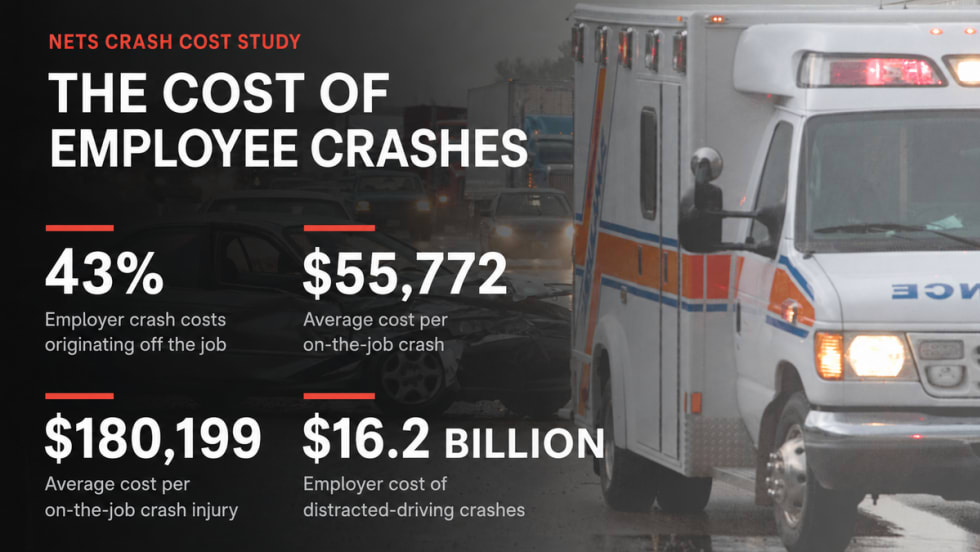
Off-the-Job Crashes Account for 43% of Employers’ $61.7 Billion Crash Burden
NETS quantifies costs dispersed across fleet, risk, HR, and other departments while providing new per-crash benchmarks for employers.
Read More →
Ram Recalls More Than 1.27 Million 1500 Pickups for Seat Belt Anchor Issue
The recall affects certain 2019-2026 Ram 1500 pickups that may have improperly attached second-row seat belt buckle anchors.
Read More →
How Better Visibility Cut Speeding Violations by 48%
Fleet leaders don't need more data, they need clearer visibility into what the data is saying. This case study explores how one utility replaced speeding-event counts with a single metric — miles driven in violation — to strengthen safety and significantly reduce speeding violations.
Read More →
Operation Safe Driver Week: Why the Industry's Oldest Safety Campaign Still Matters to Fleets
A look at how a 2007 enforcement initiative became one of the most consequential weeks on the fleet safety calendar, and what it means for your drivers in 2026.
Read More →
Nexar-Nauto Merger Aims to Give Fleets Better Safety Intelligence Through Larger Driving Dataset
Stefan Heck tells Automotive Fleet that combining more than 10 billion miles of driving history with Nexar's AI models will give fleets deeper insights into driver risk and roadway conditions than either company could provide independently.
Read More →
From Silos to Solutions: Relationship Management for Safer Fleets
From telematics adoption and driver accountability to policy consistency and risk mitigation, this episode breaks down what it really takes to build a safer fleet culture without slowing business down.
Read More →
IIHS Launches First Commercial Vehicle Safety Evaluations
The Insurance Institute for Highway Safety has begun evaluating heavy-duty pickups and cargo vans for driver protection. Which models earned top marks?
Read More →