




IIHS Challenges Automakers to Make Greater Safety Strides
New, stiffer criteria for the 2023 Top Safety Pick and Top Safety Pick+ awards target both headlights and side crash protection.

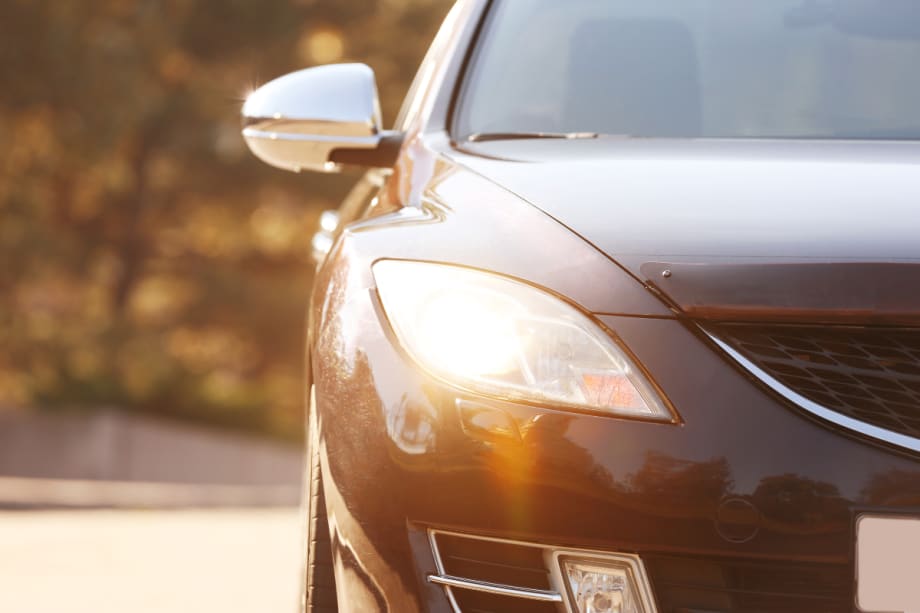
The Insurance Institute for Highway Safety has implemented stricter criteria for its Top Safety Pick awards program, including tougher standards for headlights.
Photo: Canva
Due to tougher criteria from the Insurance Institute for Highway Safety (IIHS), currently just 48 vehicle models qualify for 2023 Top Safety Pick or Top Safety Pick+ awards, compared to 101 vehicles this time last year.
Updates to the award requirements are an essential part of the Top Safety Pick program, which is designed to continually push manufacturers toward a higher level of safety. The new stiffer criteria target both headlights and side crash protection.
One key reason for boosting the requirements is the fact that almost one-quarter of passenger vehicle fatalities occur in side collisions. Another reason for tougher standards concerns pedestrian deaths. Since 2009, pedestrian deaths have risen by almost 80%. Vehicle technology that can detect and respond to pedestrians can be part of the solution to help address the crisis, say IIHS engineers.
Specifically, this year, 28 models captured Top Safety Pick+ accolades while another 20 garnered Top Safety Pick recognition. These models are true standouts in both crashworthiness and crash prevention, notes IIHS experts.
New Side Test
The biggest change to the new criteria for both awards is the replacement of the original IIHS side crash test with the updated evaluation launched in 2021. The original side crash test was extremely successful in driving down the number of fatalities in these types of crashes.
When IIHS introduced the original side test in 2003, most of the vehicles tested earned a poor rating. By 2021, when IIHS launched the updated version that is now part of the award program, virtually every vehicle built for the U.S. market earned a good rating in the original test.
IIHS researchers discovered that fatalities were still common in side crashes that occurred at higher speeds than the original evaluation, prompting them to design the updated test. In addition to a higher speed, the updated test uses a new striking barrier that is closer to the weight of today’s SUVs than the old barrier and more closely mimics the damage they create.
The updated test involves 82% more energy than the original test. Vehicles must earn an acceptable or good rating to qualify for Top Safety Pick, while a good rating is required for “plus” status.
Stricter Standards: Headlights, Pedestrian Front Crash Prevention
Vehicles with good- and acceptable-rated headlights have 15-19% fewer nighttime single-vehicle crashes than vehicles with poor-rated headlights, and the Top Safety Pick program has already pushed many inferior alternatives off the market. Since IIHS introduced the daytime vehicle-to-pedestrian front crash prevention evaluation in 2019, pedestrian crash avoidance has become at least an option on nearly every model, and around half the systems tested earn superior ratings. But there is still more to do, IIHS engineers note.
To that end, there are now stricter requirements for headlights and pedestrian front crash prevention systems. Almost half of all fatal U.S. crashes happen in the dark, and three-quarters of fatal pedestrian crashes occur at night — when many crash avoidance systems perform poorly.
To address that continuing problem, IIHS added the nighttime vehicle-to-pedestrian evaluation to the award requirements and made it impossible for a vehicle to win either award if it could be purchased while equipped with inferior headlights.
Building on Past Safety Gains
IIHS notes that the number of winners is smaller this year because the IIHS is now challenging automakers to build on the safety gains they’ve already achieved.
Automakers deserve credit for vehicle safety achievements that have allowed the IIHS to actually drop three criteria from the 2023 awards. These include the roof strength, head restraint, and vehicle-to-vehicle front crash prevention evaluations. Because manufacturers have worked hard to ensure safety in these areas, the IIHS no longer needs to make these tests part of the overall assessment.
Finally, automakers should stay alert and flexible because further changes to the award criteria are on the horizon for 2024.
More Safety

Fleet Manager’s Ultimate Playbook: Navigating the New Standard in OEM Connectivity
Rising operating costs, driver safety concerns, and unplanned downtime are putting unprecedented pressure on modern fleets. Discover how fleet managers use embedded OEM connectivity and real-time vehicle data to cut TCO, prevent downtime, and protect drivers without aftermarket telematics hardware.
Read More →
From Driver Well-Being to EV Charging | AF News Recap
Mental health belongs in the fleet safety conversation. This week, we’re looking at five ways fleets can support employee well-being before a crisis, plus Holman’s expansion in Mexico, new one-day Fleet Forward passes, and why EV charging demand is outpacing infrastructure growth.
Read More →
Nexar-Nauto Merger Aims to Give Fleets Better Safety Intelligence Through Larger Driving Dataset
Stefan Heck tells Automotive Fleet that combining more than 10 billion miles of driving history with Nexar's AI models will give fleets deeper insights into driver risk and roadway conditions than either company could provide independently.
Read More →
Don't Wait for a Crisis: 5 Ways to Build Mental Health Into Your Fleet Safety Program
For Suicide Prevention Month, fleet and safety leaders have an opportunity to put mental health where it belongs: at the center of workplace safety.
Read More →
How Camera Data Can Strengthen a Fleet’s Insurance Renewal
Insights from a commercial insurance carrier and a broker show how fleets can turn video telematic data, driver coaching, and improved claims results into a stronger case at insurance renewal.
Read More →
The Safest Fleets Aren’t the Ones with the Most Technology
You’ve made the telematics investment. Here’s how to capture the other half of its value and build the safest fleet on the road.
Read More →
Hidden in Plain Sight: Fleet Compliance Risks
Fleet compliance isn't just about having policies — it's about consistently enforcing them. This practical guide reveals six hidden compliance risks common in public sector and shared fleet operations and outlines proven strategies to improve visibility, accountability, and audit readiness
Read More →
NETS Sets 2026 Fleet Safety Benchmark Conference for Indianapolis
The Sept. 15–17 program will feature fleet benchmarking data, case studies, emerging technologies, and implementation strategies while running alongside the NSC Safety Congress & Expo.
Read More →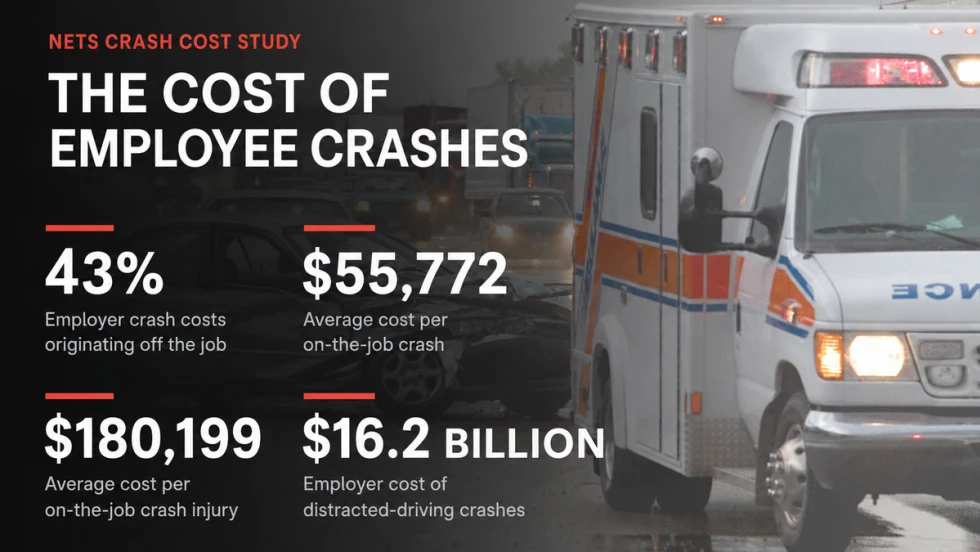
Off-the-Job Crashes Account for 43% of Employers’ $61.7 Billion Crash Burden
NETS quantifies costs dispersed across fleet, risk, HR, and other departments while providing new per-crash benchmarks for employers.
Read More →
Ram Recalls More Than 1.27 Million 1500 Pickups for Seat Belt Anchor Issue
The recall affects certain 2019-2026 Ram 1500 pickups that may have improperly attached second-row seat belt buckle anchors.
Read More →