




Hyundai to Offer Fuel Cell Models for Entire CV LIneup
South Korean automaker Hyundai announced plans to offer hydrogen fuel cell versions of all its commercial vehicles by 2028; Under its Hydrogen Vision 2040 that aims to achieve carbon neutrality, Hyundai wants to make hydrogen-based vehicles a key part of commercial transportation system.
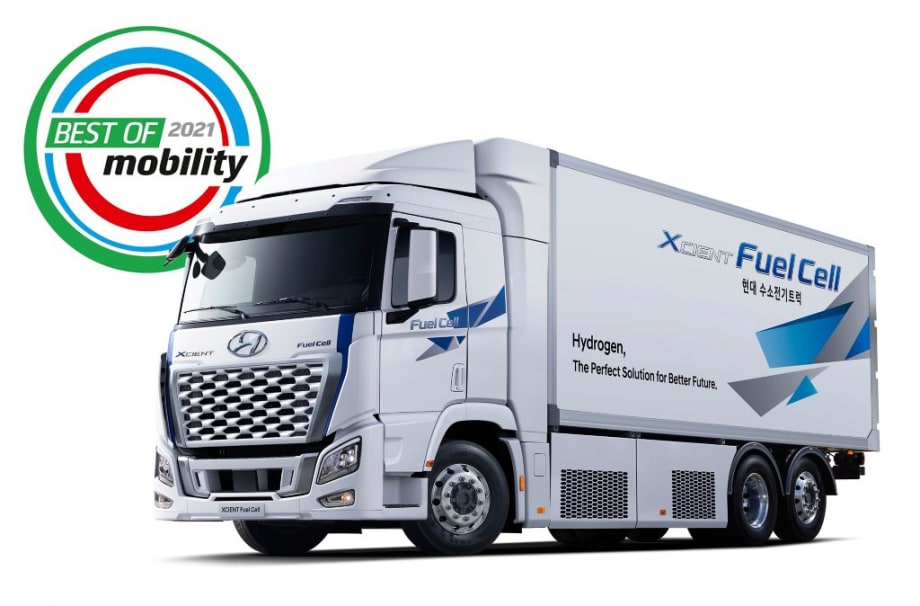
Hyundai Fuel Cell Truck
Credit: Hyundai
South Korean automaker Hyundai announced plans to offer hydrogen fuel cell versions of all its commercial vehicles by 2028;

Bakar Sadik Agwan
Credit: GlobalData
Bakar Sadik Agwan, Senior Automotive Consulting Analyst at GlobalData, a leading data and analytics company, offers his view:
“Hyundai’s announcement to feature fuel cell electric or battery electric powertrains, as well as the application of fuel cell systems to all commercial models by 2028 is a ‘bold’ move by the company. However, prima-facie the target looks tough to achieve given the limited supply-demand trends for fully electric commercial vehicles presently, especially trucks. Hyundai has pioneered hydrogen tech in commercial vehicles with commercialization of its all-fuel-cell truck – the Hyundai XCIENT launched in 2020.
“Under its Hydrogen Vision 2040 that aims to achieve carbon neutrality, Hyundai wants to make hydrogen-based vehicles a key part of commercial transportation system. The auto company definitely have the first mover advantage in the hydrogen technology and the technology have some obvious benefits. But the cost-inflation that it brings compared to peer technologies such as hybrid and battery-electric will certainly pose a challenge for its wider adoption.
“However, Hyundai plans to achieve significant cost reduction via economy of scale and bring its hydrogen vehicles at par with battery-electric by 2030. It will be an important milestone for Hyundai if achieved. But, at a time when automakers are starving for boosting EV adoption in commercial vehicles, which is quite in early stage, it won’t be an easy to make hydrogen technology a mass commercial success. Hyundai’s XCIENT accounts for quite small volume sales, target sales by 2025 is 1,600 units.
“On a positive note, the hydrogen plan is a ‘win’ situation for Hyundai anyways. The market for FCEV development is less crowded as most passenger and commercial automakers are more focused on the mass adoption of battery-electric technology barring a few companies. This will give Hyundai a competitive edge in the fuel cell commercial vehicle market which will emerge as a key battle ground over mid-to-long-term.”
More Global Fleet

GeoFencing Adds to Your Truck Security Arsenal
Geofencing is a familiar fleet tool today, but its early adoption marked a major shift in vehicle tracking, route monitoring, and the debate over employee privacy.
Read More →
Holman Takes Full Ownership of ARIZA in Mexico
Holman is bringing its Mexican fleet management operation fully under its own brand after more than 30 years as a joint venture. The change gives multinational fleet customers a single Holman operation across the U.S., Canada, and Mexico.
Read More →
5 Tire Maintenance Tips to Help Prevent Work Truck Downtime
Regular tire checks can do more than extend tread life. These five maintenance practices can help work truck fleets catch problems early, reduce costs, and prevent downtime.
Read More →

Proven Ways to Reduce Work Truck Downtime
The age-old problem of downtime will always be a reality, but with new strategies at hand, fleets have more ways to keep trucks on the road longer.
Read More →


Cameras, Safety and Insurance: From Reactive Claims to Real-Time Prevention (Part 2 of 2)
Part Two: Commercial auto remains one of the most challenging and costly lines of coverage for fleet operators and insurers alike. Continue learning more about how to effectively address these issues from Onur Aksan, Enterprise Business Development Executive, Geotab
Read More →
Cameras, Safety and Insurance: From Reactive Claims to Real-time Prevention
Commercial auto remains one of the most challenging and costly lines of coverage for fleet operators and insurers alike. Learn more about how to effectively address these issues from Onur Aksan, Enterprise Business Development Executive, Geotab.
Read More →
Fleet Costs Are Rising: Here’s How Leaders Are Responding
Fleet leaders are under pressure to reduce costs, adapt to economic uncertainty, and make smarter decisions. See how peers across North America are responding with real data, proven strategies, and forward-looking insights. Download the 2026 Market Pulse Report to benchmark your strategy and uncover where you can gain an edge.
Read More →
Enterprise Fleet Management Surpasses 900,000 Vehicles in U.S. & Canada
Enterprise Mobility connects with mobility solutions around the globe
Read More →