




Hyundai Fights Cancer While Also Promoting Fuel Cell EVs
SAN FRANCISCO – Hyundai Motor America has launched the Hyundai Drive 4 Hope, a cross-country journey aimed at demonstrating the environmental advantages and performance of fuel cell electric vehicles (FCEVs) while also contributing to the national fight against pediatric cancer.
SAN FRANCISCO – Hyundai Motor America has launched the Hyundai Drive 4 Hope, a cross-country journey aimed at demonstrating the environmental advantages and performance of fuel cell electric vehicles (FCEVs) while also contributing to the national fight against pediatric cancer.
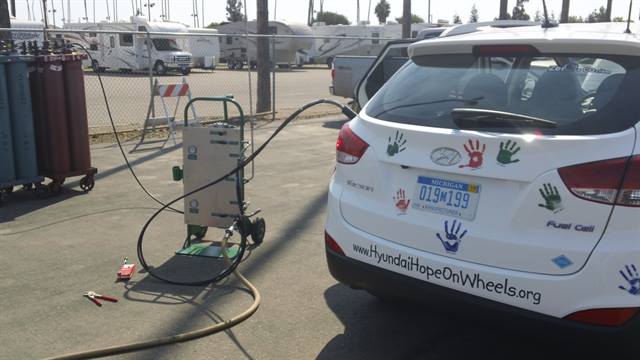
The Hyundai FCEV Tucson stops to fuel up during Drive 4 Hope.
A Hyundai FCEV Tucson serves as the official car of Hope on Wheels, Hyundai’s major pediatric cancer program. The car will travel more than 4,500 miles coast to coast for kids with cancer. During September, National Childhood Cancer Awareness Month, Hyundai Hope on Wheels will award a total of $7.1 million to children’s hospitals nationwide.
During its national tour, the Hyundai Tucson FCEV team will stop at hospitals across the country, collecting colorful handprints from childhood cancer patients and survivors along the way. By the end of September, the vehicle will have collected hundreds of handprints from children around the country, each representing a personal story about a child’s battle with this deadly disease.
After its kickoff with a handprint ceremony at University of California, San Francisco Benioff Children’s Hospital on Sept. 1 – the first of 71 hospitals to receive $100,000 Hope Grants – the Hyundai Tucson FCEV set out to travel over 4,500 miles through more than 15 states in under 30 days.
“Hyundai is committed to bold and innovative change to make the world a better place,” said John Krafcik, president and CEO of Hyundai Motor America. “Through Hope on Wheels, we are making great strides in the treatment of childhood cancer and through our leadership in fuel cell technology, we are making bold strides for a cleaner planet.”
As part of the company’s fuel efficiency strategy, the Hyundai FCEV tour will showcase the efficiency and advantages of Hyundai’s next-generation fuel cell electric vehicle technology. The Hyundai Tucson FCEV uses fuel cell power from compressed hydrogen, an energy source that is not only renewable but far safer than gasoline, the company said. The FCEV Tucson performs about the same as a vehicle on gasoline.
“Fuel cell technology is one of the lowest carbon footprint power solutions in the automotive industry and it has the potential to be a zero carbon solution,” said Michael O’Brien, vice president of product and corporate planning of Hyundai Motor America. “Several manufacturers are actively exploring fuel cell technology, but Hyundai is making it a reality with the ability to begin factory production of fuel cell cars and trucks in the next several years.”
More Green Fleet
EV Charging Use Is Outpacing Infrastructure Growth
ChargePoint’s 2026 Charging Forward Report points to rising charger use, higher-powered charging, commercial vehicle electrification, and energy-management technology. Here’s what fleets should know.
Read More →
Merchants Fleet Reports 290M EV Miles as Fleets Navigate Changing Electrification Market
From millions in operating savings to hundreds of millions of EV miles, Merchants Fleet’s latest report reveals what’s working and what’s changing in fleet electrification.
Read More →
The EV Breakdown Nobody's Talking About: Why Most Electric Vehicle Roadside Calls Aren't Mechanical Failures
Here's why EV breakdowns are widely misunderstood.
Read More →
ChargePoint Now Available in Energy Pass
ChargePoint and additional planned charging network integrations were added to GM's Energy Pass.
Read More →
First Look: Slate Auto's Electric Fleet Pickup
Could an affordable, modular EV pickup make electrification more practical for fleets?
Read More →
Slate Debuts Colorful, Unique EV Models
A recent media and client event, studded with electric vehicles dressed up on platforms, planted a new position for the manufacturer in the wider EV market. Fleets will find cost-saving advantages.
Read More →
Slate Electric SUV, Pickup Switchable Model Aims For Light-Duty Fleets
Everything about this EV is counterintuitive and understated, making it stand out from the crowd.
Read More →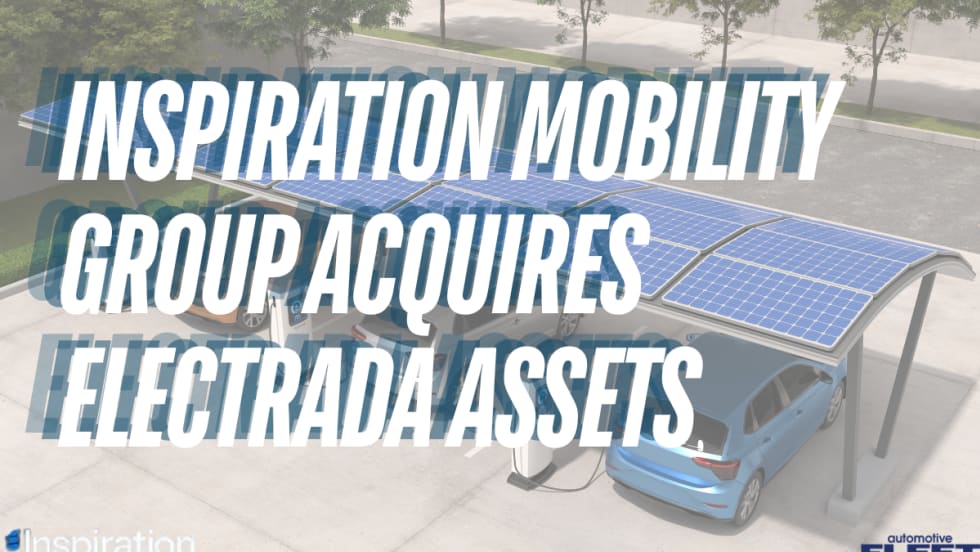
Inspiration Mobility Acquires Key Electrada Assets
Inspiration Mobility Group has acquired select assets of Electrada, adding the fleet electrification provider's team, technology, and charging infrastructure development capabilities to its energy management business.
Read More →
Turning Connected Vehicle Data Into Decisions That Matter
Fleet leaders have more data than ever, but turning that data into clear, actionable decisions remains a challenge. This white paper shows how leading organizations are using connected vehicle data to improve safety, reduce costs, and optimize fleet performance. Learn how to turn insight into action across your fleet.
Read More →