




ARLINGTON, Va. --- The Honda Odyssey was the best overall performer in recent minivan crash tests conducted by the Insurance Institute for Highway Safety to assess how well vehicle bumpers resist damage in low-speed collisions. The institute tested six 2008 minivans --- the Honda Odyssey, Dodge Grand Caravan, Toyota Sienna, Chevrolet Uplander, Kia Sedona and Nissan Quest. The front and rear bumper systems on these minivans allowed $5,000 or more damage in a series of four crash tests conducted at 3 and 6 miles per hour, the institute said. Damage to the Odyssey in the two frontal tests, full-width and corner, was in line with damage to the other minivans, but the Odyssey performed better in the rear tests. It was the best performer in the rear full-width configuration, sustaining damage costing half as much to repair as the damage to the Nissan Quest, the institute said. In the rear corner test, the Odyssey was the second best performer. Damage was largely confined to the bumper system --- the plastic cover, reinforcement bar and the energy-absorbing foam. The Dodge Grand Caravan was the best performer in this test, sustaining the least amount of damage ($483) in any of the 24 individual tests in this round of bumper evaluations. Damage to the Grand Caravan, as well as the Odyssey and Sienna, was limited to the bumpers. The Toyota Sienna sustained the least amount of damage in the front corner test. But if the crash configuration had differed slightly, the outcome could have been very different because there's little underneath the Sienna's bumper cover to absorb crash energy, the institute said. The Sienna and Chevrolet Uplander were the only minivans to withstand the front corner test without headlight damage. "There are good examples in these results," said Joe Nolan, senior vice president of the institute. "Although neither the Odyssey nor the Grand Caravan performed particularly well in the frontal tests and the Sienna didn't do particularly well in the rear tests, all three of these vehicles did turn in good performances in one or two tests apiece. What we want is for all passenger vehicles to perform as well or better than the best minivan examples in each test." In the series of four crash tests, the Nissan Quest sustained damage that would cost more than $8,000 to repair --- the most of all the tested minivans, the institute said. In the institute's bumper tests, each vehicle is run into a barrier designed to mimic the design of a car bumper. The steel barrier's plastic absorber and flexible cover simulate cars' energy absorbers and plastic bumper covers. The series of four tests includes front and rear full-width impacts at 6 mph and front and rear corner impacts at 3 mph. The bottom of the barrier is 18 inches off the ground in the full-width tests and 16 inches from the ground in the corner impacts. These heights are designed to drive bumper improvements and lead to better protection from damage in a range of real-world crashes. The minivans performed somewhat better in the four bumper tests than the midsize cars the institute tested earlier this year. The institute attributed this in part to the minivans' front bumpers being an inch or so higher off the ground, compared with car bumpers (about 17 inches versus 16). The extra height means the minivans' front bumpers usually didn't under-ride the test barrier, which exacerbates the damage, the institute said. Another important design aspect is that most of the minivans the institute tested have third-row seats that fold into the floor, which requires pushing the vehicles' frame rails out wider. Because the bumper systems attach to the ends of the rails, the rear bumpers (but not the front ones) also are wider. This means they do a better job of protecting the rear corners of the minivans from damage in low-speed collisions. For example, the taillights on the minivans weren't damaged in any of the rear corner tests, while the headlights were damaged in four of the six corresponding front corner tests. The tailgates on five of the six minivans the institute tested --- all but the Chevrolet Uplander --- sustained damage in the rear full-width test. Only the Quest and Toyota Sienna required tailgate replacement. Those on the other minivans could be repaired at less cost. In the front full-width test, the Quest slid under the bumper barrier and sustained damage to the hood and grille, the institute said. This was the only minivan with hood damage in the front full-width test.
Honda Odyssey Top Performer in Latest Minivan Crash Tests
ARLINGTON, Va. --- The Honda Odyssey was the best overall performer in recent minivan crash tests conducted by the Insurance Institute for Highway Safety to assess how well vehicle bumpers resist damage in low-speed collisions.
More Safety

Reducing Risk by Eliminating Phone Use Behind the Wheel
Distracted driving remains one of the most persistent risks in fleet operations. New approaches focus on removing mobile device use entirely while adding real-time safety support.
Read More →
Distracted Driving in the Age of Smart Tech – Part 2
As distraction risks evolve, fleets are turning to smarter, more connected technologies to better understand what’s happening behind the wheel. Part 2 explores how these tools are helping identify risky behaviors and improve visibility across operations.
Read More →
Data Rights, Risks, and Responsibilities After a Crash
What fleets capture to improve safety can also expose them in litigation, forcing leaders to rethink how data is managed, stored, and shared.
Read More →
From Distraction to Detection: Strengthening Awareness in Fleet Drivers
Distracted driving is often measured by what we can see—phones in hand, eyes off the road. But what about the distractions we can’t? A recent incident raises a bigger question about awareness, attention, and why subtle risks so often go unnoticed.
Read More →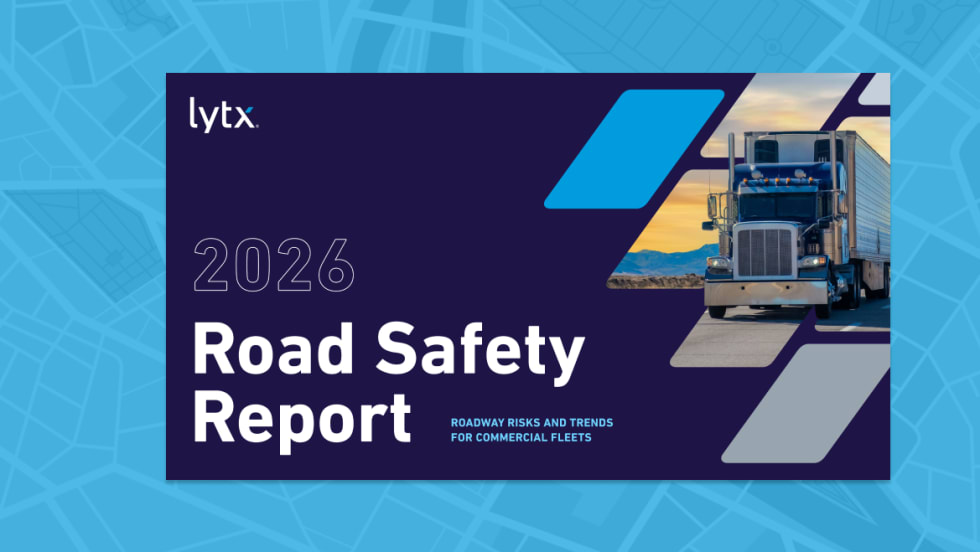
Lytx 2026 Road Safety Report
While serious crashes are declining, a rise in minor incidents and ongoing risk hotspots underscore the need for continued fleet safety investment.
Read More →
Behind-the-Wheel vs. Classroom Training: What Actually Changes Driver Behavior?
Fleets have more driver data than ever, so why isn't behavior changing? Training requires more than reports and coaching — it requires real-world practice.
Read More →
Distracted Driving in the Age of Smart Tech – Part 1
A two-part conversation with Stefan Heck on how AI is transforming the fight against distracted driving. As fleets adopt smarter tools, the focus shifts from reacting to preventing risk. In Part 1, we look at where AI is making an impact for fleets today.
Read More →
Pedestrian Safety Starts With the Driver
More people on foot means more risk for drivers. These pedestrian safety tips can help prevent serious injuries and keep everyone safer on the road.
Read More →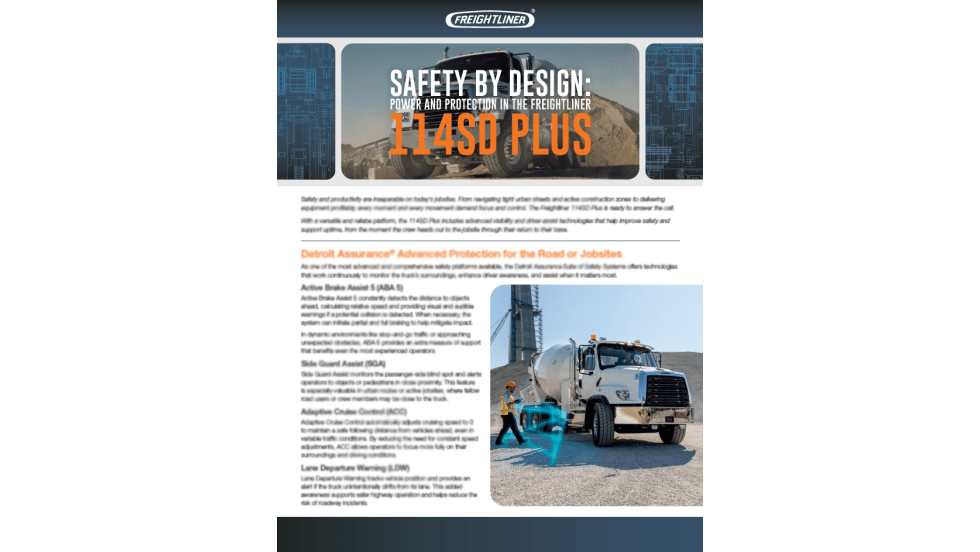
Safety by Design: Power and Protection in the Freightliner 114SD Plus
Fleet managers are under pressure to reduce accidents, control costs, and improve operational efficiency. See how advanced vehicle safety technologies are helping fleets operate smarter and safer.
Read More →
Pedestrian Deaths Drop in First Half of 2025, Marking Largest Decline in Years
An 11% drop in pedestrian fatalities in early 2025 signals progress in U.S. road safety, but elevated death rates and ongoing risks underscore the need for continued action from fleets and policymakers.
Read More →