





More from Honda: Honda Commits to New Safety Goals and Advances Electric Vehicles
Honda, Google Partner on In-Vehicle Connected Services
Future Honda models will launch with Google built-in starting in the second half of 2022.
September 24, 2021
Photo: Honda
2 min to read
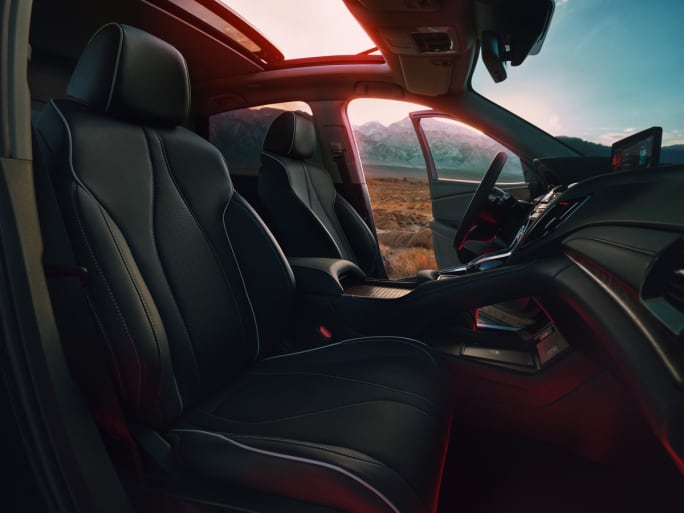
The built-in functionaility will include voice assistance, navigation, and in-vehicle apps. After launching in North America, Honda will expand the integration globally.
Photo: Honda
Honda and Google have agreed to integrate Google’s in-vehicle connected service into an all-new model that will come to market in the second half of 2022 in North America.
Honda and Google have been collaborating since 2015 with the broader automotive industry to introduce the Android platform to automobiles. As a result of this collaboration, Honda began adopting Android Auto starting with the Accord in 2016. Android Auto optimizes smartphone functions for drivers and allows Honda vehicles to offer UX (user experience) that Honda customers can enjoy safely and comfortably.
With the new collaboration with Google, Honda will further advance the UX for its customers.
By connecting mobility and people’s daily lives through the collaboration between Honda’s connected technologies and Google’s advanced technologies, Honda will offer in-vehicle solutions that better suit the needs of customers, an announcement on Sept. 23 said.
Key functions of Google built-in include:
Voice assistant: Using Google Assistant installed to the on-board display audio, the driver can easily complete daily tasks through voice control while keeping eyes on the road and hands on the steering wheel. Drivers can send messages, get directions, and control media, vehicle functions, and compatible smart phone devices hands-free.
Navigation: By integrating Google Maps to the vehicle, the maps the user already enjoys on their smartphone can be used on display audio in the vehicle. Moreover, the driver can talk to Google to do many things more easily while driving, including navigating home, getting an estimated time of arrival, finding the closest gas stations or EV charging stations, and checking a businesses hours.
In-vehicle apps: With Google Play, users can easily enjoy and download their favorite apps. Listen to music, podcasts, and audiobooks directly from their vehicle without using their smartphones. A variety of in-vehicle apps will be offered on Google Play.
Honda is planning to begin integrating Google built-in with the all-new model that will go on sale in the second half of 2022 in North America, then expand it globally in stages.
Satoshi Takami, operating executive, chief officer in charge of MaaS operations, for Honda Motor Co., Ltd, said: “It is our great pleasure to be able to offer new value for mobility and people’s daily lives all around the world by combining Honda’s strengths in advanced technologies in automobile development and Google’s strengths in innovative information technologies. Honda will continue to take on challenges to create new value while rapidly addressing the transformation of mobility without being bound by the conventional wisdom of the automobile industry.”
Google is also working with Ford on a similar partnership.
More Telematics
GM Launches OnStar Fleet Intelligence Platform With AI Assistant
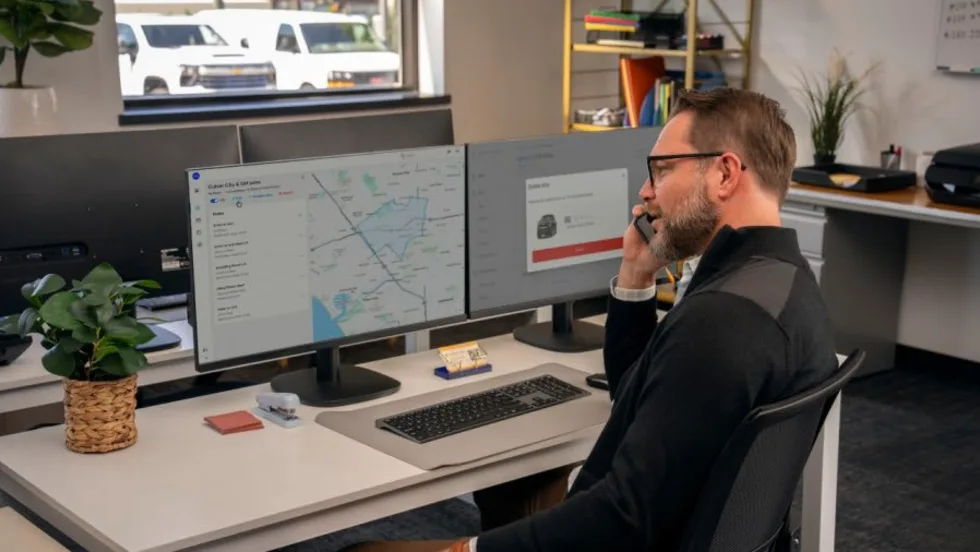
The new platform brings vehicle data, order tracking, connected services and fleet analytics into one system, with an AI assistant that can answer fleet questions using natural-language prompts.
Read More →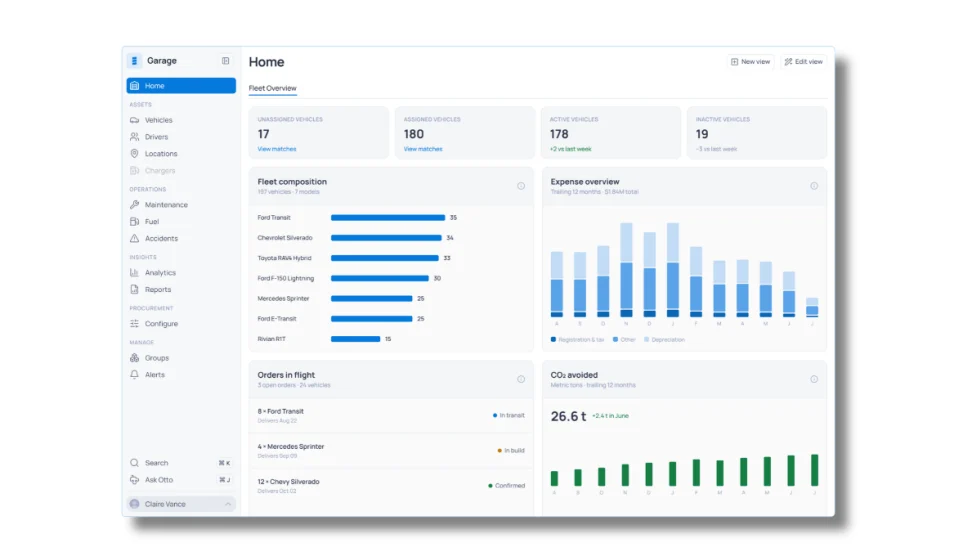
Inspiration Fleet Introduces Garage 2.0 Fleet Intelligence Platform
Fleet managers increasingly have access to data from vehicles, telematics, fuel, charging, and other systems, but those sources don't always communicate with one another. Inspiration Fleet's Garage 2.0 platform brings that information together while letting fleets keep working with different technology and service providers.
Read More →
Inside Inspiration Fleet’s New Platform for Connecting Fleet Data
Inspiration Fleet CTO Chris Getner explains how the new Garage 2.0 platform is designed to connect disparate fleet data and what that could mean for fleet managers in practice.
Read More →
Sponsored•October 1, 2026
Fleet Manager’s Ultimate Playbook: Navigating the New Standard in OEM Connectivity
Rising operating costs, driver safety concerns, and unplanned downtime are putting unprecedented pressure on modern fleets. Discover how fleet managers use embedded OEM connectivity and real-time vehicle data to cut TCO, prevent downtime, and protect drivers without aftermarket telematics hardware.
Read More →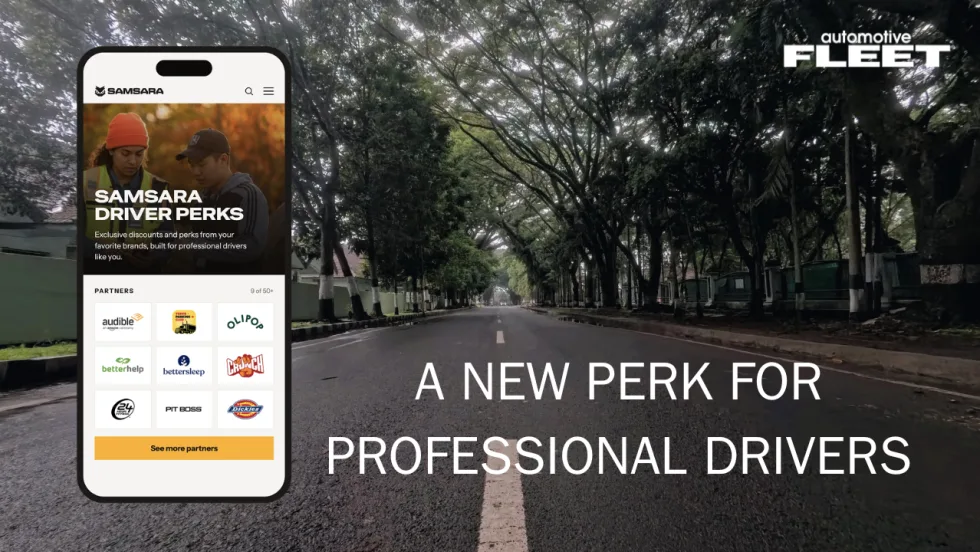
Samsara Driver Perks Adds New Benefit for Corporate Fleet Drivers
The rewards program gives eligible professional drivers access to discounts from more than 50 brands while giving fleets another way to support recruitment, retention, and the driver experience.
Read More →
Inside the Church of Jesus Christ of Latter-day Saints’ Two-Track Telematics Strategy
With 20,000 vehicles and two fundamentally different driver populations, the Church faced a fleet management problem that a single telematics program couldn't solve. How it responded offers a replicable framework for any fleet where one size doesn't fit every driver.
Read More →
How Conversational AI Can Make Fleet Tasks Easier for Drivers
While most generative AI tools help fleet managers interpret data at their desks, Connex2X is applying voice interaction to tasks behind the wheel.
Read More →
Why Fleets Are Creating Dedicated Fleet Analyst Positions
Are fleet analyst positions the new norm? Listen here to find out.
Read More →
Teletrac Navman Begins Next Chapter as Standalone Private Company
What's new with Teletrac Navman and its new owner?
Read More →
Why Fleets Are Creating Dedicated Fleet Analyst Positions
Telematics, AI, EVs, and connected technologies are generating more fleet data than traditional teams can effectively manage. Reed Jackson explains why dedicated fleet analytics roles are emerging to turn that information into better operational decisions.
Read More →