




HazMat Transport Permits Converted into Fed Regulations
WASHINGTON - The U.S. Department of Transportation's Pipeline and Hazardous Materials Safety Administration (PHMSA) on Feb. 1 announced it was incorporating the provisions of six widely used cargo tank special permits into federal hazardous materials regulations.
WASHINGTON - The U.S. Department of Transportation's Pipeline and Hazardous Materials Safety Administration (PHMSA) on Feb. 1 announced it was incorporating the provisions of six widely used cargo tank special permits into federal hazardous materials regulations.
The PHMSA described the move as "another step in its efforts to improve the safe transport of hazardous materials." This new regulation will cut down on thousands of special permit applications per year, according to the department.
The special permits incorporated into regulations have long-established safety records, PHMSA said. Like all special permits, these were used to approve processes for hazmat transport not explicitly spelled out in PHMSA regulations. Over the years, the practices approved in these permits became commonplace.
"This rulemaking is another step in incorporating tested transportation technologies and operations from longstanding special permits into the regulations, promoting safety and streamlining our processes," said PHMSA Administrator Cynthia Quarterman.
Streamlining the hazardous materials special permit and approvals process has been a stated priority for PHMSA. Last year, the Department of Transportation released an action plan to improve PHMSA's safety oversight, processes, and procedures and policies for its hazardous materials special permits and approvals program.
Listed below are the six special permits that will be incorporated into the hazardous materials regulations pertaining to the shipment of certain hazardous materials in cargo tanks.
Two of the special permits cover hazardous materials mounted on farm trucks used exclusively for agricultural purposes:
-- Liquefied petroleum gas (LPG)
-- Liquid soil pesticide (toxic substances)
One special permit covers the transportation of hazardous materials used for striping roads.
One special permit authorizes private motor carrier companies to transport propane tanks most commonly used for home heating and cooking.
Two special permits address nurse tanks:
-- The first covers the transportation of nurse tanks securely mounted on field trucks.
-- The second authorizes the use of the nurse tanks carrying anhydrous ammonia under certain conditions when the tanks are missing or have illegible identification plates.
The final rule becomes effective 30 days after the date of publication in the Federal Register. The final rule is available on the PHMSA Web site at www.phmsa.dot.gov.
More Safety

The Safest Fleets Aren’t the Ones with the Most Technology
You’ve made the telematics investment. Here’s how to capture the other half of its value and build the safest fleet on the road.
Read More →
Hidden in Plain Sight: Fleet Compliance Risks
Fleet compliance isn't just about having policies — it's about consistently enforcing them. This practical guide reveals six hidden compliance risks common in public sector and shared fleet operations and outlines proven strategies to improve visibility, accountability, and audit readiness
Read More →
NETS Sets 2026 Fleet Safety Benchmark Conference for Indianapolis
The Sept. 15–17 program will feature fleet benchmarking data, case studies, emerging technologies, and implementation strategies while running alongside the NSC Safety Congress & Expo.
Read More →
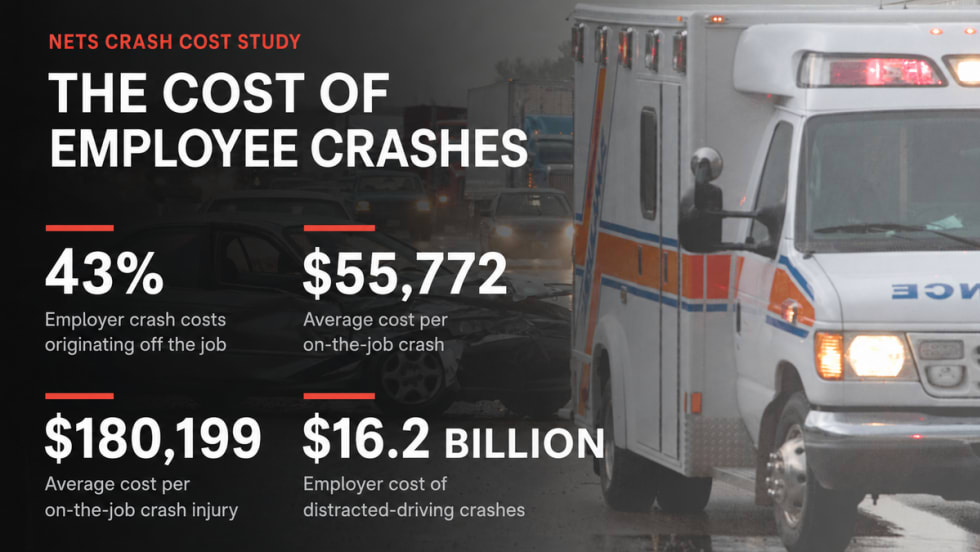
Off-the-Job Crashes Account for 43% of Employers’ $61.7 Billion Crash Burden
NETS quantifies costs dispersed across fleet, risk, HR, and other departments while providing new per-crash benchmarks for employers.
Read More →
Ram Recalls More Than 1.27 Million 1500 Pickups for Seat Belt Anchor Issue
The recall affects certain 2019-2026 Ram 1500 pickups that may have improperly attached second-row seat belt buckle anchors.
Read More →
How Better Visibility Cut Speeding Violations by 48%
Fleet leaders don't need more data, they need clearer visibility into what the data is saying. This case study explores how one utility replaced speeding-event counts with a single metric — miles driven in violation — to strengthen safety and significantly reduce speeding violations.
Read More →
Operation Safe Driver Week: Why the Industry's Oldest Safety Campaign Still Matters to Fleets
A look at how a 2007 enforcement initiative became one of the most consequential weeks on the fleet safety calendar, and what it means for your drivers in 2026.
Read More →
Nexar-Nauto Merger Aims to Give Fleets Better Safety Intelligence Through Larger Driving Dataset
Stefan Heck tells Automotive Fleet that combining more than 10 billion miles of driving history with Nexar's AI models will give fleets deeper insights into driver risk and roadway conditions than either company could provide independently.
Read More →
From Silos to Solutions: Relationship Management for Safer Fleets
From telematics adoption and driver accountability to policy consistency and risk mitigation, this episode breaks down what it really takes to build a safer fleet culture without slowing business down.
Read More →
IIHS Launches First Commercial Vehicle Safety Evaluations
The Insurance Institute for Highway Safety has begun evaluating heavy-duty pickups and cargo vans for driver protection. Which models earned top marks?
Read More →