




GMAC Offers Tips for Driving in Mexico
ST. LOUIS, Mo. --- Approximately 80 million vehicle border crossings to Mexico occur every year, but unfortunately, some drivers may be leaving themselves vulnerable in the event of an accident.
ST. LOUIS, Mo. --- Approximately 80 million vehicle border crossings to Mexico occur every year, but unfortunately, some drivers may be leaving themselves vulnerable in the event of an accident.
"The danger comes when you assume that driving your car in Mexico is the same as driving in the United States," said Gary Kusumi, CEO and president of GMAC Insurance. "That simply isn't the case."
While crossing the border itself may be simple enough, many drivers are unaware that, in most instances, their U.S. auto insurance policy will not be valid if they experience an accident in Mexico. In addition, Mexican regulations have profound differences when it comes to handling vehicle accidents, thefts and other insurance-related claims.
"If not properly insured, drivers could be faced with a mountain of headaches, such as permanently losing their vehicle or even prolonged jail time," Kusumi said. "But these are preventable, if your assets are properly protected in advance."
GMAC Insurance and its Mexican insurance partners ABA Seguros and IIG offer the following five tips:
1. Re-insure yourself. The bottom line? If you plan on crossing the border in your own vehicle, you need to get Mexico auto insurance. In the event of an accident, you probably won't be covered by your regular U.S. policy. Check with your insurance company to see if it offers a pre-approved policy in Mexico or special add-ons that will cover you within a certain mileage from the border.
2. Know the law. In Mexico, a car accident is seen as a criminal offense, and until it is determined who is at fault and whether a penalty can be paid, you could be detained in jail. Check with your insurance company to make sure they will cover bail costs, so that you aren't detained longer than absolutely necessary.
3.Stay with your car. Mexican law states that a car must either be driven by the vehicle owner, or the owner must be in the vehicle. If the vehicle owner is not present, the car will be seized by customs and not returned under any circumstances. If your name is on the title, stay with the vehicle at all times.
4. Plan ahead. Know how long you will be in the country in advance. Give yourself some extra leeway in the event an accident occurs and an extended stay is unavoidable. In addition, register with the embassy, so they are aware of your presence and your whereabouts.
5. Study up. Read your new auto insurance policy in detail and note the responsibilities you have in case of an accident or loss. Keep a copy of the policy in the vehicle at all times, and always carry your driver's license, as well --- it's valid in Mexico.
GMAC Insurance works with approved Mexican insurance companies ABA Seguros and IIG to ensure that customers can purchase mandatory liability coverage and coverage for theft and damage to their vehicle in Mexico.
More Safety
The Safest Fleets Aren’t the Ones with the Most Technology
You’ve made the telematics investment. Here’s how to capture the other half of its value and build the safest fleet on the road.
Read More →
Hidden in Plain Sight: Fleet Compliance Risks
Fleet compliance isn't just about having policies — it's about consistently enforcing them. This practical guide reveals six hidden compliance risks common in public sector and shared fleet operations and outlines proven strategies to improve visibility, accountability, and audit readiness
Read More →
NETS Sets 2026 Fleet Safety Benchmark Conference for Indianapolis
The Sept. 15–17 program will feature fleet benchmarking data, case studies, emerging technologies, and implementation strategies while running alongside the NSC Safety Congress & Expo.
Read More →
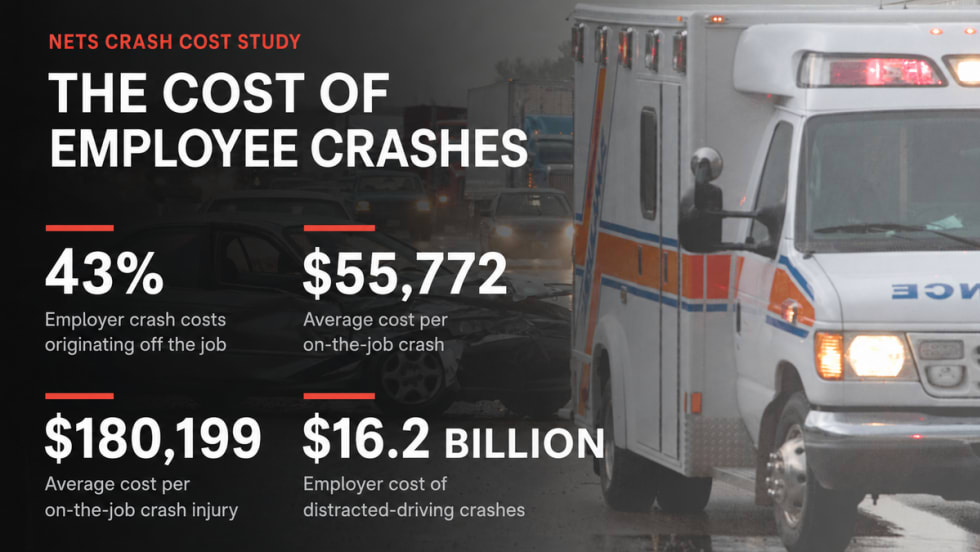
Off-the-Job Crashes Account for 43% of Employers’ $61.7 Billion Crash Burden
NETS quantifies costs dispersed across fleet, risk, HR, and other departments while providing new per-crash benchmarks for employers.
Read More →
Ram Recalls More Than 1.27 Million 1500 Pickups for Seat Belt Anchor Issue
The recall affects certain 2019-2026 Ram 1500 pickups that may have improperly attached second-row seat belt buckle anchors.
Read More →
How Better Visibility Cut Speeding Violations by 48%
Fleet leaders don't need more data, they need clearer visibility into what the data is saying. This case study explores how one utility replaced speeding-event counts with a single metric — miles driven in violation — to strengthen safety and significantly reduce speeding violations.
Read More →
Operation Safe Driver Week: Why the Industry's Oldest Safety Campaign Still Matters to Fleets
A look at how a 2007 enforcement initiative became one of the most consequential weeks on the fleet safety calendar, and what it means for your drivers in 2026.
Read More →
Nexar-Nauto Merger Aims to Give Fleets Better Safety Intelligence Through Larger Driving Dataset
Stefan Heck tells Automotive Fleet that combining more than 10 billion miles of driving history with Nexar's AI models will give fleets deeper insights into driver risk and roadway conditions than either company could provide independently.
Read More →
From Silos to Solutions: Relationship Management for Safer Fleets
From telematics adoption and driver accountability to policy consistency and risk mitigation, this episode breaks down what it really takes to build a safer fleet culture without slowing business down.
Read More →
IIHS Launches First Commercial Vehicle Safety Evaluations
The Insurance Institute for Highway Safety has begun evaluating heavy-duty pickups and cargo vans for driver protection. Which models earned top marks?
Read More →