




GM Showcases HCCI Engine
WARREN, MI --- General Motors Corp. officials showcased the HCCI four-cylinder engine May 20 at the company's research and development center, the Detroit News reported. The engine promises up to a 15-percent increase in fuel economy while dramatically reducing NOx gases.
WARREN, MI --- General Motors Corp. officials showcased the HCCI four-cylinder engine May 20 at the company's research and development center, the Detroit News reported. The engine promises up to a 15-percent increase in fuel economy while dramatically reducing NOx gases.
NOx is a generic term for highly reactive gases that include bonded nitrogen and oxygen, which can cause respiratory problems for people and contribute to acid rain and global warming.
HCCI stands for homogenous charge compression ignition.
Uwe Grebe, GM's executive director of powertrain advanced engineering, declined to give a firm date when an HCCI engine would become production ready but said it would be in the next decade. The process can "be applied to many engines, including four- , six- and eight-cylinder engines," Grebe said.
Paul Najt, GM lab group manager of powertrain systems research, has been studying gasoline compression ignition for 30 years. He said the science behind these engines has moved forward with other engine advances such as direct injection.
"It's amazing how quickly all of this enabling technology is advancing," Najt said.
The engine can operate under compression ignition from idle to 3,000 rpm and cruise up to 60 mph. A spark plug also is connected to each cylinder to permit the engine to operate in the traditional mode. But when driving in compression mode, the cylinder's temperature stays cooler. This prevents pollutants from forming, the Detroit News reported. A conventional gas engine ignites its fuel at 3,800 degrees Fahrenheit. When in compression mode, the HCCI engine ignites the same fuel at 2,900 degrees, Najt said.
Vijay Ramappan, staff engineer for calibration, said the HCCI engine still needs work but will significantly improve city mileage for future cars and trucks.
More Green Fleet

Merchants Fleet Reports 290M EV Miles as Fleets Navigate Changing Electrification Market
From millions in operating savings to hundreds of millions of EV miles, Merchants Fleet’s latest report reveals what’s working and what’s changing in fleet electrification.
Read More →
The EV Breakdown Nobody's Talking About: Why Most Electric Vehicle Roadside Calls Aren't Mechanical Failures
Here's why EV breakdowns are widely misunderstood.
Read More →
ChargePoint Now Available in Energy Pass
ChargePoint and additional planned charging network integrations were added to GM's Energy Pass.
Read More →

First Look: Slate Auto's Electric Fleet Pickup
Could an affordable, modular EV pickup make electrification more practical for fleets?
Read More →
Slate Debuts Colorful, Unique EV Models
A recent media and client event, studded with electric vehicles dressed up on platforms, planted a new position for the manufacturer in the wider EV market. Fleets will find cost-saving advantages.
Read More →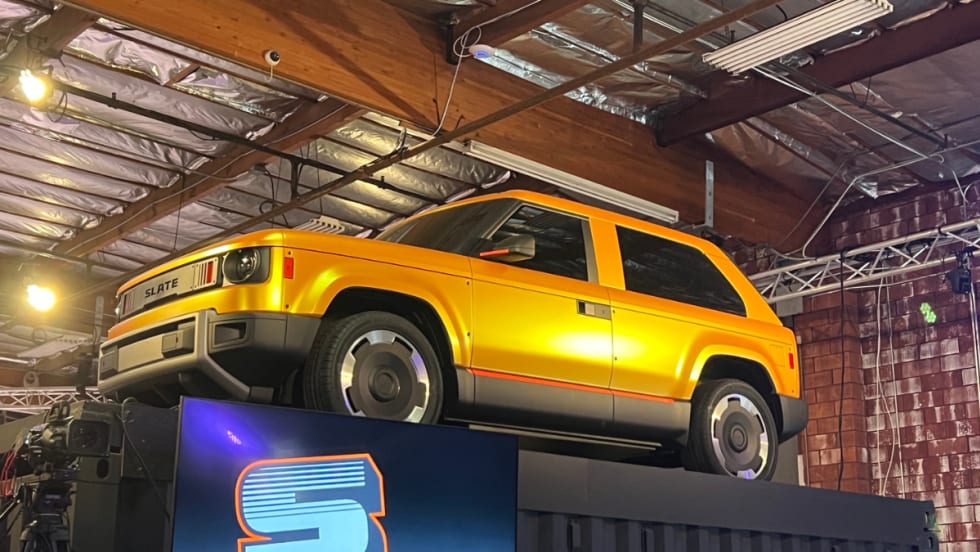
Slate Electric SUV, Pickup Switchable Model Aims For Light-Duty Fleets
Everything about this EV is counterintuitive and understated, making it stand out from the crowd.
Read More →
Inspiration Mobility Acquires Key Electrada Assets
Inspiration Mobility Group has acquired select assets of Electrada, adding the fleet electrification provider's team, technology, and charging infrastructure development capabilities to its energy management business.
Read More →
Turning Connected Vehicle Data Into Decisions That Matter
Fleet leaders have more data than ever, but turning that data into clear, actionable decisions remains a challenge. This white paper shows how leading organizations are using connected vehicle data to improve safety, reduce costs, and optimize fleet performance. Learn how to turn insight into action across your fleet.
Read More →
Are You Tracking Your Fleet's True Total Cost of Ownership?
Bobit Business Media surveyed 190 fleet professionals and found that while most fleets are tracking costs, fragmented systems and data gaps are keeping true TCO visibility out of reach. With rising pressure to control spend in an increasingly volatile environment, the gap between what fleets think they know and what the data actually shows is wider than you might expect. See how your peers are managing costs today and where the industry still has room to improve.
Read More →