




GM Settles Coolant Repair Cases
WASHINGTON, D.C. --- General Motors Corp. recently agreed to settle a series of class-action lawsuits alleging that the company sold about 35 million vehicles with faulty coolant and engine parts, the Detroit Free Press reported.
WASHINGTON, D.C. --- General Motors Corp. recently agreed to settle a series of class-action lawsuits alleging that the company sold about 35 million vehicles with faulty coolant, the Detroit Free Press reported.
The proposed settlement calls for GM to reimburse class members between $50 and $800 for repairs linked to Dex-Cool, a coolant that GM included in its cars and trucks from 1995 to 2004. About 14 federal and state lawsuits seeking class-action status have been filed alleging a variety of problems in V6 engines linked to Dex-Cool, the Detroit Free Press reported.
Most of the claims have alleged that Dex-Cool caused engine or radiator damage.
Owners and customers who have paid for repairs related to Dex-Cool have until Oct. 27 to submit a claim.
The total cost of the settlement will depend on how many customers claim damages. Tom Wilkinson, a spokesman for GM, told the Free Press that the company settled the case because the lawsuits were "time-consuming and expensive."
The company isn't admitting to any wrongdoing, Wilkinson told the Associated Press. He added: "Our experience with Dex-Cool is that when the cooling system is kept full and properly maintained we haven't seen any problems. These kinds of things appear to be issues of low coolant, which isn't unusual with high-mileage vehicles, so we decided to agree to the settlement."
Under the proposed settlement, current and former owners and lessees of certain 1995-2004 model year GM vehicles with 3.1-liter, 3.4-liter, 3.8-liter or 4.3-liter engines will be eligible to receive reimbursement for Dex-Cool related engine repairs that occurred within seven years or 150,000 miles (whichever is earlier) of original vehicle purchase; these repairs include intake manifold gasket replacements, cooling system flushes, and heater core repairs.
Vehicle owners or lessees who paid for a qualifying repair will be entitled to cash reimbursement from GM of up to $400 per repair made within the first five years of the vehicle’s life, up to $100 per repair made in the sixth year, and up to $50 per repair made in the seventh year. Those who paid for multiple covered repairs may be eligible to receive multiple cash reimbursements. In addition, those vehicle owners or lessees who had more expensive repairs as a result of internal coolant leaks will be entitled to cash reimbursement from GM of up to $800.
"The settlement is the result of a lot of hard work over a five-year period in what was a vigorously contested series of class-action lawsuits," said Eric Gibbs of San Francisco-based Girard Gibbs LLP, co-lead counsel for the plaintiffs.
This settlement does not include Missouri, which has an identical settlement authorized by a different court.
For more information about the settlement, visit www.dexcoolsettlement.com.
More Safety

How Better Visibility Cut Speeding Violations by 48%
Fleet leaders don't need more data, they need clearer visibility into what the data is saying. This case study explores how one utility replaced speeding-event counts with a single metric — miles driven in violation — to strengthen safety and significantly reduce speeding violations.
Read More →
Operation Safe Driver Week: Why the Industry's Oldest Safety Campaign Still Matters to Fleets
A look at how a 2007 enforcement initiative became one of the most consequential weeks on the fleet safety calendar, and what it means for your drivers in 2026.
Read More →
Nexar-Nauto Merger Aims to Give Fleets Better Safety Intelligence Through Larger Driving Dataset
Stefan Heck tells Automotive Fleet that combining more than 10 billion miles of driving history with Nexar's AI models will give fleets deeper insights into driver risk and roadway conditions than either company could provide independently.
Read More →
From Silos to Solutions: Relationship Management for Safer Fleets
From telematics adoption and driver accountability to policy consistency and risk mitigation, this episode breaks down what it really takes to build a safer fleet culture without slowing business down.
Read More →
IIHS Launches First Commercial Vehicle Safety Evaluations
The Insurance Institute for Highway Safety has begun evaluating heavy-duty pickups and cargo vans for driver protection. Which models earned top marks?
Read More →
Reducing Risk by Eliminating Phone Use Behind the Wheel
Hosted with the cofounder of Lifesaver Mobile, this episode addresses phone use behind the wheel and how to design a driving environment that actually helps prevents accidents.
Read More →
Cameras, Safety and Insurance: From Reactive Claims to Real-Time Prevention (Part 2 of 2)
Part Two: Commercial auto remains one of the most challenging and costly lines of coverage for fleet operators and insurers alike. Continue learning more about how to effectively address these issues from Onur Aksan, Enterprise Business Development Executive, Geotab
Read More →
How 5-Second Telematics Data Is Changing Fleet Safety
This episode connects with Steve Santostasi of Ford Pro and covers how a few seconds of data can make a difference in fleet safety.
Read More →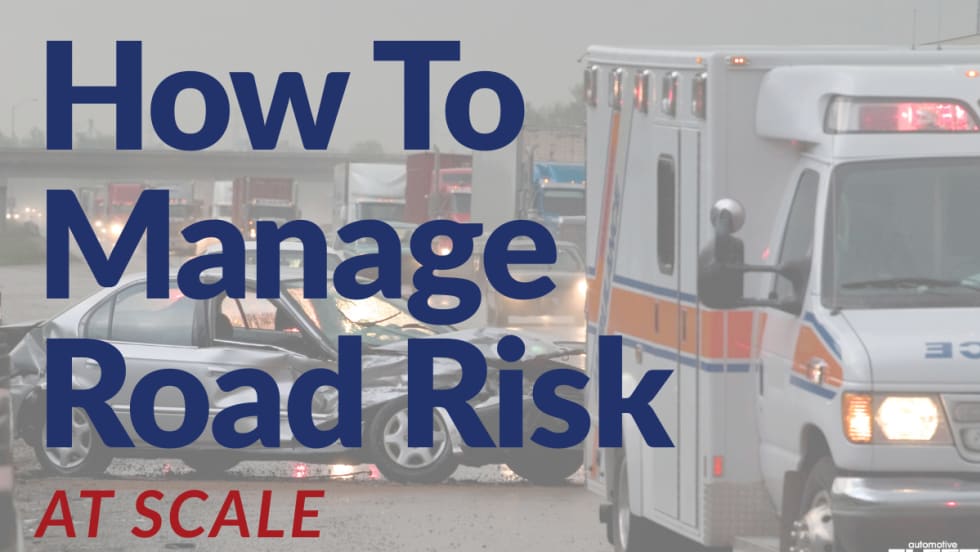
Managing Road Risk at Scale: Why Fleet Safety Needs a Data-Driven Framework
Insights from the FIA Road and Driver Safety Indexes reveal how to manage road risk on a larger scale.
Read More →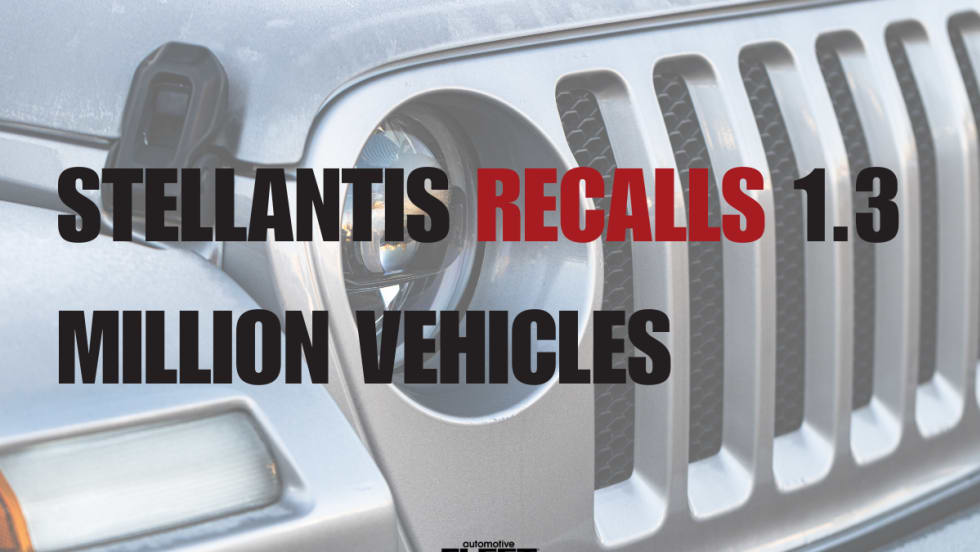
Stellantis Recalls 1.3 Million Jeep Vehicles Worldwide Over Fire Risk
Stellantis is recalling more than 1.3 million Jeep Wrangler and Gladiator models worldwide over a fire risk linked to power steering pump wiring.
Read More →