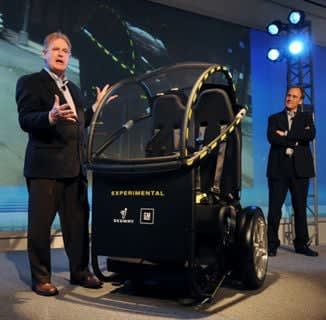
The two companies are working on an electronically powered, two-seat prototype vehicle that only has two wheels to allow people to travel around cities. They've dubbed it Project P.U.M.A. (Personal Urban Mobility and Accessibility).
by Staff
April 9, 2009
2 min to read
On April 7, General Motors Corp. and Segway demonstrated a new type of vehicle that could change the way we move around in cities.
Dubbed Project P.U.M.A. (Personal Urban Mobility and Accessibility), GM and Segway are developing an electrically powered, two-seat prototype vehicle that has only two wheels. It could allow people to travel around cities more quickly, safely, quietly and cleanly - and at a lower total cost. The vehicle also enables design creativity, fashion, fun and social networking.
Ad Loading...
Trends indicate that urbanization is growing, and with that comes increased congestion and more competition for parking. Cities around the world are actively looking for solutions to alleviate congestion and pollution. Project P.U.M.A. addresses those concerns, according to the companies. It combines several technologies demonstrated by GM and Segway, including electric drive and batteries; dynamic stabilization (two-wheel balancing); all-electronic acceleration, steering and braking; vehicle-to-vehicle communications; and autonomous driving and parking. Those technologies integrate in Project P.U.M.A. to increase mobility freedom, while also enabling energy efficiency, zero emissions, enhanced safety, seamless connectivity and reduced congestion in cities.
The Project P.U.M.A. prototype vehicle integrates a lithium-ion battery, digital smart energy management, two-wheel balancing, dual electric wheel motors, and a dockable user interface that allows off-board connectivity. The result is an advanced and functional concept that demonstrates the capabilities of technology that exists today.
Built to carry two or more passengers, it can travel at speeds up to 35 miles per hour (56 kph), with a range up to 35 miles (56 km) between recharges.
Since the introduction of the Segway Personal Transporter (PT), Segway has established itself as the leader in the small electric vehicle space. Its approach to congestion and environmental challenges is balanced with a strong understanding of the functional needs of its customers, enabling them to do more with less. Segway has delivered more than 60,000 lithium-ion batteries to the market.
Fleet managers are done with the debate—and focused on execution. Learn how to build a practical electrification strategy that aligns infrastructure, operations, and financing while keeping costs controlled and deployment scalable with support from Blink Charging. Discover how smart planning today positions fleets for long-term performance and ROI.
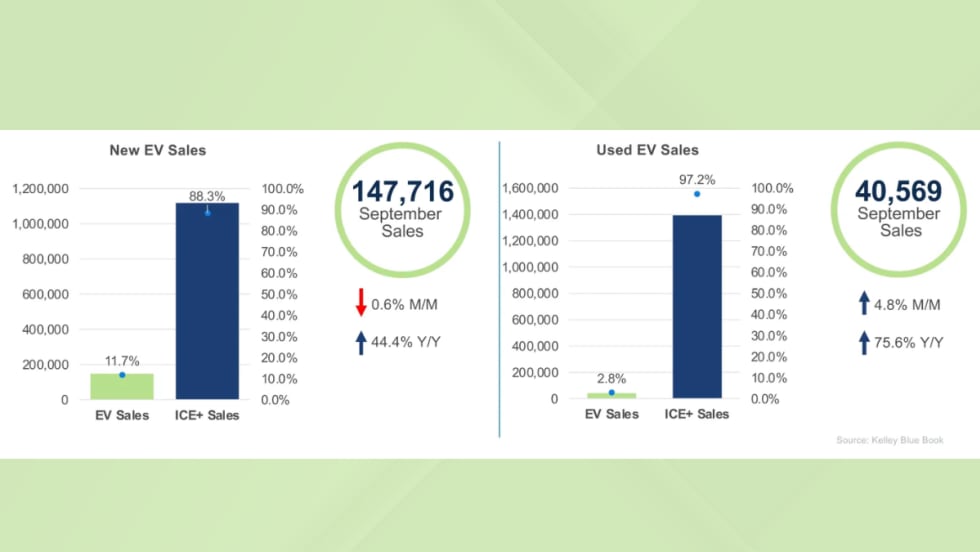
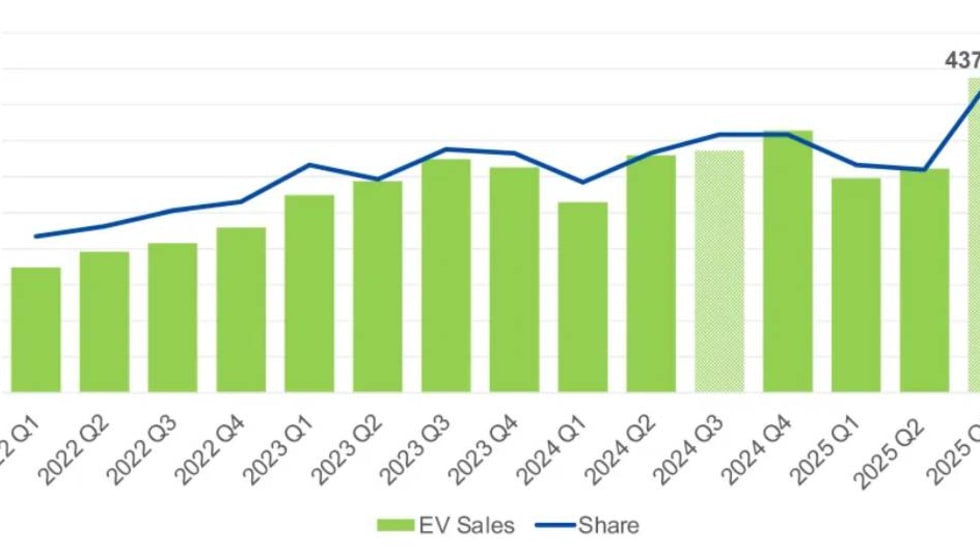
New industry group data revealed that light-duty electric vehicle sales are hitting record market share and volumes, while commercial EV volume dipped. What’s driving the fluctuations?
For fleet managers, fuel is one of the biggest line items in the budget — and it's one hybrids can shrink without changing how your people work. Download the eBook to see the numbers, understand the technology, and get a step-by-step guide to making the switch.
With the expiration of federal incentives, EV success now hinges less on government policy and more on discounts, battery tech progress, increased range, and broader infrastructure.
Fleet operators shared their challenges during an annual conference that embraced the latest advances across all aspects of running private- and public-sector vehicles.