




GM Fires 15 Employees Linked to Ignition Switch Recall Failures
CEO Mary Barra calls the findings of a company investigation ‘deeply troubling’ and pledges to take action on all of the report's recommendations.

GM CEO Mary Barra provides an update on the ignition switch recall investigation on June 5. Steve Fecht photo courtesy of General Motors.
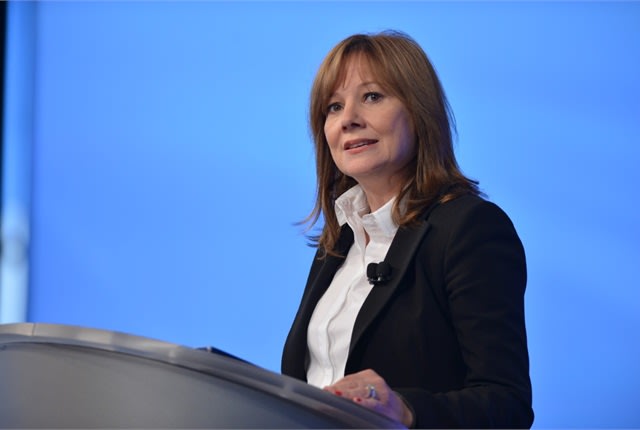
GM CEO Mary Barra provides an update on the ignition switch recall investigation on June 5. Steve Fecht photo courtesy of General Motors.
General Motors has fired 15 employees and disciplined five others, as a result of an internal investigation into the Cobalt ignition switch defect and recall, the company announced.
At the same time, CEO Mary Barra said an internal investigation into the recall revealed "deeply troubling" aspects that GM will take strides to rectify.
Additionally, the automaker hired attorney Kenneth Feinberg to administer a compensation program for collision victims and their families, CEO Mary Barra announced June 5. Feinberg has gained renown for his work overseeing claims for victims involved in such events as the BP oil spill in the Gulf of Mexico and the Virginia Tech campus shootings.
GM has acknowledged that the ignition switch defect is linked to 13 deaths.
Speaking to GM employees and the media, Barra described the investigation findings as "extremely thorough, brutally tough and deeply troubling."
Earier this year, the automaker's board of directors hired Anton Valukas, a former U.S. attorney, to conduct the probe into how the company handled the ignition switch defect and recall. He presented his findings by June 2. The investigation included 350 interviews with more than 230 people. More than 41 million documents were involved.
A redacted version of the Valukas report is available for download on the National Highway Traffic Safety Administration website.
"Overall the report found that, from start to finish, the Cobalt saga was riddled with failures which led to tragic results for many," Barra said.
The investigation report details how company personnel failed to address the ignition switch problem, which persisted for more than 11 years. "While everybody who was engaged on the ignition switch issue had the responsibility to fix it, nobody took responsibility. Thoughout the 11-year history, there was no demonstrated sense of urgency, right to the very end," Barra said, summing up some of the report's conclusions.
Barra also noted that the Valukas report revealed no company cover-up conspiracy and no evidence that any employee made a trade-off between safety and cost.
"What Valukas found was a pattern of management deficiencies and misjudgements often based on incomplete data that were passed off at the time as business as usual," Barra said. "Unfortunately, the report found, these seemingly benign actions led to devastating consequences. In short, we misdiagnosed the problem from the beginning. Experienced engineers, with responsibility for safety, didn't understand that the airbags would not deploy if the ignition switch changed position."
The GM Board of Directors is working closely with management to oversee implementation of those recommendations, said Chairman Tim Solso.
"In addition, the board also retained independent counsel to advise us with respect to this situation and governance and risk management issues," Solso said. "We will establish a stand-alone risk committee to assist in overseeing these efforts. The board, like management, is committed to changing the company’s culture and processes to ensure that the problems described in the Valukas report never happen again."
The Valukas report concluded that a trio of executives did not learn about the ignition switch safety issues and the recall delay until after the decision to issue a recall was made on Jan. 31, Solso said. Executives named included Barra; Mike Millikin, executive vice president and general counsel; and Mark Reuss, executive vice president of global product development, purchasing and supply chain.
Barra emphasized that the company is committed to making sweeping changes in the way it handles safety issues. The actions to date include:
Appointing Jeff Boyer as vice president of global vehicle safety, elevating and integrating GM’s safety processes under a single leader
Adding 35 product safety investigators that will allow GM to identify and address issues more quickly
Launching the “Speak up for Safety” program, which encourages employees to report potential safety issues quickly and forcefully
Creating a new Global Product Integrity organization to enhance overall safety and quality performance
Restructuring the recall decision-making process to raise it to the highest levels of the company.
So far, the company's numerous recalls in 2014 — GM has recalled 13.78 million vehicles across 30 models in North America — don't appear to have impacted sales. In May, the automakers reported a 12.6 percent increase over the prior year, reports the Detroit News.
More Safety
IIHS Crash Avoidance Tests Reveal Safety Gaps in Cargo Vans and Work Trucks
New crash-avoidance ratings from the Insurance Institute for Highway Safety reveal inconsistent performance among commercial vehicles, with several popular cargo vans and heavy-duty pickups struggling to avoid collisions with other vehicles and pedestrians.
Read More →
What’s Next for Fleet? Safety, AI & Industry Recognition | AF News Recap
Could your company's culture be encouraging distracted driving? This week, we're exploring how workplace expectations affect driver safety, what AI, EVs, and autonomous vehicles could mean for the future of fleet management, and how fleet professionals can strengthen their award nominations.
Read More →
Does Your Fleet's Culture Encourage Distracted Driving?
What happens when the people responsible for enforcing safety rules are the ones setting the wrong example? The answer may reveal why some of the biggest risks to fleet drivers have little to do with what's written in the employee handbook.
Read More →
Fleet Manager’s Ultimate Playbook: Navigating the New Standard in OEM Connectivity
Rising operating costs, driver safety concerns, and unplanned downtime are putting unprecedented pressure on modern fleets. Discover how fleet managers use embedded OEM connectivity and real-time vehicle data to cut TCO, prevent downtime, and protect drivers without aftermarket telematics hardware.
Read More →
From Driver Well-Being to EV Charging | AF News Recap
Mental health belongs in the fleet safety conversation. This week, we’re looking at five ways fleets can support employee well-being before a crisis, plus Holman’s expansion in Mexico, new one-day Fleet Forward passes, and why EV charging demand is outpacing infrastructure growth.
Read More →
Nexar-Nauto Merger Aims to Give Fleets Better Safety Intelligence Through Larger Driving Dataset
Stefan Heck tells Automotive Fleet that combining more than 10 billion miles of driving history with Nexar's AI models will give fleets deeper insights into driver risk and roadway conditions than either company could provide independently.
Read More →
Don't Wait for a Crisis: 5 Ways to Build Mental Health Into Your Fleet Safety Program
For Suicide Prevention Month, fleet and safety leaders have an opportunity to put mental health where it belongs: at the center of workplace safety.
Read More →
How Camera Data Can Strengthen a Fleet’s Insurance Renewal
Insights from a commercial insurance carrier and a broker show how fleets can turn video telematic data, driver coaching, and improved claims results into a stronger case at insurance renewal.
Read More →
The Safest Fleets Aren’t the Ones with the Most Technology
You’ve made the telematics investment. Here’s how to capture the other half of its value and build the safest fleet on the road.
Read More →
Hidden in Plain Sight: Fleet Compliance Risks
Fleet compliance isn't just about having policies — it's about consistently enforcing them. This practical guide reveals six hidden compliance risks common in public sector and shared fleet operations and outlines proven strategies to improve visibility, accountability, and audit readiness
Read More →