




GM Expands Safety Tech in 2016 Models
The automaker is also taking advantage of a new testing area near Detroit to develop and evaluate advanced crash-avoidance technologies and vehicle-to-vehicle communications.

Front pedestrian braking, a new active safety technology available on the 2016 Chevrolet Malibu and 2016 Cadillac CT6, is one of many safety features tested at General Motors' new Active Safety Test Area at the Milford Proving Ground in Milford, Mich. Photo by Jeffrey Sauger for General Motors.

Front pedestrian braking, a new active safety technology available on the 2016 Chevrolet Malibu and 2016 Cadillac CT6, is one of many safety features tested at General Motors' new Active Safety Test Area at the Milford Proving Ground in Milford, Mich. Photo by Jeffrey Sauger for General Motors.
General Motors announced that its Chevrolet, Buick, GMC and Cadillac brands will offer 22 different active safety technologies across their 2016 model-year U.S. lineups, ranging from driver alerts to features that automatically intervene and assist the driver in critical situations.
Safety engineers will develop and test these and other safety technologies for products around the world at GM’s new, 52-acre Active Safety Test Area at its Milford Proving Ground near Detroit. The $14 million facility officially opened July 24.
“Our comprehensive safety strategy of helping customers before, during and after a crash continues,” said Jeff Boyer, vice president of GM global vehicle safety.
Examples of available crash-avoidance technologies for 2016 GM models include:
City Speed Front Automatic Braking – If the vehicle is traveling at a low speed and the system detects that a front-end collision situation is imminent while following a detected vehicle and the driver has not already applied the brakes, the system automatically applies brakes to help reduce the collision’s severity. The system may even help avoid the collision at very low speeds.
Front Pedestrian Braking – If the system detects that a pedestrian is directly ahead and a collision is imminent, and the driver has not already applied the brakes, the system alerts the driver and, if necessary, automatically applies the brakes to help reduce the collision’s severity or avoid the collision.
Rear Camera Mirror – Compared to a traditional inside rearview mirror, this rearview mirror display provides a wider, less obstructed field of view to assist when driving, changing lanes, and checking for vehicles and traffic conditions.
Night Vision – Provides the driver an infrared night vision image of the area lit beyond the headlamps that highlights and provides alerts to detected pedestrians or large animals.
Curb View Camera – When in forward gear during low-speed maneuvering (such as parking), this system provides the driver a view of the scene immediately ahead of the vehicle on the vehicle’s center stack display to help the driver avoid low-speed collisions into nearby objects, such as curbs, poles and parked vehicles.
“The technologies we are developing and testing at this facility are available to our customers across our GM brands,” said Cynthia Bay, director of active safety electronics and controls. “Front Pedestrian Braking will be offered on the 2016 Chevrolet Malibu, and the lowest-priced Chevrolet we offer in the U.S. – the new 2016 Spark – has available Lane Departure Warning and Forward Collision Alert.”
The new Active Safety Test Area concentrates the company’s active safety testing into one site. It features:
A 16-acre dynamics pad for testing a variety of robot-controlled and automated vehicles
Highway simulation with six lanes, on/off ramps, controlled lighting and road signs that represent specifications around the world
A parking test area with different curb types and landscaping detection
A pedestrian test area with a 90-degree traffic intersection and specially designed rig for accurate dummy movement
A simulated tunnel with walls and posts
A building for observation, indoor testing, hoists for test preparation and a robotic control station.
Bay said the facility is ideal for testing vehicle-to-vehicle (V2V) technologies, which will be standard on the 2017 Cadillac CTS.
“In addition to helping customers all over the world avoid crashes, many of the technologies we develop and test here are integral to our ongoing V2V communications work and even the development of future autonomous vehicles,” she said.
The V2V dedicated short-range radio communication enables vehicles to “talk” to each other and exchange basic safety data such as speed, location and braking status. It complements existing safety components such as radar, camera and ultrasonic sensors, GM said.
The facility is also used to assess performance in regulatory and insurance industry consumer metric tests, such as those conducted by the National Highway Traffic Safety Administration (NHTSA), Euro New Car Assessment Program (NCAP), the Insurance Institute for Highway Safety (IIHS) and others.
More Safety

Nexar-Nauto Merger Aims to Give Fleets Better Safety Intelligence Through Larger Driving Dataset
Stefan Heck tells Automotive Fleet that combining more than 10 billion miles of driving history with Nexar's AI models will give fleets deeper insights into driver risk and roadway conditions than either company could provide independently.
Read More →
Don't Wait for a Crisis: 5 Ways to Build Mental Health Into Your Fleet Safety Program
For Suicide Prevention Month, fleet and safety leaders have an opportunity to put mental health where it belongs: at the center of workplace safety.
Read More →
How Camera Data Can Strengthen a Fleet’s Insurance Renewal
Insights from a commercial insurance carrier and a broker show how fleets can turn video telematic data, driver coaching, and improved claims results into a stronger case at insurance renewal.
Read More →
The Safest Fleets Aren’t the Ones with the Most Technology
You’ve made the telematics investment. Here’s how to capture the other half of its value and build the safest fleet on the road.
Read More →
Hidden in Plain Sight: Fleet Compliance Risks
Fleet compliance isn't just about having policies — it's about consistently enforcing them. This practical guide reveals six hidden compliance risks common in public sector and shared fleet operations and outlines proven strategies to improve visibility, accountability, and audit readiness
Read More →
NETS Sets 2026 Fleet Safety Benchmark Conference for Indianapolis
The Sept. 15–17 program will feature fleet benchmarking data, case studies, emerging technologies, and implementation strategies while running alongside the NSC Safety Congress & Expo.
Read More →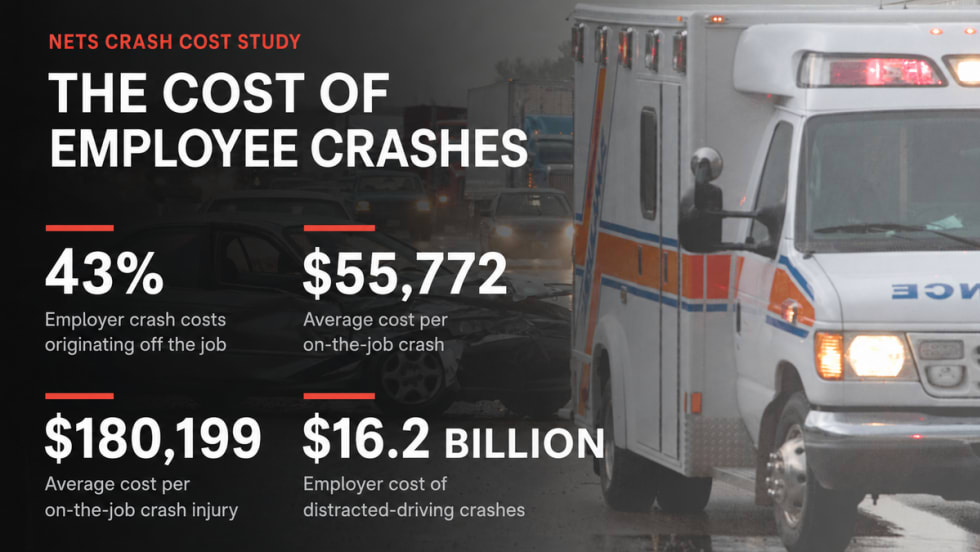
Off-the-Job Crashes Account for 43% of Employers’ $61.7 Billion Crash Burden
NETS quantifies costs dispersed across fleet, risk, HR, and other departments while providing new per-crash benchmarks for employers.
Read More →
Ram Recalls More Than 1.27 Million 1500 Pickups for Seat Belt Anchor Issue
The recall affects certain 2019-2026 Ram 1500 pickups that may have improperly attached second-row seat belt buckle anchors.
Read More →
How Better Visibility Cut Speeding Violations by 48%
Fleet leaders don't need more data, they need clearer visibility into what the data is saying. This case study explores how one utility replaced speeding-event counts with a single metric — miles driven in violation — to strengthen safety and significantly reduce speeding violations.
Read More →
Operation Safe Driver Week: Why the Industry's Oldest Safety Campaign Still Matters to Fleets
A look at how a 2007 enforcement initiative became one of the most consequential weeks on the fleet safety calendar, and what it means for your drivers in 2026.
Read More →