




GM Details 2013-MY Malibu Retail Pricing and Standard Features
DETROIT – GM said its 2013-MY Chevrolet Malibu mid-size sedan will start at a suggested retail price of $23,150, including a $760 destination charge.
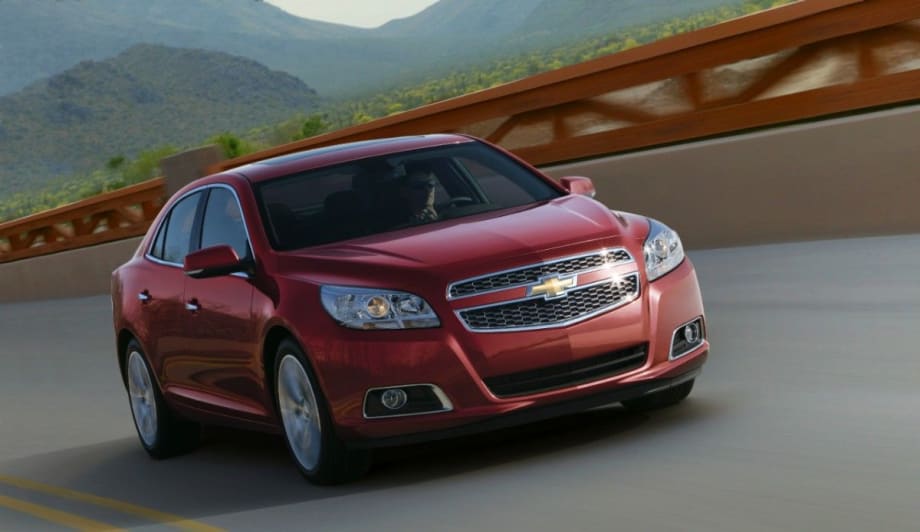
The Chevrolet Malibu LTZ.
The Chevrolet Malibu LTZ.
DETROIT – GM said its 2013-MY Chevrolet Malibu mid-size sedan will start at a suggested retail price of $23,150, including a $760 destination charge. The 2013 Malibu is available in LS, Eco, LT and LTZ models, with the Eco version having gone on sale earlier this year. An all-new turbocharged Malibu LTZ will be available in the fall. All models are covered by a transferrable five-year/100,000-mile powertrain warranty and a three-year/36,000-mile bumper-to-bumper limited warranty, according to GM.
The base prices for all Malibu models – with a $760 destination charge – are as follows:
LS (1LS trim): $23,150
LT (1LT trim): $24,765
LT (2LT trim): $26,000
Eco (1SA trim): $26,095
Eco (2SA trim): $27,705
LT (3LT trim with turbo): $27,710
LTZ (1LZ trim): $28,590
LTZ (2LZ trim with turbo): $30,925
GM said the starting price is an increase over the 2012-MY Malibu, at $22,870, but that the new model-year Malibu includes more content. The base prices are lower for the LTZ models, which include all-new features such as Chevrolet MyLink with a 7-inch color-touch LCD screen, color LCD driver information center, and dual-zone automatic climate controls.
The list of standard features for the vehicle is as follows:
Standard powertrain and chassis content:
Ecotec 2.5L direct injection with continuously variable valve timing, rated at 197 horsepower (147 kW)
Six-speed automatic transmission with tap-shift control
Four-wheel disc brakes with ABS
Panic brake assist
Electronic park brake
StabiliTrak electronic stability control system
Electric power steering (rack-mounted)
MacPherson strut front suspension
Four-link rear suspension
16-inch aluminum wheels
Standard exterior content:
Active front lower grille aero shutters (LS, Eco, 3LT Turbo)
Projector-beam headlamps with automatic exterior lamp control
Fin-type combined OnStar/SiriusXM Satellite Radio antenna (body color)
Acoustic-laminated, solar-absorbing glass
Intermittent windshield wipers with structureless blade
Standard interior content:
Air conditioning
Audio system: AM/FM stereo with CD with MP3 playback
SiriusXM Satellite Radio (with three-month trial period)
Six-speaker sound system
Bluetooth phone connectivity
Cruise control
Remote keyless entry
Power windows with express down feature
Power door and window locks
Driver information center
Tilt and telescopic steering column
Steering wheel audio and cruise controls
Driver’s footrest
Overhead console
Compass display
Two auxiliary power outlets
Rear center armrest with storage
Standard safety content:
10 standard air bags, including dual-stage frontal air bags, driver and front passenger thorax side-impact air bags, driver and front passenger knee air bags and head curtain side-impact air bags (front and rear outboard seating positions) and rear outboard thorax side-impact air bags
Safety belt pretensioners
Tire pressure monitoring system
OnStar with six months of Directions and Connections service, including Automatic Crash Response, Crisis Assist, Stolen Vehicle Assistance, Remote Door Unlock and more
Uplevel features:
In addition to the content included on LS models, Eco, LT and LTZ models add:
7-inch color touch-screen with concealed storage behind it
Chevrolet MyLink connected radio
Bluetooth streaming audio for select phones
USB port and auxiliary input jack
Ice-blue ambient lighting
Dual-zone automatic climate control (Eco, 2LT, 3LT and LTZ models)
Color driver information center (Eco, 2LT, 3LT and LTZ models)
On 2LT, 3LT and LTZ models, an available advanced safety package adds Forward Collision Alert and Lane Departure Warning. A leather package for Eco (2SA) and LT (2LT/3LT) adds leather-trimmed seating and heated front seats.
On LTZ, the following features are also standard:
LED taillamps
18-inch aluminum wheels
Dual exhaust with bright chrome accents
Silver grille insert
Fog lamps
Chrome door handles
Leather-appointed seats
Heated front seats
Eight-way power-adjustable driver and passenger seats with power lumbar
Leather-wrapped steering wheel and shift knob
Remote start
Power sunroof (2LZ)
An available premium package on the LTZ adds passive entry/keyless access, push-button starting, high-intensity discharge headlamps and driver’s memory seat and mirrors. Nineteen-inch wheels are also available.
Exterior Colors:
Silver Ice Metallic
Black
Black Granite Metallic
Blue Topaz Metallic
Summit White
Crystal Red Tintcoat
White Diamond Tricoat
Taupe Gray Metallic
Atlantis Blue Metallic
Champagne Silver Metallic
Interior Color/Trim Choices:
Jet Black
Jet Black/Titanium
Jet Black/Brownstone
Cocoa/Light Neutral
More Operations

Fleet Has a Talent Pipeline Problem. What Comes Next? | AF News Recap
Where will fleet’s next generation of leaders come from? This week, we’re looking at the industry’s talent pipeline, what certification can add to a fleet career, how to build an award-worthy track record, and the return of Automotive Fleet’s Personal Use Survey.
Read More →
Smith System Launches Driver Risk Management Program
Fleets have more driver data than ever, but identifying risky behavior doesn't necessarily correct it. Smith System's new Driver Risk Management program combines monitoring, training, and follow-up coaching to help fleets connect risk signals with driver intervention.
Read More →
Automotive Fleet Opens 2026 Personal Use Survey for Commercial Fleet Managers
Less than two weeks left! Commercial and corporate fleet managers are invited to share how their organizations handle company vehicle personal-use policies, charges, and driver eligibility.
Read More →
From AI Prompts to AI-Generated Safety Songs | AF News Recap
Can better prompts make AI more useful for fleet managers? This week, we’re breaking down smarter fleet analysis, an AI-assisted experiment that turned safety training into music, and what happened to fuel prices in August.
Read More →
How to Write Better AI Prompts for Fleet Analysis
Include these six elements in your fleet prompts to generate more relevant analysis and accurate answers.
Read More →
Fleet Meets: Eric Kilgore
This edition of the Fleet Meets series features one of the industry's best leaders driving multi-market and national operations.
Read More →
Why Reactive Fleet Management Is Becoming Too Expensive to Sustain
Research highlights a growing need for proactive management strategies to address rising costs in fleet operations effectively.
Read More →
What Your Fleet KPIs Aren’t Telling You
Tracking fleet metrics is only useful when the data leads to better decisions. This guide helps fleet leaders assess cost, utilization, and downtime more accurately, identify performance gaps, and prioritize the actions that can improve operational results.
Read More →
Hidden in Plain Sight: Fleet Compliance Risks
Fleet compliance isn't just about having policies — it's about consistently enforcing them. This practical guide reveals six hidden compliance risks common in public sector and shared fleet operations and outlines proven strategies to improve visibility, accountability, and audit readiness
Read More →
Turning Fleet Payment Data into Executive Insights
Does data alone drive results in operations?
Read More →