




GHSA Report Finds Number of Deaths From Speeding Increased 7% Since 2000
WASHINGTON - The Governor’s Highway Safety Association (GHSA) released a report on progress in reducing the number of speeding-related deaths, finding that in 2010, 10,530 people lost their lives in speeding-related crashes in the U.S. and Puerto Rico.
WASHINGTON - The Governor’s Highway Safety Association (GHSA) released a report on progress in reducing the number of speeding -related deaths, finding that in 2010, 10,530 people lost their lives in speeding-related crashes in the U.S. and Puerto Rico. This reflects an increase of 7% in the number of speeding-related deaths since 2000, even though the number of fatal crashes from non-use of seatbelts decreased by 23%, and alcohol-related deaths dropped by 3%.
The new report, “Survey of the States: Speeding and Aggressive Driving,” includes responses from highway safety offices in all 50 states and Guam. GHSA said states it similarly surveyed states on this topic in 2005.
The GHSA recommended that states should focus on more aggressive enforcement of speed laws and target speed enforcement in school and work zones. The organization said the National Highway Traffic Safety Administration should sponsor a high-visibility enforcement campaign, promote best practices in automated enforcement, and sponsor a “National Forum on Speeding and Aggressive Driving,” similar to a 2005 effort to bring experts on the subject together.
According to GHSA, part of what contributes to this increase is the fact that seven U.S. states, including Kansas, Kentucky, Maine, Ohio, Pennsylvania, Texas, and Virginia increased speed limits as high as 85 mph on certain roadways.
Some states have worked to enact stricter laws since 2005, though the number is relatively small. Only one state, Indiana, enacted an aggressive driver law, though a total of 11 states have those laws. Two states increased fined for speeders, Connecticut for all drivers and Wyoming for commercial vehicle drivers. Lastly, three states, Georgia, Hawaii, and Pennsylvania, created a new “super” or “excessive” speeder classification for violators.
Survey respondents (state agencies surveyed), said the biggest obstacles to addressing speeding were public indifference to speeding (78%), and public perception that speed enforcement is just a revenue generator (61%). Lastly, 43% said a lack of federal funding for enforcement was the biggest problem.
Related to enforcement, 35 states reported overall decreases in the number of enforcement personnel. GHSA said respondents attributed staffing decreases to budget cuts, military deployments, and the existence of other, more desirable overtime shift assignments than speed enforcement.
More Safety

Nexar-Nauto Merger Aims to Give Fleets Better Safety Intelligence Through Larger Driving Dataset
Stefan Heck tells Automotive Fleet that combining more than 10 billion miles of driving history with Nexar's AI models will give fleets deeper insights into driver risk and roadway conditions than either company could provide independently.
Read More →
Don't Wait for a Crisis: 5 Ways to Build Mental Health Into Your Fleet Safety Program
For Suicide Prevention Month, fleet and safety leaders have an opportunity to put mental health where it belongs: at the center of workplace safety.
Read More →
How Camera Data Can Strengthen a Fleet’s Insurance Renewal
Insights from a commercial insurance carrier and a broker show how fleets can turn video telematic data, driver coaching, and improved claims results into a stronger case at insurance renewal.
Read More →
The Safest Fleets Aren’t the Ones with the Most Technology
You’ve made the telematics investment. Here’s how to capture the other half of its value and build the safest fleet on the road.
Read More →
Hidden in Plain Sight: Fleet Compliance Risks
Fleet compliance isn't just about having policies — it's about consistently enforcing them. This practical guide reveals six hidden compliance risks common in public sector and shared fleet operations and outlines proven strategies to improve visibility, accountability, and audit readiness
Read More →
NETS Sets 2026 Fleet Safety Benchmark Conference for Indianapolis
The Sept. 15–17 program will feature fleet benchmarking data, case studies, emerging technologies, and implementation strategies while running alongside the NSC Safety Congress & Expo.
Read More →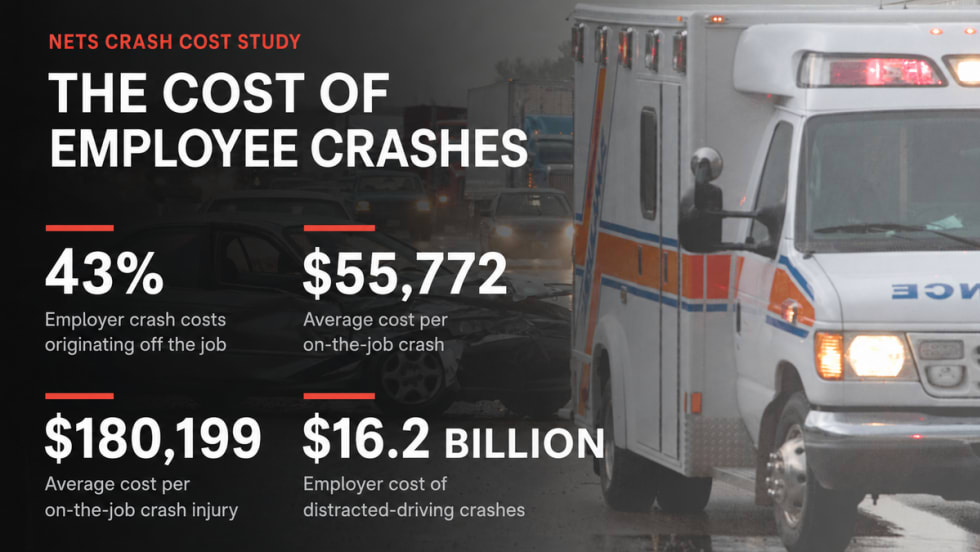
Off-the-Job Crashes Account for 43% of Employers’ $61.7 Billion Crash Burden
NETS quantifies costs dispersed across fleet, risk, HR, and other departments while providing new per-crash benchmarks for employers.
Read More →
Ram Recalls More Than 1.27 Million 1500 Pickups for Seat Belt Anchor Issue
The recall affects certain 2019-2026 Ram 1500 pickups that may have improperly attached second-row seat belt buckle anchors.
Read More →
How Better Visibility Cut Speeding Violations by 48%
Fleet leaders don't need more data, they need clearer visibility into what the data is saying. This case study explores how one utility replaced speeding-event counts with a single metric — miles driven in violation — to strengthen safety and significantly reduce speeding violations.
Read More →
Operation Safe Driver Week: Why the Industry's Oldest Safety Campaign Still Matters to Fleets
A look at how a 2007 enforcement initiative became one of the most consequential weeks on the fleet safety calendar, and what it means for your drivers in 2026.
Read More →