





The full report can be viewed by EPRI members at the following link: EPRI. The report is also available upon request at sales@freewiretech.com.
FreeWire Boost Charger Cuts Costs for EV Fleets
The savings on installation and operations enables utilities and site hosts to rapidly and affordably deploy fast chargers to meet EV demand, according to an independent study.
April 7, 2021

The FreeWire Boost Charger enables ultrafast charging while only requiring low voltage input, saving tens of thousands on installation costs and almost $30,000 a year on energy fees and demand charges, the independent study shows.
Photo: FreeWire
3 min to read
FreeWire Technologies, a provider of electric vehicle (EV) charging and power solutions, announced April 6 that an independent study conducted by the Electric Power Research Institute (EPRI) validated the functionality and economic advantages of its next-generation EV charging product, Boost Charger.
In November 2020, EPRI conducted a laboratory evaluation of Boost Charger to verify FreeWire’s two main stated economic advantages over traditional DC fast chargers: 1) Lower cost of installation due to reduced infrastructure requirements; 2) Lower cost of operation due to peak-shaving and load shifting capabilities
According to the study conducted as part of EPRI’s Incubatenergy Labs Challenge, the FreeWire Boost Charger enables ultrafast charging while only requiring low voltage input, saving tens of thousands on installation costs and almost $30,000 a year on energy fees and demand charges.
“The single biggest challenge to scaling ultrafast charging is infrastructure limitations – extremely high power is required for fast charging at scale, but enhancing the electric grid in places where drivers will need to charge is prohibitively expensive and complicated,” said Arcady Sosinov, founder and CEO of FreeWire. “We have developed a novel solution with Boost Charger that addresses these barriers by delivering high power everywhere without expensive and burdensome grid upgrades.”
EPRI estimates an annual $29,180 energy cost savings to the site host over the life of the unit as well as reduced installation costs. These outcomes verify that Boost Charger enables utilities and site hosts to rapidly, and cost-effectively deploy fast chargers to meet growing EV demand.
“EPRI’s report verifies that our technology works as designed, saving our customers tens of thousands of dollars per year, while lowering barriers of adoption to enable rapid expansion of critical charging infrastructure to drive EV growth,” Sosinov said.
FreeWire’s Boost Charger is a powerful battery-integrated electric vehicle charger that delivers high power while significantly reducing demand charges. Easy to connect with existing infrastructure, it can be set up without costly construction or extensive permitting. Boost Charger enables ultrafast charging using the same infrastructure as Level 2 chargers at up to a 40% lower cost of installation versus other fast chargers. With its integrated storage and ultrafast charging speeds, Boost Charger is ready for current and next generation EVs.
FreeWire has deployed over 200 battery-integrated chargers with Fortune 100 companies, commercial customers, fleets, retail locations, and gas stations. In December 2020, FreeWire and bp pulse, one of the UK’s leading providers of EV charging infrastructure, announced an exclusive MOU for bp pulse to deploy Boost Charger in its operations across the UK. FreeWire and ampm, a bp subsidiary and convenience store chain with over 1,000 locations, have already deployed multiple public charging stations in the U.S.
In January 2021, FreeWire announced a $50 million Series C funding round, led by Riverstone Holdings, with participation from current shareholders bp ventures, Energy Innovation Capital, and Blue Bear Capital. This financing will enable FreeWire to accelerate international market expansion of Boost Charger and expand production capacity to meet unprecedented customer demand.
Originally posted on Charged Fleet
More Green Fleet
Sponsored•October 1, 2026
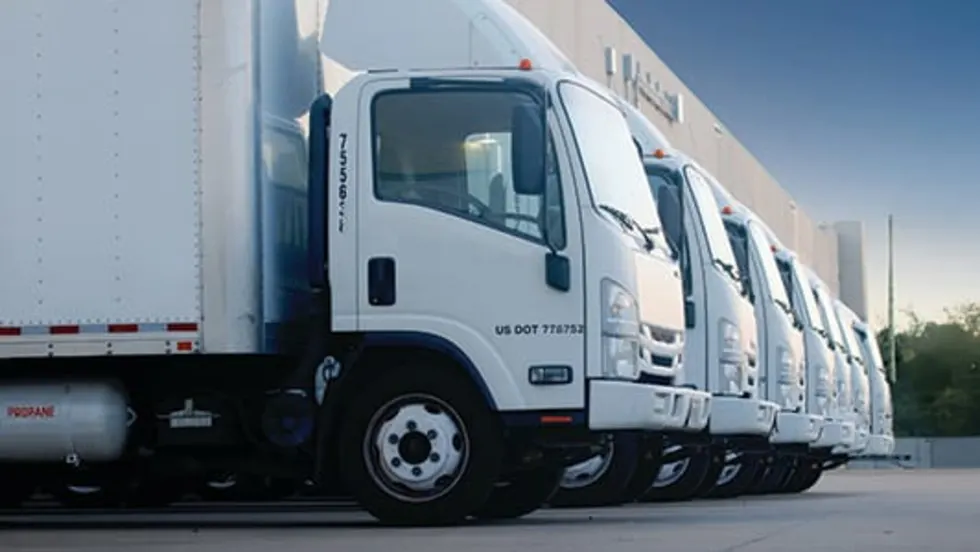
New Propane Autogas Program Offers Fleet Compensation
Qualified commercial fleets can receive $7,500 per eligible propane autogas vehicle and up to $10,000 for new refueling site prep. Learn how the program works and see whether your fleet qualifies.
Read More →
EV Charging Use Is Outpacing Infrastructure Growth
ChargePoint’s 2026 Charging Forward Report points to rising charger use, higher-powered charging, commercial vehicle electrification, and energy-management technology. Here’s what fleets should know.
Read More →
Merchants Fleet Reports 290M EV Miles as Fleets Navigate Changing Electrification Market
From millions in operating savings to hundreds of millions of EV miles, Merchants Fleet’s latest report reveals what’s working and what’s changing in fleet electrification.
Read More →
The EV Breakdown Nobody's Talking About: Why Most Electric Vehicle Roadside Calls Aren't Mechanical Failures
Here's why EV breakdowns are widely misunderstood.
Read More →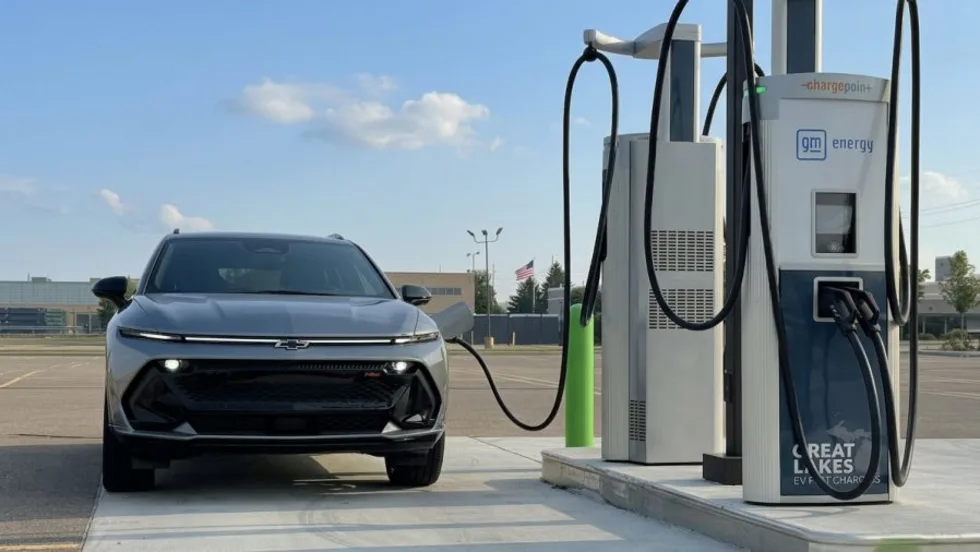
ChargePoint Now Available in Energy Pass
ChargePoint and additional planned charging network integrations were added to GM's Energy Pass.
Read More →

First Look: Slate Auto's Electric Fleet Pickup
Could an affordable, modular EV pickup make electrification more practical for fleets?
Read More →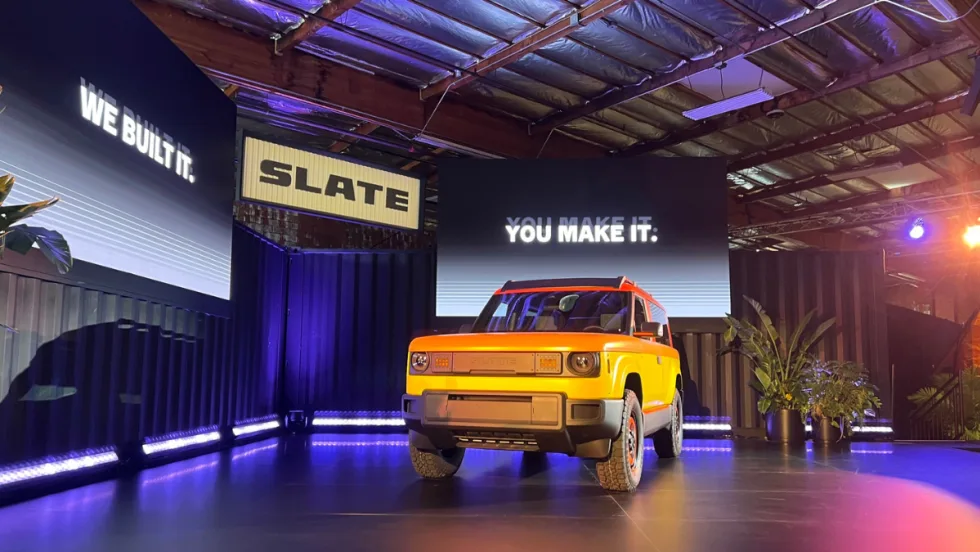
Slate Debuts Colorful, Unique EV Models
A recent media and client event, studded with electric vehicles dressed up on platforms, planted a new position for the manufacturer in the wider EV market. Fleets will find cost-saving advantages.
Read More →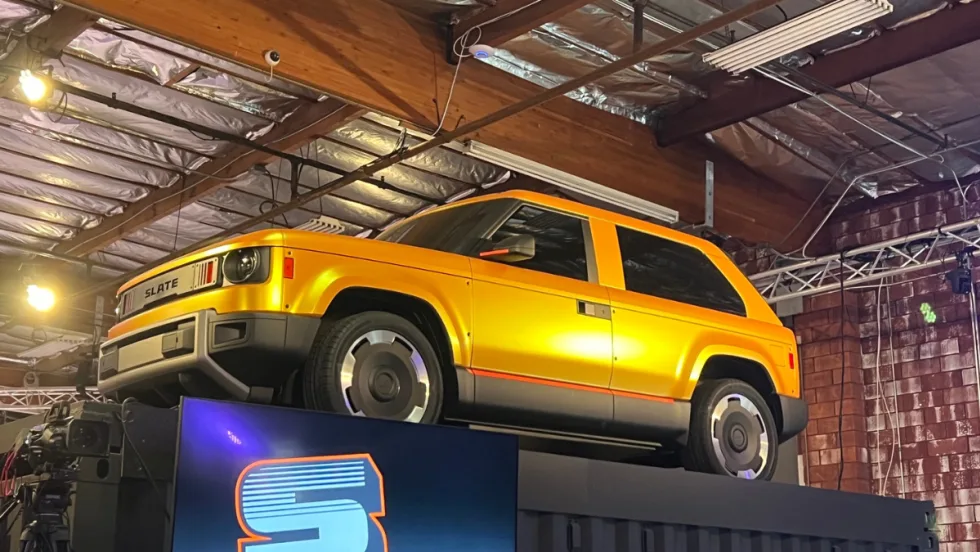
Slate Electric SUV, Pickup Switchable Model Aims For Light-Duty Fleets
Everything about this EV is counterintuitive and understated, making it stand out from the crowd.
Read More →
Inspiration Mobility Acquires Key Electrada Assets
Inspiration Mobility Group has acquired select assets of Electrada, adding the fleet electrification provider's team, technology, and charging infrastructure development capabilities to its energy management business.
Read More →