




Ford's Rear Inflatable Seat Belts Garner Edison Awards Gold
NEW YORK - During the 2011 Edison Awards ceremony April 5, Ford Motor Co. received three Gold Awards and one Silver Award for the automaker's MyKey, MyFord Touch, Rear Inflatable Seat Belts and SYNC AppLink, respectively.
NEW YORK - During the 2011 Edison Awards ceremony April 5, Ford Motor Co. received three Gold Awards and one Silver Award for the automaker's MyKey, MyFord Touch, Rear Inflatable Seat Belts and SYNC AppLink, respectively.
In addition, Ford CEO Alan Mulally walked away with the prestigious 2011 Edison Achievement Award.
The annual awards ceremony, held at the historic Capitale Ballroom in New York City, sets out to recognize the most innovative products and services introduced to the marketplace in the past year. The awards are sponsored by the Nielsen Co., Discovery Communications, Science Channel, Spencer Trask and USA Today.
Ford's Rear Inflatable Seat Belts received the Gold Award in the applied technology category. The advanced restraint system is designed to help reduce head, neck and chest injuries for rear seat passengers -- often children and older passengers who can be more vulnerable to such injuries.
Ford introduced inflatable rear seat belts on the 2011 Ford Explorer. Over time, Ford plans to offer the technology in vehicles globally.
Advances in airbag inflation and seat belt construction methods have enabled Ford and its suppliers to develop inflatable seat belts that are designed to deploy over a vehicle occupant's torso and shoulder in 40 milliseconds in the event of a crash.
In everyday use, the inflatable belts operate like conventional seat belts and are safe and compatible with infant and children safety car and booster seats. In Ford's research, more than 90 percent of those who tested the inflatable seat belts found them to be similar to or more comfortable than a conventional belt because they feel padded and softer. That comfort factor could help improve the 61 percent rear belt usage rate in the U.S., which compares to 82 percent usage by front seat passengers, according to National Highway Traffic Safety Administration (NHTSA) data.
In the event of a frontal or side crash, the inflatable belt's increased diameter more effectively holds the occupant in the appropriate seating position, helping to reduce the risk of injury.
Vehicle safety sensors determine the severity of the collision in the blink of an eye and deploy the inflatable belts' airbags. Each belt's tubular airbag inflates with cold compressed gas, which flows through a specially designed buckle from a cylinder housed below the seat.
The inflatable belt's accordion-folded bag breaks through the belt fabric as it fills with air, expanding sideways across the occupant's body in about the same amount of time it takes a car traveling at highway speed to cover a yard of distance.
The use of cold compressed gas instead of a heat-generating chemical reaction -- which is typical of traditional airbag systems -- means the inflated belts feel no warmer on the wearer's body than the ambient temperature. The inflatable belts also fill at a lower pressure and a slower rate than traditional airbags, because the device does not need to close a gap between the belt and the occupant.
"It's a very simple and logical system, but it required extensive trial and error and testing over several years to prove out the technology and ensure precise reliable performance in a crash situation," said Srini Sundararajan, safety technical leader for Ford Research and Advanced Engineering.
The inflated belt helps distribute crash force energy across five times more of the occupant's torso than a traditional belt, which expands its range of protection and reduces risk of injury by diffusing crash pressure over a larger area, while providing additional support to the head and neck. After deployment, the belt remains inflated for several seconds before dispersing its air through the pores of the airbag.
More Safety

Nexar-Nauto Merger Aims to Give Fleets Better Safety Intelligence Through Larger Driving Dataset
Stefan Heck tells Automotive Fleet that combining more than 10 billion miles of driving history with Nexar's AI models will give fleets deeper insights into driver risk and roadway conditions than either company could provide independently.
Read More →
Don't Wait for a Crisis: 5 Ways to Build Mental Health Into Your Fleet Safety Program
For Suicide Prevention Month, fleet and safety leaders have an opportunity to put mental health where it belongs: at the center of workplace safety.
Read More →
How Camera Data Can Strengthen a Fleet’s Insurance Renewal
Insights from a commercial insurance carrier and a broker show how fleets can turn video telematic data, driver coaching, and improved claims results into a stronger case at insurance renewal.
Read More →
The Safest Fleets Aren’t the Ones with the Most Technology
You’ve made the telematics investment. Here’s how to capture the other half of its value and build the safest fleet on the road.
Read More →
Hidden in Plain Sight: Fleet Compliance Risks
Fleet compliance isn't just about having policies — it's about consistently enforcing them. This practical guide reveals six hidden compliance risks common in public sector and shared fleet operations and outlines proven strategies to improve visibility, accountability, and audit readiness
Read More →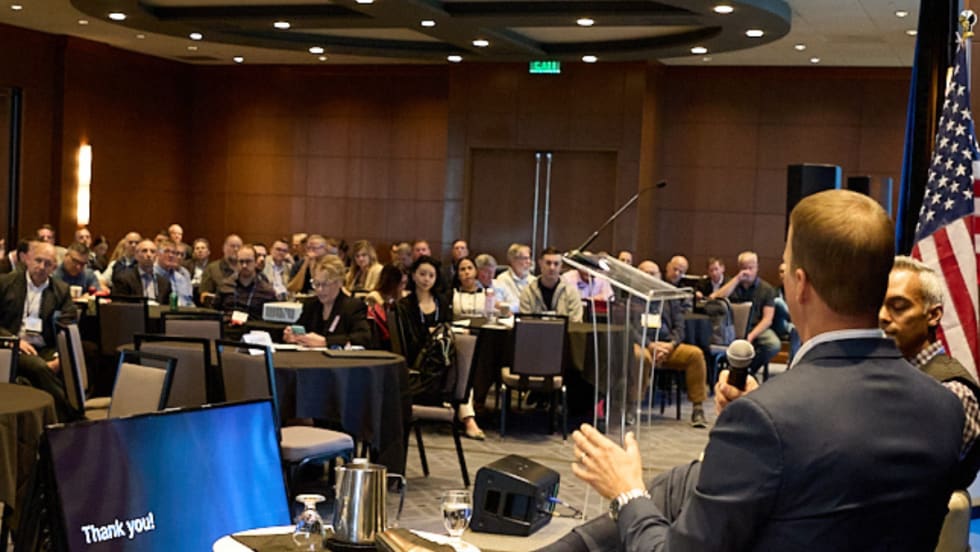
NETS Sets 2026 Fleet Safety Benchmark Conference for Indianapolis
The Sept. 15–17 program will feature fleet benchmarking data, case studies, emerging technologies, and implementation strategies while running alongside the NSC Safety Congress & Expo.
Read More →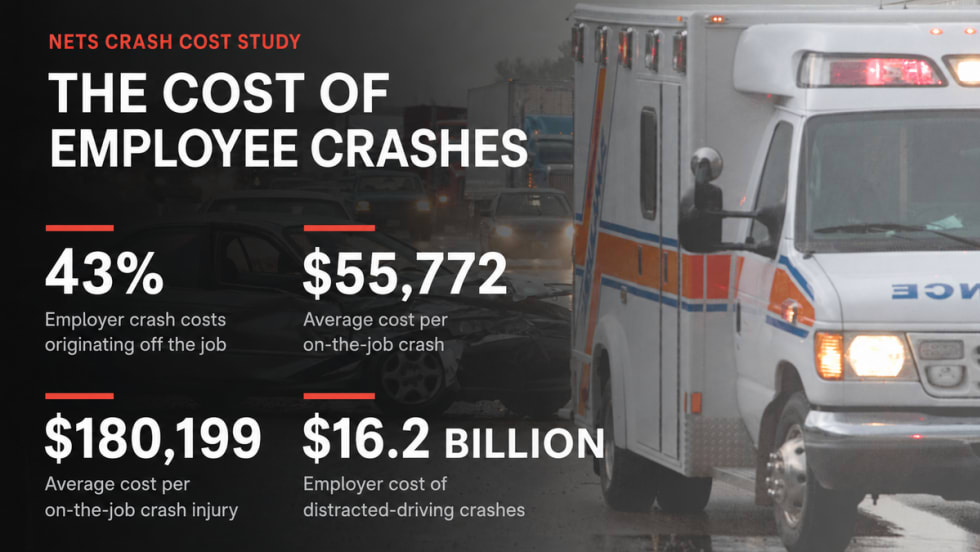
Off-the-Job Crashes Account for 43% of Employers’ $61.7 Billion Crash Burden
NETS quantifies costs dispersed across fleet, risk, HR, and other departments while providing new per-crash benchmarks for employers.
Read More →
Ram Recalls More Than 1.27 Million 1500 Pickups for Seat Belt Anchor Issue
The recall affects certain 2019-2026 Ram 1500 pickups that may have improperly attached second-row seat belt buckle anchors.
Read More →
How Better Visibility Cut Speeding Violations by 48%
Fleet leaders don't need more data, they need clearer visibility into what the data is saying. This case study explores how one utility replaced speeding-event counts with a single metric — miles driven in violation — to strengthen safety and significantly reduce speeding violations.
Read More →
Operation Safe Driver Week: Why the Industry's Oldest Safety Campaign Still Matters to Fleets
A look at how a 2007 enforcement initiative became one of the most consequential weeks on the fleet safety calendar, and what it means for your drivers in 2026.
Read More →