




Ford Uses Advanced Steels To Make Vehicles Safer, Lighter, Stronger
DEARBORN, MI – The Ford Five Hundred and Mercury Montego – each awarded the 2005 “Top Safety Pick: Gold” by the Insurance Institute for Highway Safety – have advanced safety features, including dual-frontal and side-curtain airbags.
DEARBORN, MI – The Ford Five Hundred and Mercury Montego – each awarded the 2005 “Top Safety Pick: Gold” by the Insurance Institute for Highway Safety – have advanced safety features, including dual-frontal and side-curtain airbags. In addition, Ford Motor Company researchers and product designers are applying advanced high-strength steel (AHSS) to make vehicles safer, stronger, lighter, and more fuel-efficient. The Five Hundred and Montego are among the first North American designed cars to use significant amounts of AHSS in A pillars, B pillars, and other safety-related areas. Until the early 1980s, vehicles were made primarily with what's called mild steel. In the early 1990s, high-strength steels – which are up to 40 percent stronger than mild steels – revolutionized the industry. Automakers began using large quantities of these steels in vehicles. Now AHSS – developed over the past five years and is up to triple the strength of conventional high-strength steel – is making its way into the auto industry. Volvo uses HSS/AHSS extensively in many models, ranging from 15 percent in the S40 to 57 percent in its XC90. Likewise, the Mazda6 and Mazda RX-8 use advanced high-strength steels in several body structural parts. The primary area where Ford is using AHSS is in vehicle structural components – 55 percent of the weight of a car is steel – to make them lighter and stronger. Because AHSS is so strong, the gage or thickness of steel used in frames, suspension, and body structures can be made thinner, and thus lighter. All steels have the same stiffness, but not the same strength. Stiffness is steel's ability to resist deformation. AHSS has a higher yield strength – the point at which it permanently deforms – and it has a higher ultimate strength. Because about 40 percent of the parts of a car are stiffness-driven, mild steel is fine; there is no real advantage for these parts to be AHSS. With a strength-driven architecture, the car can be made lighter, which is more fuel-efficient, as well as being stronger and more durable. Besides being used in structural components, advanced high-strength steel can be used in the exterior panels. The 2004 Ford Mustang used AHSS in its door panels, for example. Ford researchers are also looking at utilizing AHSS to make pickup truck boxes stronger and better able to withstand heavy loads. Safety is another key area in which the Research & Advanced Engineering group is working with advanced high-strength steels. For example, a Big Bang team is looking at using AHSS in Super Duty pickup trucks to meet roof-crush regulations. If they can develop a structure that can withstand the g forces on a Super Duty during roll-over, they will cascade that knowledge down into other vehicle programs.
More Safety

From Driver Well-Being to EV Charging | AF News Recap
Mental health belongs in the fleet safety conversation. This week, we’re looking at five ways fleets can support employee well-being before a crisis, plus Holman’s expansion in Mexico, new one-day Fleet Forward passes, and why EV charging demand is outpacing infrastructure growth.
Read More →
Nexar-Nauto Merger Aims to Give Fleets Better Safety Intelligence Through Larger Driving Dataset
Stefan Heck tells Automotive Fleet that combining more than 10 billion miles of driving history with Nexar's AI models will give fleets deeper insights into driver risk and roadway conditions than either company could provide independently.
Read More →
Don't Wait for a Crisis: 5 Ways to Build Mental Health Into Your Fleet Safety Program
For Suicide Prevention Month, fleet and safety leaders have an opportunity to put mental health where it belongs: at the center of workplace safety.
Read More →
How Camera Data Can Strengthen a Fleet’s Insurance Renewal
Insights from a commercial insurance carrier and a broker show how fleets can turn video telematic data, driver coaching, and improved claims results into a stronger case at insurance renewal.
Read More →
The Safest Fleets Aren’t the Ones with the Most Technology
You’ve made the telematics investment. Here’s how to capture the other half of its value and build the safest fleet on the road.
Read More →
Hidden in Plain Sight: Fleet Compliance Risks
Fleet compliance isn't just about having policies — it's about consistently enforcing them. This practical guide reveals six hidden compliance risks common in public sector and shared fleet operations and outlines proven strategies to improve visibility, accountability, and audit readiness
Read More →
NETS Sets 2026 Fleet Safety Benchmark Conference for Indianapolis
The Sept. 15–17 program will feature fleet benchmarking data, case studies, emerging technologies, and implementation strategies while running alongside the NSC Safety Congress & Expo.
Read More →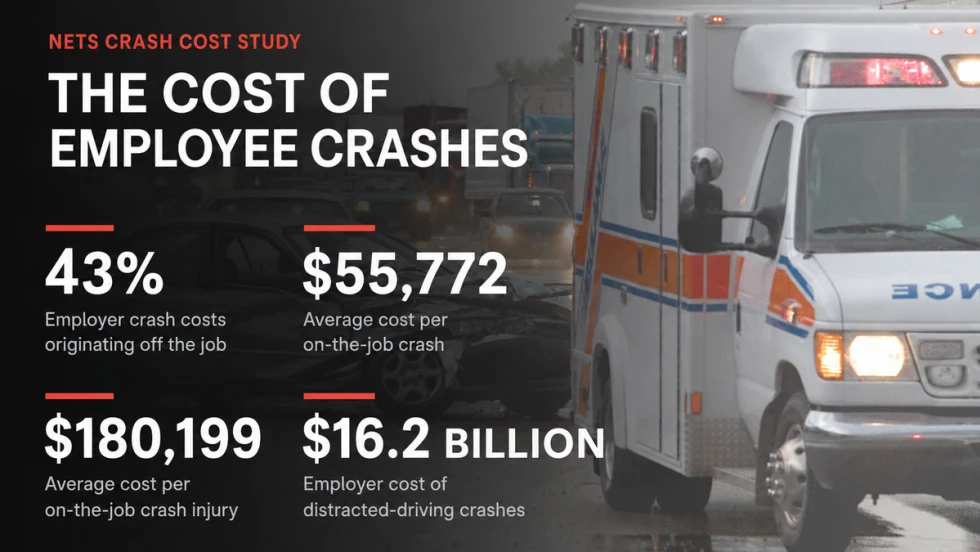
Off-the-Job Crashes Account for 43% of Employers’ $61.7 Billion Crash Burden
NETS quantifies costs dispersed across fleet, risk, HR, and other departments while providing new per-crash benchmarks for employers.
Read More →
Ram Recalls More Than 1.27 Million 1500 Pickups for Seat Belt Anchor Issue
The recall affects certain 2019-2026 Ram 1500 pickups that may have improperly attached second-row seat belt buckle anchors.
Read More →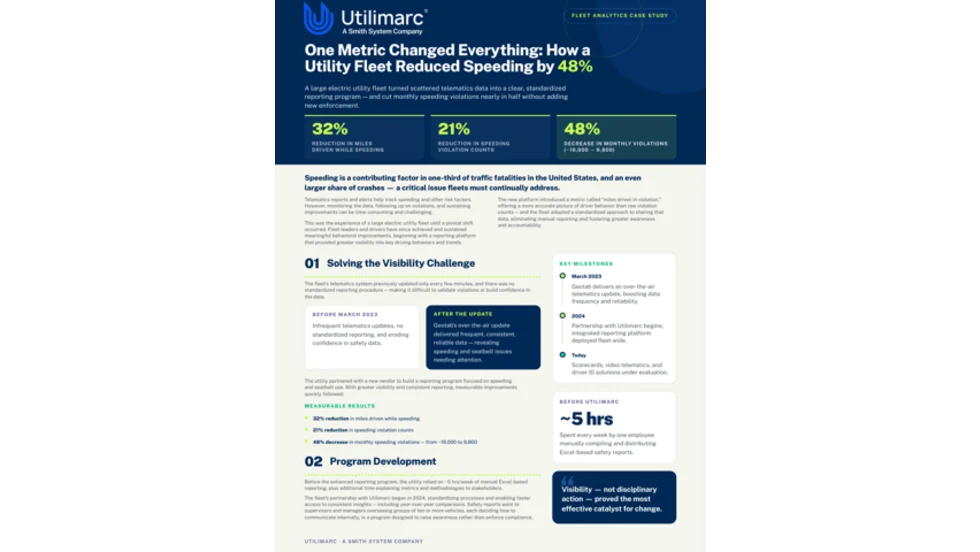
How Better Visibility Cut Speeding Violations by 48%
Fleet leaders don't need more data, they need clearer visibility into what the data is saying. This case study explores how one utility replaced speeding-event counts with a single metric — miles driven in violation — to strengthen safety and significantly reduce speeding violations.
Read More →