





Related: Mobility Shift Will Come with Mass Autonomous Vehicle Adoption
Ford Urges Standard for Autonomous Vehicle Communication
In an effort to advance the safe deployment of autonomous vehicles for all roadway users, Ford Motor Company is calling upon all self-driving vehicle developers to work together to develop an industry standard for communicating driving intent.
October 4, 2018

Ford Motor Company is calling upon all self-driving vehicle developers to work together to develop an industry standard for communicating driving intent.
Photo courtesy of Ford.
2 min to read
In an effort to advance the safe deployment of autonomous vehicles (AV) for all roadway users, Ford Motor Company is calling upon all self-driving vehicle developers to work together to develop an industry standard for communicating driving intent.
A recent article published by the automaker on Medium.com outlines Ford’s specific efforts and the company’s rationale for striving for a universal language. It is the best approach, notes Ford, because it provides a basis for everyone to trust self-driving vehicles—be they a rider in an AV, or a pedestrian, cyclist, scooter user, or another driver.
Last year, Ford conducted a real-world study of its self-driving intent interface in conjunction with Virginia Tech Transportation Institute (VTTI). The intent interface is essentially a light-bar and it was mounted to the top of a windshield of a Ford Transit Connect van. The VTTI team designed a means for the van to operate as if it were autonomous and then tested three different lighting patterns to reflect yielding, active driving mode, and start-to-go.
Through the use of cameras—and over the course of approximately 2,000 miles—the research team observed how pedestrians and other motorists responded to the vehicle signaling its intent.
The results found that the light signal interface did not encourage any unsafe behavior by other road users. The automaker believes the results suggest there is baseline to build from in terms of the potential to improve acceptance of self-driving vehicles and confidence in the technology.
Additional efforts on the part of Ford include another study in virtual reality as well as research in Europe to understand how the same signals are received across regions and cultures.
The automaker is currently installing the self-driving intent interface on a small fleet of its Fusion Hybrid self-driving development vehicles to be used by Argo AI in Miami-Dade County. Ongoing testing will continue to observe how pedestrians and drivers respond to the light bar.
Ford’s call to arms to the industry to work together toward standardization is intended to help accelerate the safe deployment of AV for all roadway users.
More Safety

Nexar-Nauto Merger Aims to Give Fleets Better Safety Intelligence Through Larger Driving Dataset
Stefan Heck tells Automotive Fleet that combining more than 10 billion miles of driving history with Nexar's AI models will give fleets deeper insights into driver risk and roadway conditions than either company could provide independently.
Read More →
Don't Wait for a Crisis: 5 Ways to Build Mental Health Into Your Fleet Safety Program
For Suicide Prevention Month, fleet and safety leaders have an opportunity to put mental health where it belongs: at the center of workplace safety.
Read More →
How Camera Data Can Strengthen a Fleet’s Insurance Renewal
Insights from a commercial insurance carrier and a broker show how fleets can turn video telematic data, driver coaching, and improved claims results into a stronger case at insurance renewal.
Read More →
The Safest Fleets Aren’t the Ones with the Most Technology
You’ve made the telematics investment. Here’s how to capture the other half of its value and build the safest fleet on the road.
Read More →
Sponsored•August 7, 2026
Hidden in Plain Sight: Fleet Compliance Risks
Fleet compliance isn't just about having policies — it's about consistently enforcing them. This practical guide reveals six hidden compliance risks common in public sector and shared fleet operations and outlines proven strategies to improve visibility, accountability, and audit readiness
Read More →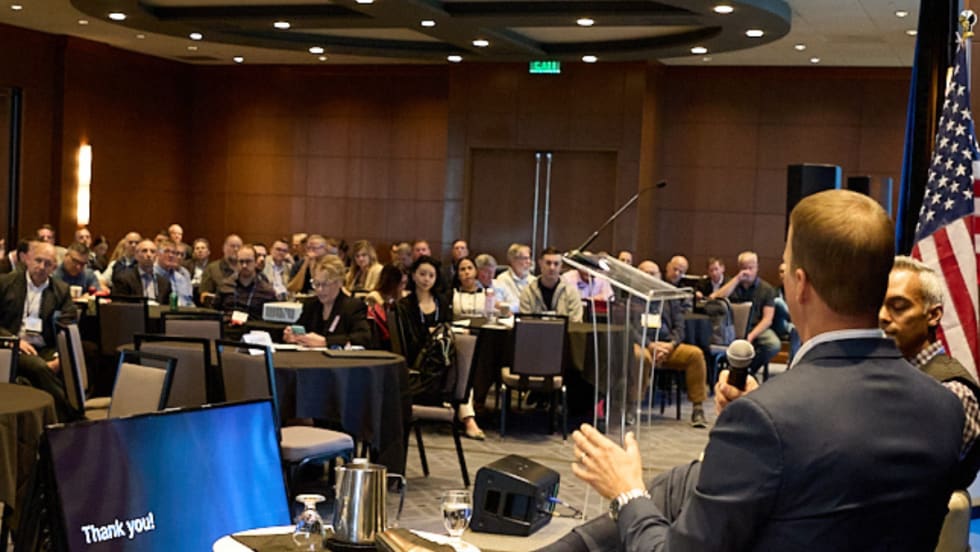
NETS Sets 2026 Fleet Safety Benchmark Conference for Indianapolis
The Sept. 15–17 program will feature fleet benchmarking data, case studies, emerging technologies, and implementation strategies while running alongside the NSC Safety Congress & Expo.
Read More →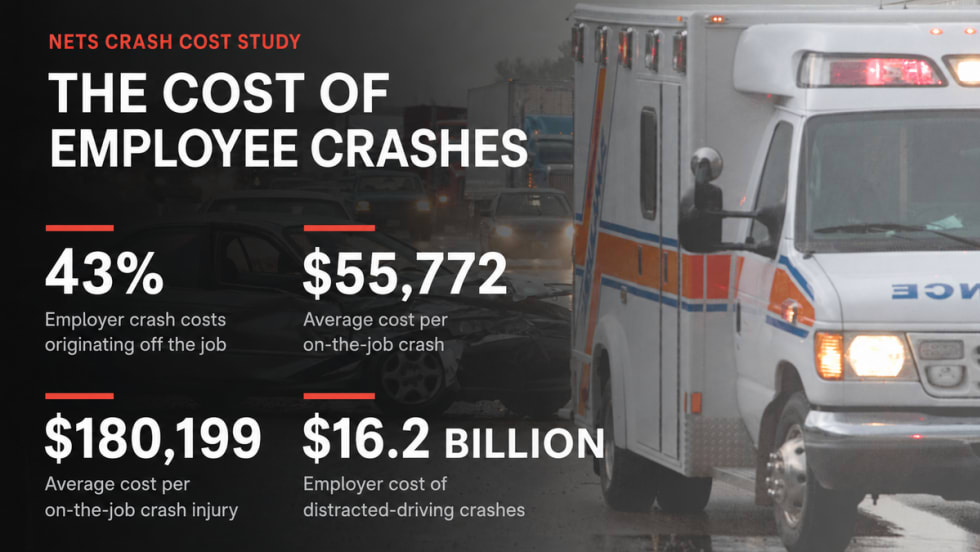
Off-the-Job Crashes Account for 43% of Employers’ $61.7 Billion Crash Burden
NETS quantifies costs dispersed across fleet, risk, HR, and other departments while providing new per-crash benchmarks for employers.
Read More →
Ram Recalls More Than 1.27 Million 1500 Pickups for Seat Belt Anchor Issue
The recall affects certain 2019-2026 Ram 1500 pickups that may have improperly attached second-row seat belt buckle anchors.
Read More →
Sponsored•July 17, 2026
How Better Visibility Cut Speeding Violations by 48%
Fleet leaders don't need more data, they need clearer visibility into what the data is saying. This case study explores how one utility replaced speeding-event counts with a single metric — miles driven in violation — to strengthen safety and significantly reduce speeding violations.
Read More →
Operation Safe Driver Week: Why the Industry's Oldest Safety Campaign Still Matters to Fleets
A look at how a 2007 enforcement initiative became one of the most consequential weeks on the fleet safety calendar, and what it means for your drivers in 2026.
Read More →