




Ford to Ramp Up Active Safety Offerings
DEARBORN, Mich. --- Ford Motor Co. announced plans to offer more active safety product features and technologies that consumers increasingly want and to ramp up research and development into next-generation accident avoidance safety technologies.
DEARBORN, Mich. --- Ford Motor Co. announced plans to offer more active safety product features and technologies that consumers increasingly want and to ramp up research and development into next-generation accident avoidance safety technologies.
In the next year, Ford will introduce three new active technologies including adaptive cruise control, BLISTM (blind spot information system) with cross traffic alert and a third to be named later in 2008. These features will complement Ford's AdvanceTrac with RSC (roll stability control) system that is standard on millions of Ford products.
Researchers say consumers are seeking safety in all aspects of their lives, including the vehicles they drive. In a recent survey, consumers listed vehicle safety technologies as more than half of their Top 20 wants. At the same time, National Highway Traffic Safety Administration (NHTSA) research show teens and older drivers, the two driving populations that are involved in the most accidents, now constitute a growing majority of motorists in the United States.
"Consumers today are constantly bombarded with safety scares -- from food contamination to lead paint in toys to violence -- and that means they seek more safety in things they can control, such as the vehicles they want," said Sheryl Connelly, global trends manager for Ford Motor Co. "Ford is delivering more safety features to give them peace of mind and, at the same time, developing features that may help drivers avoid accidents."
Vehicle safety technology is second only to fuel efficiency on consumers' purchase considerations wish lists, according to a recent study by RDA Group Global Market Research of Bloomfield Hills, Mich. Among consumers’ top desires for safety features are collision warning and prevention, greater traction controls, entrapment prevention, and vehicle-to-vehicle communications.
"Over the past several years we've seen drivers' attitudes change regarding safety technology," said Jim Thomas, senior vice president of RDA. "It used to be that they didn't want to release control of the vehicle at all, but now they're looking for the vehicle to be more proactive and taking over in instances where the vehicle can react faster."
Active safety technologies such as forward collision warning systems may provide drivers additional help in accident avoidance. Awareness and acceptance of such technologies means more consumers will be looking for "smart vehicles" equipped with those technologies for themselves and their families, said Michelle McQuaid, Ford cross vehicle product marketing manager for features and technologies.
Demographic trends show teens and older drivers, the two driving populations that are involved in the most accidents, are increasing. In the years between 1996 and 2006 the number of U.S. licensed drivers 65 and older increased by nearly 20 percent. Their numbers are expected to increase another 25 percent in the next decade as oldest members of the huge Baby Boomer generation turn 65 in 2011. By 2020, the number of 65 or older drivers is expected to reach 40 million strong.
At the opposite end of the age spectrum are the teen and 20-something members of Generation Y (or "Millennials"), who add at least 40,000 licensed drivers to U.S. roads each year and number more than 70 million in total. These young drivers represent approximately 28 percent of the U.S. population, making their group the largest consumer segment in U.S. history.
According to NHTSA, teens and older drivers are involved in accidents for different reasons. Drivers 65 or older are prone to a gradual decline in cognitive, perceptual and motor abilities. And the younger drivers lack experience and are more likely to take risks such as speeding, driving under the influence of alcohol, or driving without wearing a safety belt.
"Baby boomer soccer parents drove many of the auto safety advancements of the past two decades,” said Priya Prasad, Ford technical fellow for safety. "But their size in numbers could become a major safety issue over the next decade as their collective driving skills may fade. At the same time, their grandkids will be hitting the roads to create the largest population of teen drivers ever. There may be a greater need for active safety systems as the number of older and younger drivers increase."
Researchers at Ford’s advanced driving simulator, Virtual Test Track Experiment (VIRTTEX), are devoting much of 2008 to study how active safety technologies in vehicles may better alert drivers of potentially dangerous driving incidents.
"New technologies such as radar, cameras, lasers and GPS may enable us to offer more safety and convenience features in the future,” said Jeff Rupp, manager of active safety, research and advanced engineering at Ford's Research and Innovation Center. "A key is identifying the kinds of warnings that drivers will find both more effective and easier to understand.”
Ford recently used VIRTTEX to examine driver preferences and reaction times with advanced early-warning systems such as forward collision warning, a radar-based system designed to help avoid or mitigate the effect of front-end collisions. Research to date has shown drivers respond more quickly to certain audible alerts that are more intense, thus more authoritative. Early research also shows some preference for a combination of warnings -- audio alerts backed up by visual warning reinforcement.
Ford also is studying the optimal moment to warn a driver in a potentially dangerous situation. Initial studies show early warnings can be useful for distracted drivers, but can frustrate attentive drivers by warning of dangers they've already anticipated.
Ford's smart intersection research focuses on wireless communications between vehicles and infrastructure, as well as "active safety" technologies that can help warn drivers about potential hazards at intersections where 40 percent of all traffic accidents and 20 percent of crash-related fatalities occur. The collision avoidance system receives information such as traffic signal status communicated to the vehicles from intersection infrastructure to assess potential traffic hazards and provide warnings to drivers if necessary.
In the next year, Ford will introduce three new active technologies that will be available on many Ford products, starting with the 2009 Lincoln MKS.
-- Adaptive Cruise Control: Conventional cruise control allows the driver to set the car's speed and maintain that speed without using the accelerator pedal. The new adaptive cruise control radar-based system monitors traffic in front (up to 600 feet) and adjusts the speed of the vehicle to keep it a safe distance behind the lead vehicle. Four settings accommodate different driving styles for trailing distances. The feature is offered optional on the 2009 Lincoln MKS and is a major building block for next-generation systems such as forward collision warning.
BLISTM (blind spot information system) with cross traffic alert: Ford's new cross traffic alert feature will help warn drivers of impending traffic while backing out by using radars to pick up moving objects within a 65-foot range from either side of the vehicle. Two warnings are given: an indicator lights up in the corresponding outside mirror and an audible alert is sounded. The feature works in conjunction with Ford’s radar-based blind-spot monitoring system, using this system's two multiple beam radar modules, which are packaged in the rear quarter panels -- one per side. The radar identifies when a vehicle enters the defined blind spot zone and illuminates an indicator light on the corresponding sideview mirror providing a warning that a vehicle is approaching.
A third active technology will be announced later in 2008, Ford said.
More Safety

Nexar-Nauto Merger Aims to Give Fleets Better Safety Intelligence Through Larger Driving Dataset
Stefan Heck tells Automotive Fleet that combining more than 10 billion miles of driving history with Nexar's AI models will give fleets deeper insights into driver risk and roadway conditions than either company could provide independently.
Read More →
Don't Wait for a Crisis: 5 Ways to Build Mental Health Into Your Fleet Safety Program
For Suicide Prevention Month, fleet and safety leaders have an opportunity to put mental health where it belongs: at the center of workplace safety.
Read More →
How Camera Data Can Strengthen a Fleet’s Insurance Renewal
Insights from a commercial insurance carrier and a broker show how fleets can turn video telematic data, driver coaching, and improved claims results into a stronger case at insurance renewal.
Read More →
The Safest Fleets Aren’t the Ones with the Most Technology
You’ve made the telematics investment. Here’s how to capture the other half of its value and build the safest fleet on the road.
Read More →
Hidden in Plain Sight: Fleet Compliance Risks
Fleet compliance isn't just about having policies — it's about consistently enforcing them. This practical guide reveals six hidden compliance risks common in public sector and shared fleet operations and outlines proven strategies to improve visibility, accountability, and audit readiness
Read More →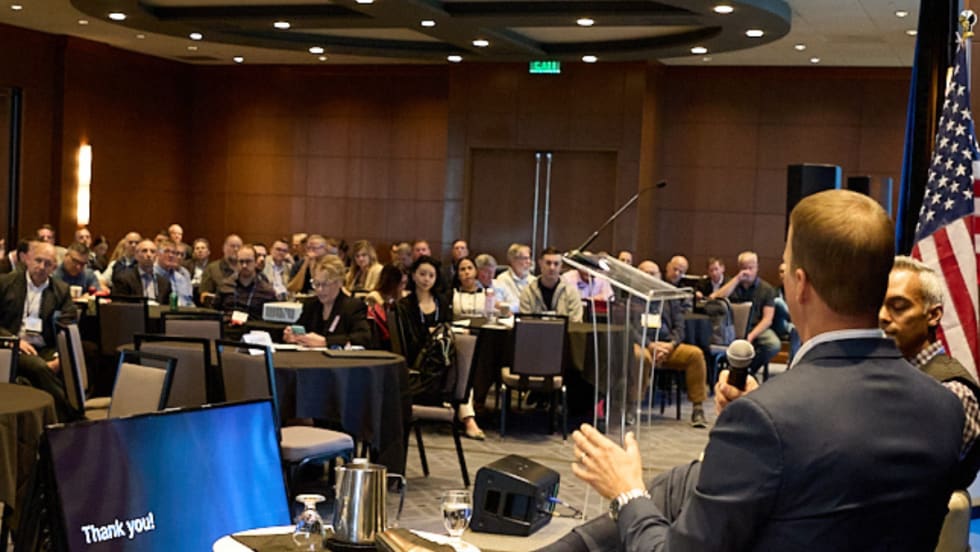
NETS Sets 2026 Fleet Safety Benchmark Conference for Indianapolis
The Sept. 15–17 program will feature fleet benchmarking data, case studies, emerging technologies, and implementation strategies while running alongside the NSC Safety Congress & Expo.
Read More →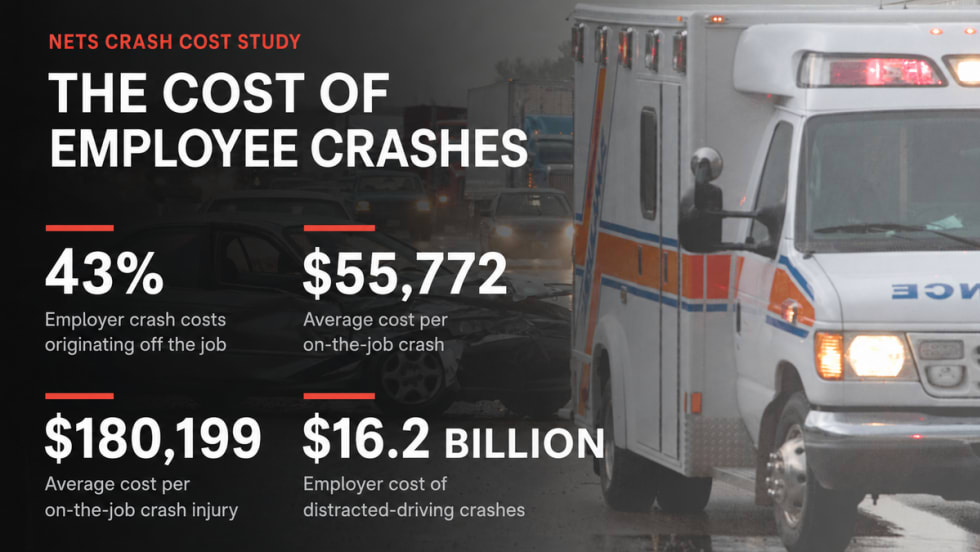
Off-the-Job Crashes Account for 43% of Employers’ $61.7 Billion Crash Burden
NETS quantifies costs dispersed across fleet, risk, HR, and other departments while providing new per-crash benchmarks for employers.
Read More →
Ram Recalls More Than 1.27 Million 1500 Pickups for Seat Belt Anchor Issue
The recall affects certain 2019-2026 Ram 1500 pickups that may have improperly attached second-row seat belt buckle anchors.
Read More →
How Better Visibility Cut Speeding Violations by 48%
Fleet leaders don't need more data, they need clearer visibility into what the data is saying. This case study explores how one utility replaced speeding-event counts with a single metric — miles driven in violation — to strengthen safety and significantly reduce speeding violations.
Read More →
Operation Safe Driver Week: Why the Industry's Oldest Safety Campaign Still Matters to Fleets
A look at how a 2007 enforcement initiative became one of the most consequential weeks on the fleet safety calendar, and what it means for your drivers in 2026.
Read More →