




Ford to Double Models Offering Rear View Camera System
DEARBORN, MI --- Ford Motor Co. announced it plans to double the number of Ford, Lincoln and Mercury models that offer its rear view camera system by the end of 2009.
DEARBORN, MI --- Ford Motor Co. announced it plans to double the number of Ford, Lincoln and Mercury models that offer its rear view camera system by the end of 2009.
Approximately 75 percent of Ford vehicles will offer the feature by the end of next year, including the new 2010 Ford Mustang -- the only sports car to offer the feature when it arrives in spring 2009 -- and the recently introduced 2010 Ford Fusion and Fusion Hybrid.
"Ford is bringing new innovations such as the rear view camera system to as many customers as possible to help them see better when reversing," said Jim Buczkowski, director of electrical and electronics systems engineering at Ford. "Our research shows that visibility is one of the biggest customer concerns today, which is why we are the only company to offer a rear view camera system, blind spot mirrors and the radar-based blind spot information system with cross traffic system."
Ford's system uses an exterior camera embedded in the rear of the vehicle that sends images to a video display in the rearview mirror or the navigation system screen to help enhance visibility directly behind the vehicle when the driver is in reverse. Ford is leveraging the affordability of high-quality video cameras to widely offer the technology with navigation systems that also quickly have come down in price. The rearview mirror system allows customers to choose an even more affordable version of the technology.
Ford’s Rear View Camera System image is overlaid with lines that mark the width of the vehicle and are shown either on a rear-view mirror display or navigation system screen. The camera's low light capability, combined with the intensity of the vehicle’s reverse lamps, helps illuminate the image even in dark parking areas.
"We believe Ford's rear view camera system is easiest to use because there are lines to mark the vehicle's size for easier parking in tight spots," Buczkowski said.
A recent automotive study on "unmet consumer needs" indicates that visibility around the vehicle ranks as one of the top customer needs. The issue also has hit the legislative ranks. Earlier this year, the Kids and Cars Safety Act, spearheaded by Sen. Hillary Clinton, was signed into law. The measure is designed to protect children from vehicle-related, non-traffic accidents -- which include back-over incidents. The new law eventually will require vehicles to be equipped with standard back-over detection.
Ford's system will be offered on most of its full-size pickups, vans and crossovers -- including the new 2009 Ford F-150 -- with the added benefit of helping truck owners align and hitch trailers. And demand is surging as nearly twice as many 2009 F-150s are ordered with the system than the 2008 model.
"The tendency with trucks is just to talk about the numbers, who has the most towing or the most payload," said Doug Scott, Ford's Pickup, SUV, and commercial vehicle marketing manager. "We lead in both of those areas, but equally important is that we're making it easier to use that best in class capability. The rear view camera system makes hooking up to a trailer so much easier than it's ever been before, so trucks are the ideal vehicle for this feature."
Ford studies show that radar- and camera-based active safety and driver-aid technologies -- such as backing and parking aids, forward collision warning systems and adaptive cruise control -- are particularly useful to drivers with slow reaction times or limited range of motion. One in five drivers -- 54 million people in the U.S. -- cope with temporary or permanent physical challenges such as injury or obesity that can inhibit their abilities to turn their heads to check blind spots or avoid a rear-end collision, Ford researchers have learned.
Also, aging Baby Boomers will increase the number of licensed drivers 65 years and older -- who generally face more physical challenges, slower reaction times and decreased depth perception – by 25 percent to 40 million by 2020.
"Systems that support backing and parking maneuvers also helped improve the performance of drivers with physical limitations," said Dr. Louis Tijerina, Ford senior technical specialist.
Ford will launch new blind spot mirrors, collision warning with brake support forward collision warning technology and BLIS (blind spot information system) with cross traffic alert -- a radar system that helps detect vehicles in blind spots during normal driving and oncoming traffic when reversing out of parking spots -- in 2009.
More Safety

Which Fleet Types Have the Highest Severe Speeding Rates?
New research from SambaSafety finds significant differences in speeding rates across fleet industries, even as nearly 90% of surveyed fleets report using telematics.
Read More →
When a Cyberattack Hits Your Fleet: What Happens Next?
“You have two opportunities to test your plans: when you choose or when the threat actor chooses.” A cybersecurity expert reveals what fleet managers need to know before a cyberattack puts their operations at risk — and why the decisions made in the first moments can shape the entire recovery.
Read More →
Tips for Driving Safely on Halloween Night
This video features a reminder from the Connecticut Department of Transportation (DOT) and the Connecticut Police Chiefs Association, urging drivers to prioritize safety this Halloween.
Read More →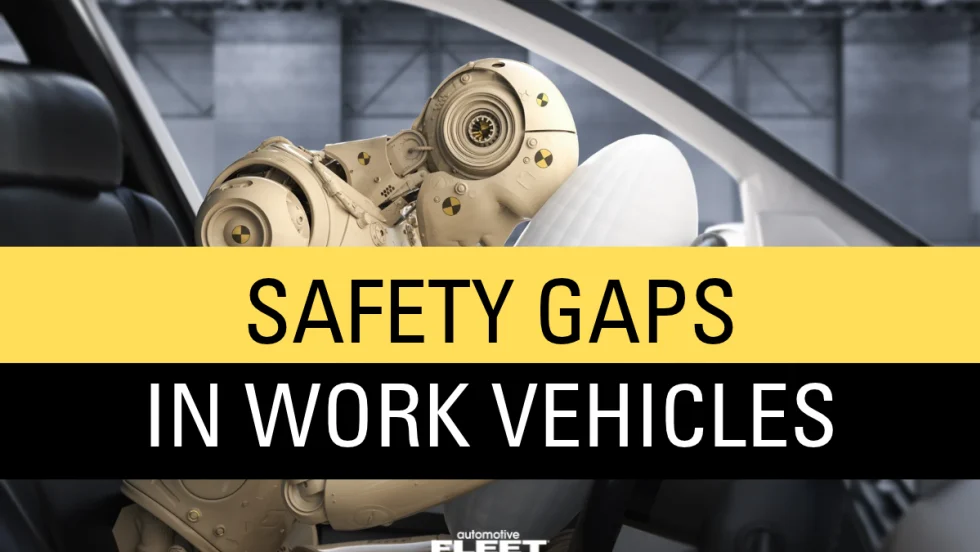
IIHS Crash Avoidance Tests Reveal Safety Gaps in Cargo Vans and Work Trucks
New IIHS crash avoidance ratings show uneven performance among cargo vans and heavy-duty pickups, with most struggling to avoid vehicle-to-vehicle collisions.
Read More →
What’s Next for Fleet? Safety, AI & Industry Recognition | AF News Recap
Could your company's culture be encouraging distracted driving? This week, we're exploring how workplace expectations affect driver safety, what AI, EVs, and autonomous vehicles could mean for the future of fleet management, and how fleet professionals can strengthen their award nominations.
Read More →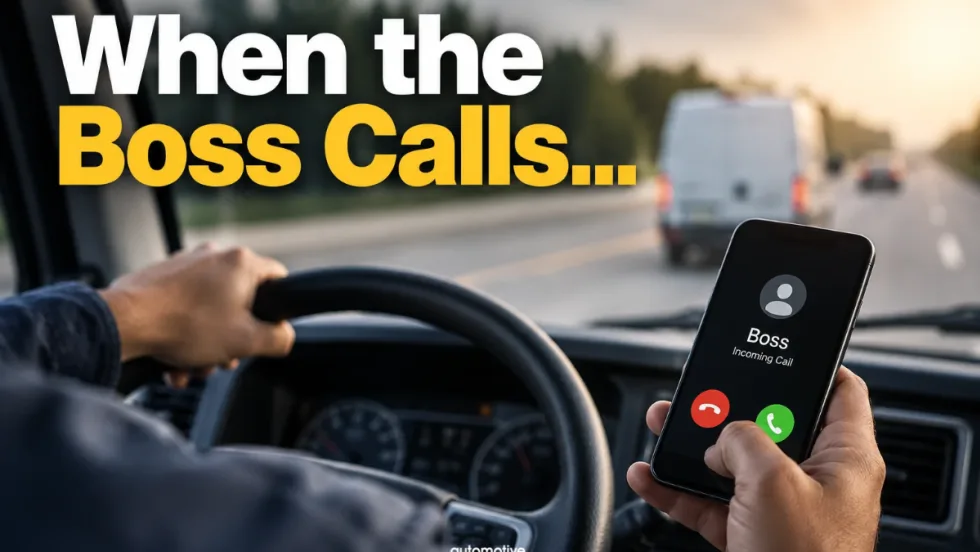
Does Your Fleet's Culture Encourage Distracted Driving?
What happens when the people responsible for enforcing safety rules are the ones setting the wrong example? The answer may reveal why some of the biggest risks to fleet drivers have little to do with what's written in the employee handbook.
Read More →
Fleet Manager’s Ultimate Playbook: Navigating the New Standard in OEM Connectivity
Rising operating costs, driver safety concerns, and unplanned downtime are putting unprecedented pressure on modern fleets. Discover how fleet managers use embedded OEM connectivity and real-time vehicle data to cut TCO, prevent downtime, and protect drivers without aftermarket telematics hardware.
Read More →
From Driver Well-Being to EV Charging | AF News Recap
Mental health belongs in the fleet safety conversation. This week, we’re looking at five ways fleets can support employee well-being before a crisis, plus Holman’s expansion in Mexico, new one-day Fleet Forward passes, and why EV charging demand is outpacing infrastructure growth.
Read More →
Nexar-Nauto Merger Aims to Give Fleets Better Safety Intelligence Through Larger Driving Dataset
Stefan Heck tells Automotive Fleet that combining more than 10 billion miles of driving history with Nexar's AI models will give fleets deeper insights into driver risk and roadway conditions than either company could provide independently.
Read More →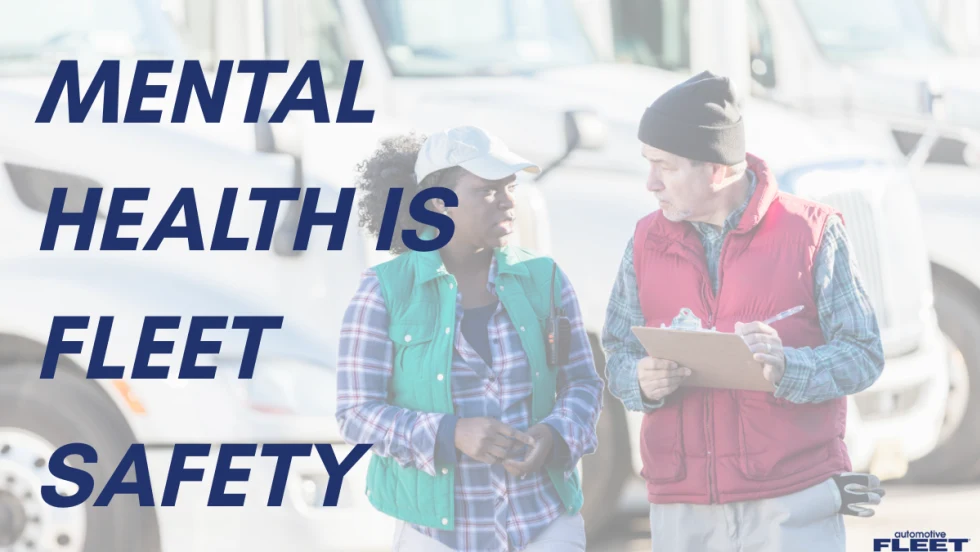
Don't Wait for a Crisis: 5 Ways to Build Mental Health Into Your Fleet Safety Program
For Suicide Prevention Month, fleet and safety leaders have an opportunity to put mental health where it belongs: at the center of workplace safety.
Read More →