




Ford Teams With MIT, Stanford to Advance Automated Driving Research
The MIT research focuses on scenario planning to predict actions of other vehicles and pedestrians, while Stanford explores how a vehicle might maneuver to allow its sensors to peek around obstructions.
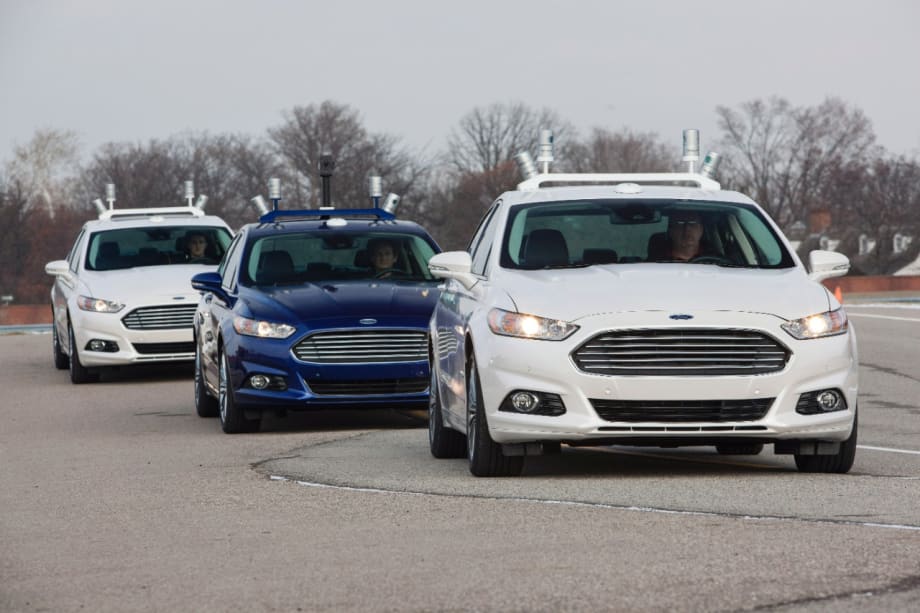
The research projects will explore the application of LiDAR sensors and advanced algorithms to develop automated driving solutions. Photo: Ford Motor Co.
The research projects will explore the application of LiDAR sensors and advanced algorithms to develop automated driving solutions. Photo: Ford Motor Co.
Ford Motor Co. is teaming with Massachusetts Institute of Technology and Stanford University on new research projects aimed at developing solutions to some of the technical challenges surrounding automated driving.
The projects build on Ford’s commitment to automated driving research. Last month the automaker unveiled its automated Ford Fusion Hybrid research vehicle.
Automated driving is a key component of Ford’s Blueprint for Mobility, which outlines what transportation will look like in 2025 and beyond, along with the technologies, business models and partnerships needed to get there.
With its automated Fusion Hybrid research vehicle, Ford is exploring potential solutions for the longer-term societal, legislative and technological issues posed by a future of fully automated driving.
“To deliver on our vision for the future of mobility, we need to work with many new partners across the public and private sectors, and we need to start today,” said Paul Mascarenas, chief technical officer and vice president of Ford research and innovation. “Working with university partners like MIT and Stanford enables us to address some of the longer-term challenges surrounding automated driving while exploring more near-term solutions for delivering an even safer and more efficient driving experience.”
Ford’s automated Fusion Hybrid research vehicle uses the same technology already in Ford vehicles in dealer showrooms, then adds four LiDAR sensors to generate a real-time 3D map of the vehicle’s surrounding environment.
While the vehicle can sense objects around it using the LiDAR sensors, Ford’s research with MIT uses advanced algorithms to help the vehicle learn to predict where moving vehicles and pedestrians could be in the future. This scenario planning provides the vehicle with a better sense of the surrounding risks, enabling it to plan a path that will safely avoid pedestrians, vehicles and other moving objects.
Working with Stanford, Ford is exploring how the sensors could see around obstacles.
Typically, when a driver’s view is blocked by an obstacle such as a big truck, the driver will maneuver within the lane to take a peek around it and see what’s ahead. Similarly, this research would enable the sensors to “take a peek ahead” and make evasive maneuvers if needed. For example, if the truck ahead slammed on its brakes, the vehicle would know if the area around it is clear to safely change lanes.
“Our goal is to provide the vehicle with common sense,” said Greg Stevens, global manager for driver assistance and active safety, Ford research and innovation. “Drivers are good at using the cues around them to predict what will happen next, and they know that what you can’t see is often as important as what you can see. Our goal in working with MIT and Stanford is to bring a similar type of intuition to the vehicle.”
More Safety

Nexar-Nauto Merger Aims to Give Fleets Better Safety Intelligence Through Larger Driving Dataset
Stefan Heck tells Automotive Fleet that combining more than 10 billion miles of driving history with Nexar's AI models will give fleets deeper insights into driver risk and roadway conditions than either company could provide independently.
Read More →
Don't Wait for a Crisis: 5 Ways to Build Mental Health Into Your Fleet Safety Program
For Suicide Prevention Month, fleet and safety leaders have an opportunity to put mental health where it belongs: at the center of workplace safety.
Read More →
How Camera Data Can Strengthen a Fleet’s Insurance Renewal
Insights from a commercial insurance carrier and a broker show how fleets can turn video telematic data, driver coaching, and improved claims results into a stronger case at insurance renewal.
Read More →
The Safest Fleets Aren’t the Ones with the Most Technology
You’ve made the telematics investment. Here’s how to capture the other half of its value and build the safest fleet on the road.
Read More →
Hidden in Plain Sight: Fleet Compliance Risks
Fleet compliance isn't just about having policies — it's about consistently enforcing them. This practical guide reveals six hidden compliance risks common in public sector and shared fleet operations and outlines proven strategies to improve visibility, accountability, and audit readiness
Read More →
NETS Sets 2026 Fleet Safety Benchmark Conference for Indianapolis
The Sept. 15–17 program will feature fleet benchmarking data, case studies, emerging technologies, and implementation strategies while running alongside the NSC Safety Congress & Expo.
Read More →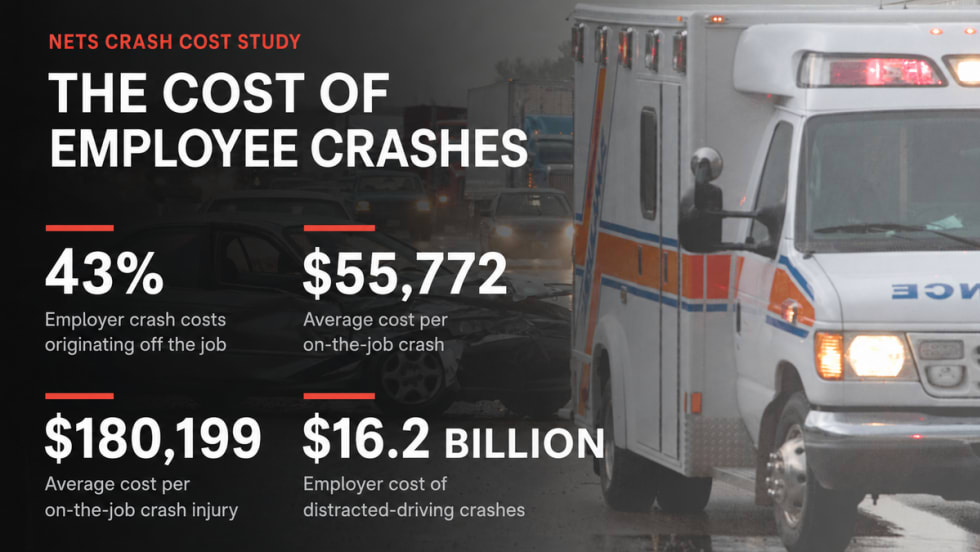
Off-the-Job Crashes Account for 43% of Employers’ $61.7 Billion Crash Burden
NETS quantifies costs dispersed across fleet, risk, HR, and other departments while providing new per-crash benchmarks for employers.
Read More →
Ram Recalls More Than 1.27 Million 1500 Pickups for Seat Belt Anchor Issue
The recall affects certain 2019-2026 Ram 1500 pickups that may have improperly attached second-row seat belt buckle anchors.
Read More →
How Better Visibility Cut Speeding Violations by 48%
Fleet leaders don't need more data, they need clearer visibility into what the data is saying. This case study explores how one utility replaced speeding-event counts with a single metric — miles driven in violation — to strengthen safety and significantly reduce speeding violations.
Read More →
Operation Safe Driver Week: Why the Industry's Oldest Safety Campaign Still Matters to Fleets
A look at how a 2007 enforcement initiative became one of the most consequential weeks on the fleet safety calendar, and what it means for your drivers in 2026.
Read More →