




Ford Survey: Drivers Want Safety Features that Bolster Awareness of Hazards
DEARBORN, MI -- Nearly nine in 10 drivers are interested in alert and assist technologies like those offered on the all-new Ford Fusion launching this fall, according to a new Ford survey.
DEARBORN, MI – According to a new survey commissioned by Ford Motor Co., most Americans say they consider themselves to be careful drivers but admit they would welcome some extra electronic help when they’re behind the wheel. Even the most attentive of drivers can’t see everything around them at all times or anticipate every hazard on the road.
Recently, leading market research firm Penn Schoen Berland conducted the survey of American drivers over the age of 18 to learn more about their attitudes toward driver assist technology. The survey found that the vast majority of drivers are interested in getting some extra assist features in their next vehicle to help them avoid potential accidents.
“We found the drivers we talked to were definitely inclined toward features that provided real practical benefits by alerting them to potentially hazardous situations they may have missed,” said Billy Mann, managing director of Penn Schoen Berland. “For them, assistance features that increase awareness ranked high among their priorities.”
Even under ideal daytime conditions on a dry road, traffic can suddenly slow or someone can slip into the gap between you and the car ahead. When the sun goes down or the clouds open up, it gets harder to judge what a suitable following distance might be. Nearly nine out of 10 of the survey respondents expressed interest in technology that could assist in slowing their car if it determines there is a potential collision ahead.
Whether on the highway during rush hour, in urban traffic or a parking lot, driving in close quarters with other vehicles can be stressful for any driver. Two-thirds of the drivers who participated in the survey indicated they would be interested in systems that can help them see around other vehicles while backing out of a parking space and detect other vehicles that might be in a blind spot over their shoulders.
“This survey shows that as consumers have become accustomed to using electronic assistants in other aspects of life, they are increasingly recognizing how technology can help them cope with the stresses of driving,” said Amy Marentic, Ford group marketing manager.
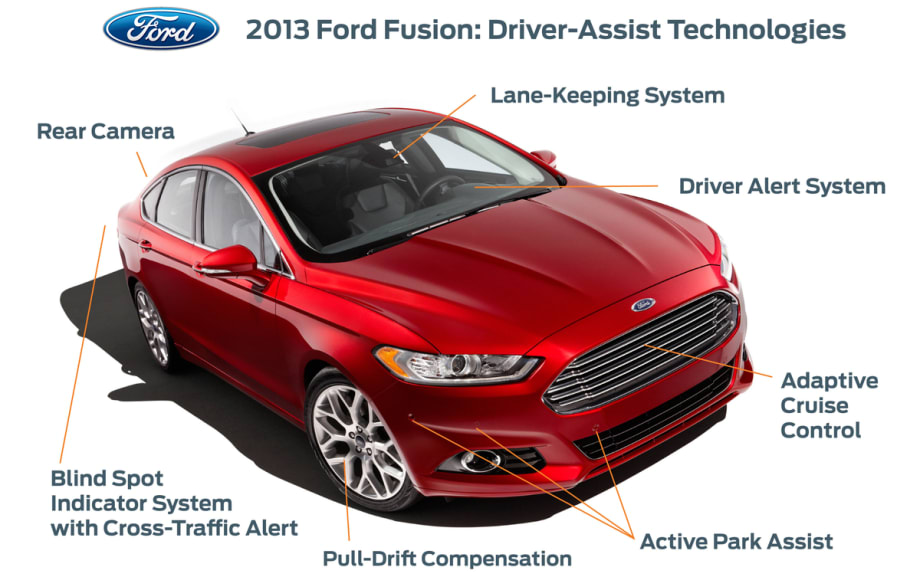
Fatigue or inattentiveness can lead to a car drifting out of its lane, and eight in 10 of the surveyed drivers expressed interest in a system that could provide an alert or even help to keep the vehicle in the lane. Ford’s Lane-Keeping System uses a forward-facing camera to watch for visible road markings, alerting the driver by vibrating the steering wheel if the system senses the car drifting out of its lane. The Fusion also applies a torque to the steering wheel to help nudge the car back into the lane.
“With the emergence of sensor-packed smartphones over the past several years, consumers have become accustomed to using their electronic gadgets to realize real-world benefits such as finding their way in unfamiliar places, figuring out the best place to grab a meal and track their exercise,” says Sheryl Connelly, Ford manager of global trends and futuring. “Advanced driver assistance features bring those benefits to the driving experience by extending the driver’s senses beyond the car.”
While respondents almost universally consider themselves to be safe behind the wheel, most of them also acknowledge that they engage in other activities when they are behind the wheel. Three-quarters admit to eating or drinking behind the wheel and more than half have exceeded the speed limit or used a hand-held mobile phone. Eighty-three percent admit that either they or someone they know has driven when very tired.
Adult American drivers are self-aware enough to recognize the flaws in their own driving habits and express interest in technological aids.
“We see the driver as always being at the center of control of the vehicle,” said Randy Visintainer, director of Ford research and innovation. “With improvements in sensing and control technologies, we can now provide unprecedented levels of assistance to drivers.”
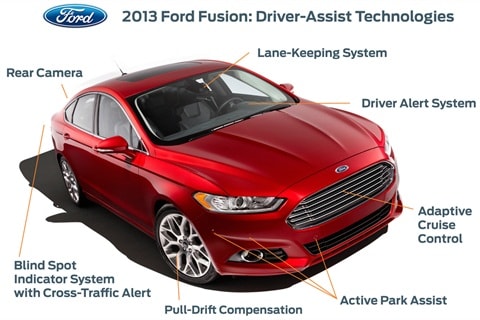
Though it’s critical that drivers always retain full control of their vehicle, Ford engineers recognize there will always be situations where drivers can use some help, said Visintainer. Consequently, Ford engineers have developed a full suite of driver assistance technologies to help mitigate the risks. Until now, it’s only been possible to get many of these features in luxury cars costing $100,000 or more.
The 2013 Ford Fusion’s safety features include:
• Blind Spot Information System (BLIS) with cross-traffic alert
• Adaptive cruise control and forward collision warning with brake support
• Lane-Keeping System with Driver Alert System
• Active park assist
• Rear-view camera system
• SYNC.
More Safety

Nexar-Nauto Merger Aims to Give Fleets Better Safety Intelligence Through Larger Driving Dataset
Stefan Heck tells Automotive Fleet that combining more than 10 billion miles of driving history with Nexar's AI models will give fleets deeper insights into driver risk and roadway conditions than either company could provide independently.
Read More →
Don't Wait for a Crisis: 5 Ways to Build Mental Health Into Your Fleet Safety Program
For Suicide Prevention Month, fleet and safety leaders have an opportunity to put mental health where it belongs: at the center of workplace safety.
Read More →
How Camera Data Can Strengthen a Fleet’s Insurance Renewal
Insights from a commercial insurance carrier and a broker show how fleets can turn video telematic data, driver coaching, and improved claims results into a stronger case at insurance renewal.
Read More →
The Safest Fleets Aren’t the Ones with the Most Technology
You’ve made the telematics investment. Here’s how to capture the other half of its value and build the safest fleet on the road.
Read More →
Hidden in Plain Sight: Fleet Compliance Risks
Fleet compliance isn't just about having policies — it's about consistently enforcing them. This practical guide reveals six hidden compliance risks common in public sector and shared fleet operations and outlines proven strategies to improve visibility, accountability, and audit readiness
Read More →
NETS Sets 2026 Fleet Safety Benchmark Conference for Indianapolis
The Sept. 15–17 program will feature fleet benchmarking data, case studies, emerging technologies, and implementation strategies while running alongside the NSC Safety Congress & Expo.
Read More →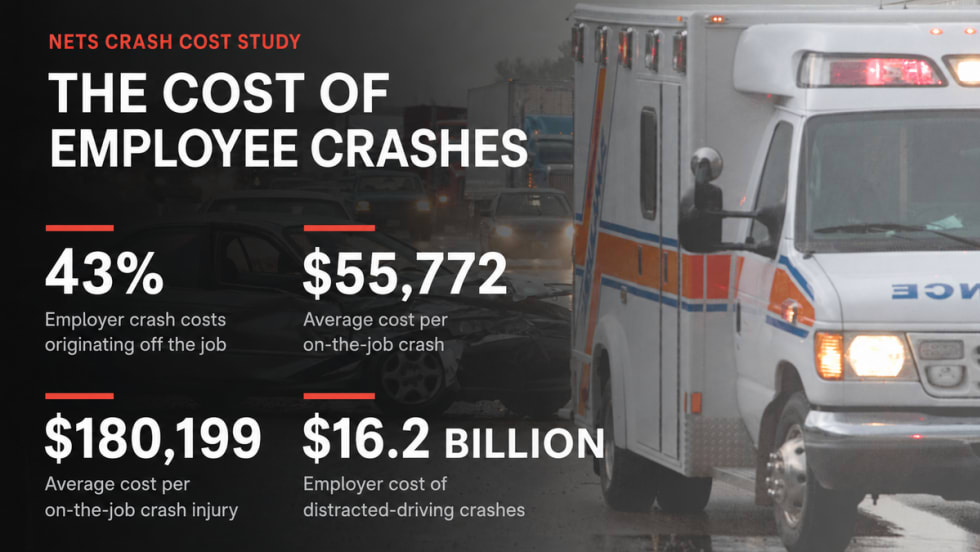
Off-the-Job Crashes Account for 43% of Employers’ $61.7 Billion Crash Burden
NETS quantifies costs dispersed across fleet, risk, HR, and other departments while providing new per-crash benchmarks for employers.
Read More →
Ram Recalls More Than 1.27 Million 1500 Pickups for Seat Belt Anchor Issue
The recall affects certain 2019-2026 Ram 1500 pickups that may have improperly attached second-row seat belt buckle anchors.
Read More →
How Better Visibility Cut Speeding Violations by 48%
Fleet leaders don't need more data, they need clearer visibility into what the data is saying. This case study explores how one utility replaced speeding-event counts with a single metric — miles driven in violation — to strengthen safety and significantly reduce speeding violations.
Read More →
Operation Safe Driver Week: Why the Industry's Oldest Safety Campaign Still Matters to Fleets
A look at how a 2007 enforcement initiative became one of the most consequential weeks on the fleet safety calendar, and what it means for your drivers in 2026.
Read More →