




Ford Showcases Intelligent Vehicle Technology at Dodger Stadium Event
LOS ANGELES - Ford Motor Co. convened a panel of auto industry, transportation and technology visionaries at Dodger Stadium on May 25 to showcase and discuss how intelligent vehicles could soon lead to safety breakthroughs.
LOS ANGELES - Ford Motor Co. convened a panel of auto industry, transportation and technology visionaries at Dodger Stadium on May 25 to showcase and discuss how intelligent vehicles could soon lead to safety breakthroughs.
On June 1, Ford will conduct a similar event in San Francisco.
"Intelligent vehicles are the next frontier of collision avoidance innovations that could revolutionize the driving experience and hold the potential of helping reduce many crashes," said Sue Cischke, Ford group vice president of sustainability, environment and safety engineering.
An October, 2010 NHTSA report on the potential safety benefits of vehicle-to-vehicle communications estimates that intelligent vehicles could help in as many as 4.3 million police-reported, light-vehicle crashes annually, or approximately 81 percent of all light-vehicle crashes involving unimpaired drivers. Experts say intelligent vehicles could be on the road in the near future.
Ford has built functional prototype vehicles to preview the technology, and is conducting a series of events across the country to explore the real-life benefits and near-term feasibility to save drivers' lives, fuel and time spent on the road. In addition to Los Angeles, Ford's demonstration tour has stopped in Washington D.C. and New York.
John Gartner, senior analyst at Pike Research, moderated the panel May 25 at Dodger Stadium. Panelists included:
Hamid Bahadori, Auto Club of Southern California, manager of transportation policy and programs
Alan Clelland, Iteris, senior vice president of transportation systems
Hasan Ikhrata, Southern California Association of Governments, executive director
Kevin Klowden, Milken Institute, managing economist and director of the California Center
James Moore, professor of industrial and systems engineering for public policy and management, and civil engineering, University of Southern California.
[PAGEBREAK]
Ford's vehicle communications research technology allows vehicles to talk wirelessly with one another using advanced Wi-Fi signals, or dedicated short-range communications, on a secured channel allocated by the Federal Communications Commission. Unlike radar-based safety features, which identify hazards within a direct line of sight, the Wi-Fi-based radio system allows full-range, 360-degree detection of potentially dangerous situations, such as when a driver's vision is obstructed.
For example, drivers could be alerted if their vehicle is on path to collide with another vehicle at an intersection, when a vehicle ahead stops or slows suddenly or when a traffic pattern changes on a busy highway. The systems also could warn drivers if there is a risk of collision when changing lanes, approaching a stationary or parked vehicle, or if another driver loses control.
By reducing crashes, intelligent vehicles could ease traffic delays, which would save drivers both time and fuel costs. Congestion also could be avoided through a network of intelligent vehicles and infrastructure that would process real-time traffic and road information and allow drivers to choose less congested routes.
According to Texas Transportation Institute's (TTI) 2010 Urban Mobility Report, traffic congestion continues to worsen in American cities of all sizes, annually wasting nearly 3.9 billion gallons of fuel in 2009 and costing the average Los Angeles commuter $1,464. Leading factors in traffic delays are caused by accidents, breakdowns and road debris, TTI maintains.
"We are not far from the day when vehicles will operate like mobile devices with four wheels, constantly exchanging information and communicating with our environment to do things like shorten commute times, improve fuel economy and generally help us more easily navigate life on the road," said Paul Mascarenas, vice president of Ford Research and Innovation and chief technical officer. "A smart network of intelligent vehicles has the potential to benefit drivers in many ways."
After a decade of research, Ford announced earlier this year an accelerated development of its intelligent vehicle work, doubling its research investment and convening a new 20-member task force - consisting of company planners, engineers and scientists from around the world with expertise in safety, eco-mobility, infotainment and driver conveniences. The goal is to define the next 10 years of safety, convenience and driver assistance, and to strengthen the company's position as a leader in connected vehicle technology.
[PAGEBREAK]
"While there are challenges ahead, the foundation of these smarter vehicles is advanced versions of technologies that are pervasive - Wi-Fi and crash avoidance systems that Ford has pioneered in mainstream vehicles today," said Mascarenas. "Intelligent vehicles could help warn drivers of numerous potential dangers such as a car running a red light but blocked from the view of a driver properly entering the intersection."
Ford is partnering with other automakers and the federal government, as well as local and county road commissions, to create a common language that ensures all vehicles can talk to each other based on a common communication standard.
This public-private partnership will include the world's first government-sponsored driving clinics beginning in summer 2011, for which the company will contribute two prototype Ford Taurus sedans. The DOT's Intelligent Transportation Systems (ITS) will head the research, continuing to coordinate with a coalition of automakers organized by the Crash Avoidance Metrics Partnership (CAMP), which is a joint research group headed by Ford and General Motors. The partnership is working to develop inter-operability standards in advance of completing the research phase in 2013.
"Ford has laid the groundwork to give vehicles a voice with SYNC and Wi-Fi technology," said Jim Vondale, director of the Ford Automotive Safety Office. "Now we're working with other automakers and government leaders worldwide to develop common standards globally to bring intelligent vehicles to market quicker and more affordably."
Vondale has been appointed by Transportation Secretary Ray LaHood to represent automakers on the ITS Advisory Committee. Mike Shulman, technical leader of Ford Research and Innovation, leads the government-industry technical partnership as program manager for CAMP.
Many of Ford's current technologies show how intelligent vehicles will be able to help drivers. For example, features that alert drivers to approaching hazards, such as Ford's collision warning with brake support and Blind Spot Information System (BLIS) with cross-traffic alert rely on radar sensors to detect vehicles or objects close to the vehicle.
"Ford has pioneered connectivity in modern vehicles with SYNC," said Shulman. "We believe advanced Wi-Fi for intelligent vehicles could be added to smartphones or GPS systems and simply connect to SYNC like today's phones."
More Safety

Nexar-Nauto Merger Aims to Give Fleets Better Safety Intelligence Through Larger Driving Dataset
Stefan Heck tells Automotive Fleet that combining more than 10 billion miles of driving history with Nexar's AI models will give fleets deeper insights into driver risk and roadway conditions than either company could provide independently.
Read More →
Don't Wait for a Crisis: 5 Ways to Build Mental Health Into Your Fleet Safety Program
For Suicide Prevention Month, fleet and safety leaders have an opportunity to put mental health where it belongs: at the center of workplace safety.
Read More →
How Camera Data Can Strengthen a Fleet’s Insurance Renewal
Insights from a commercial insurance carrier and a broker show how fleets can turn video telematic data, driver coaching, and improved claims results into a stronger case at insurance renewal.
Read More →
The Safest Fleets Aren’t the Ones with the Most Technology
You’ve made the telematics investment. Here’s how to capture the other half of its value and build the safest fleet on the road.
Read More →
Hidden in Plain Sight: Fleet Compliance Risks
Fleet compliance isn't just about having policies — it's about consistently enforcing them. This practical guide reveals six hidden compliance risks common in public sector and shared fleet operations and outlines proven strategies to improve visibility, accountability, and audit readiness
Read More →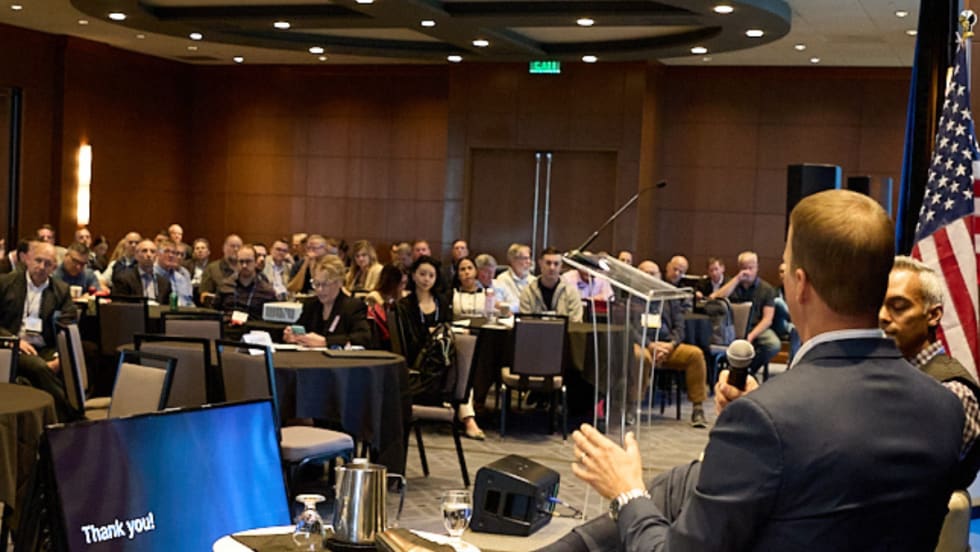
NETS Sets 2026 Fleet Safety Benchmark Conference for Indianapolis
The Sept. 15–17 program will feature fleet benchmarking data, case studies, emerging technologies, and implementation strategies while running alongside the NSC Safety Congress & Expo.
Read More →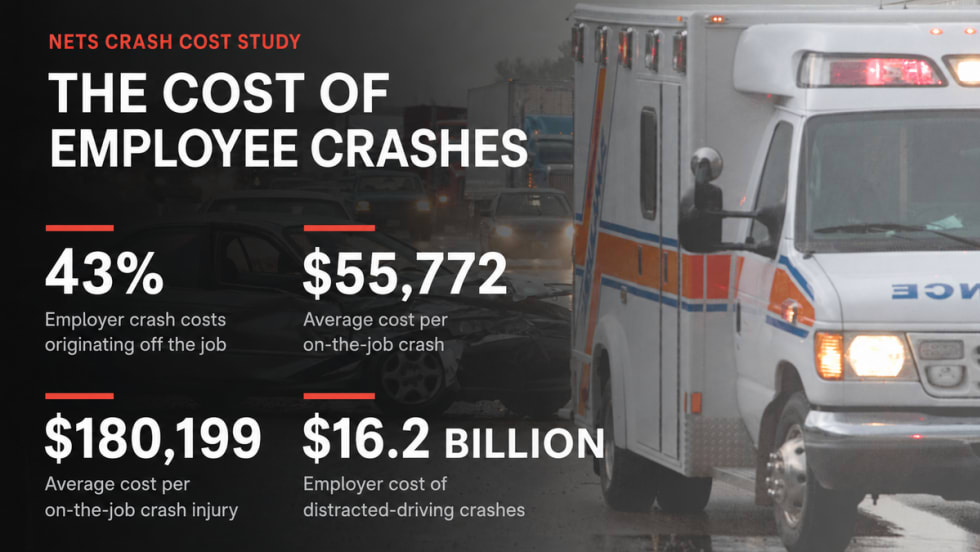
Off-the-Job Crashes Account for 43% of Employers’ $61.7 Billion Crash Burden
NETS quantifies costs dispersed across fleet, risk, HR, and other departments while providing new per-crash benchmarks for employers.
Read More →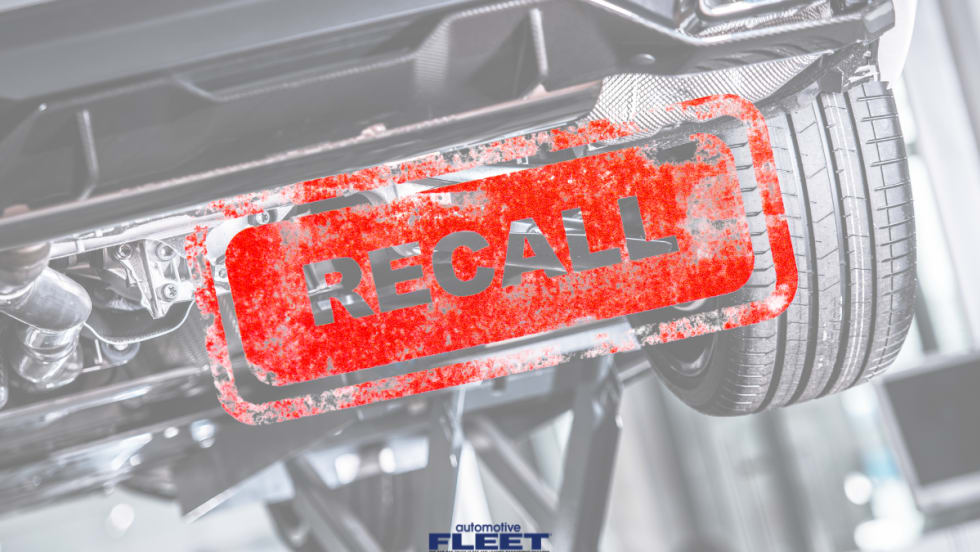
Ram Recalls More Than 1.27 Million 1500 Pickups for Seat Belt Anchor Issue
The recall affects certain 2019-2026 Ram 1500 pickups that may have improperly attached second-row seat belt buckle anchors.
Read More →
How Better Visibility Cut Speeding Violations by 48%
Fleet leaders don't need more data, they need clearer visibility into what the data is saying. This case study explores how one utility replaced speeding-event counts with a single metric — miles driven in violation — to strengthen safety and significantly reduce speeding violations.
Read More →
Operation Safe Driver Week: Why the Industry's Oldest Safety Campaign Still Matters to Fleets
A look at how a 2007 enforcement initiative became one of the most consequential weeks on the fleet safety calendar, and what it means for your drivers in 2026.
Read More →