




Ford Reveals Transit Van Chassis Cab and Cutaway Models
The Transit chassis cab and cutaway models will come in three wheelbases, including, 138, 156, or 178 inches, and gross vehicle weight ratings ranging from 9,000 lbs. to 10,360 lbs.
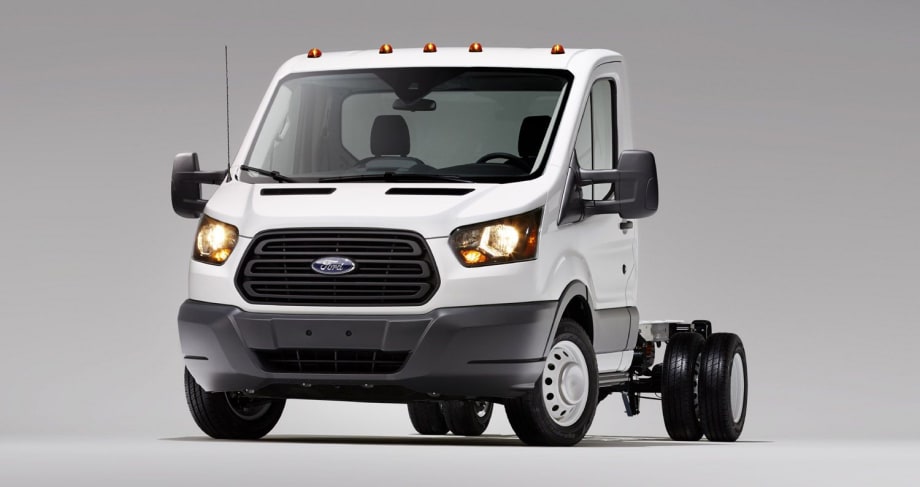
The Ford Transit chassis cab.
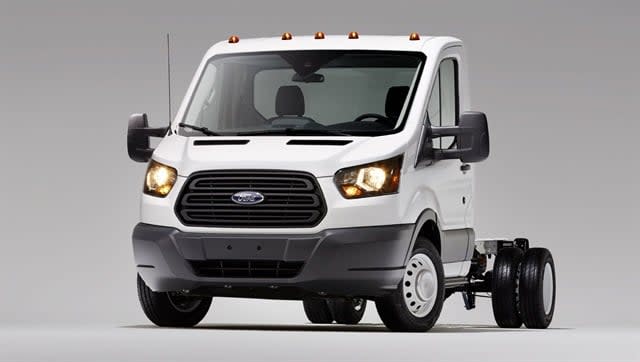
The Ford Transit chassis cab.
Ford has revealed the chassis cab and cutaway models of its upcoming Transit van. The Transit chassis cab features an enclosed passenger compartment and a frame that can accept aftermarket body modules. The Transit cutaway version is similar but the rear area of the passenger compartment is open, which allows it to be paired with body modules such as those for shuttles or school buses.
The Transit chassis cab and cutaway models will come in three wheelbases, including, 138, 156, or 178 inches, and gross vehicle weight ratings ranging from 9,000 lbs. to 10,360 lbs.
Ford stated the frame used in the Transit cutaway and chassis cab feature a uni-ladder structure that combines the cab with a girder frame. The fully welded platform underpins the entire cab area, according to Ford, with the frame rails reaching from the front of the vehicle to the rear bumper mounts.
The automaker added that it made extensive use of high-strength steel in the frame, and that it reinforced the cab area and uni-ladder frame rails with boron for added strength while saving weight. The company also said it used an anti-corrosion agent on the frame for added durability. In addition, Ford said it can extend the frame with support plates, giving an upfitted body more room to accommodate extra cargo.
A buyer can choose a factory-installed towing package, which includes a hitch, lighting connections, and a pre-wire package for upfitted body lighting, according to Ford.
Engine-wise, the automaker offers a 3.7L V-6, a 3.5L EcoBoost engine (the one in the F-150), and an all-new 3.2L Power Stroke diesel engine choice. The automaker also plans to offer a prep kit for the 3.7L engine that will allow it to run on compressed natural gas or liquid propane gas. The 3.7L V-6 is also engineered to run on E85, according to Ford.
You can view additional photos of the other Transit van models here.
You can also download a PDF that calls out specific features on the chassis cab and cutaway models here.
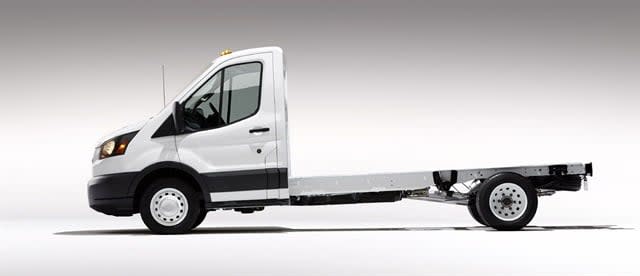
Ford stated the frame used in the Transit cutaway and chassis cab feature a uni-ladder structure that combines the cab with a girder frame.
More Operations

Personal-Use Charges Rise as Vehicle Values Fall | AF News Recap
Personal-use charges are climbing, wholesale used-vehicle values are declining, and commercial fleet sales growth is slowing. This week, we're breaking down the latest fleet data, plus how Element Fleet Management is helping Waymo prepare for its first Canadian robotaxi market.
Read More →
Here's When You Should Make an Exception to Fleet Policy
Fleet policies are designed to create consistency, but not every driver or situation fits neatly within standard rules.
Read More →
AI-Native or AI-Acquired: What Should Fleet Managers Look for in an AI Platform?
Six questions can help fleet managers look beyond AI marketing claims to evaluate integration, data access, and real-world operational performance.
Read More →

A buyer's guide to fleet management software in 2027
Buying fleet management software in 2027 means looking beyond features and price. As fleet operations, technology and expectations evolve, this guide explores what today’s fleet professionals should consider when choosing a system that can deliver value now and adapt to what comes next.
Read More →
What Will Shape the Next Era of Fleet Management?
EVs, AI, and autonomous vehicles are reshaping fleet management. Discover what’s ahead—and how fleet leaders can prepare for the next era.
Read More →
How Fleets Can Recruit and Train Veterans for Technician Roles
Here's how the technician shortage has affected uptime for fleets, and what to do about it.
Read More →
Avis Budget Group Deploys Neology Toll Management Technology Across Major Brands
Neology’s neoFleet platform will manage toll transactions and toll-authority operations for vehicles across Avis, Budget, Payless, Budget Truck and Zipcar.
Read More →
Fleet Personal-Use Charges Edge Higher in 2026
Nearly eight in 10 surveyed fleets allow personal use of company vehicles, while just over half of respondents report charging employees for the privilege.
Read More →
The Future of Fleet + What’s Changing Right Now | AF News Recap
Could developments overseas offer a preview of what’s coming for U.S. fleets? This week, we’re looking at the future of AI, autonomy, and electrification, plus Ford Pro’s new certified pre-owned program, smarter vehicle offboarding, and a new way for fleets to manage toll expenses.
Read More →
How to Handle Vehicle Offboarding
What do fleet managers need to do when a driver leaves?
Read More →